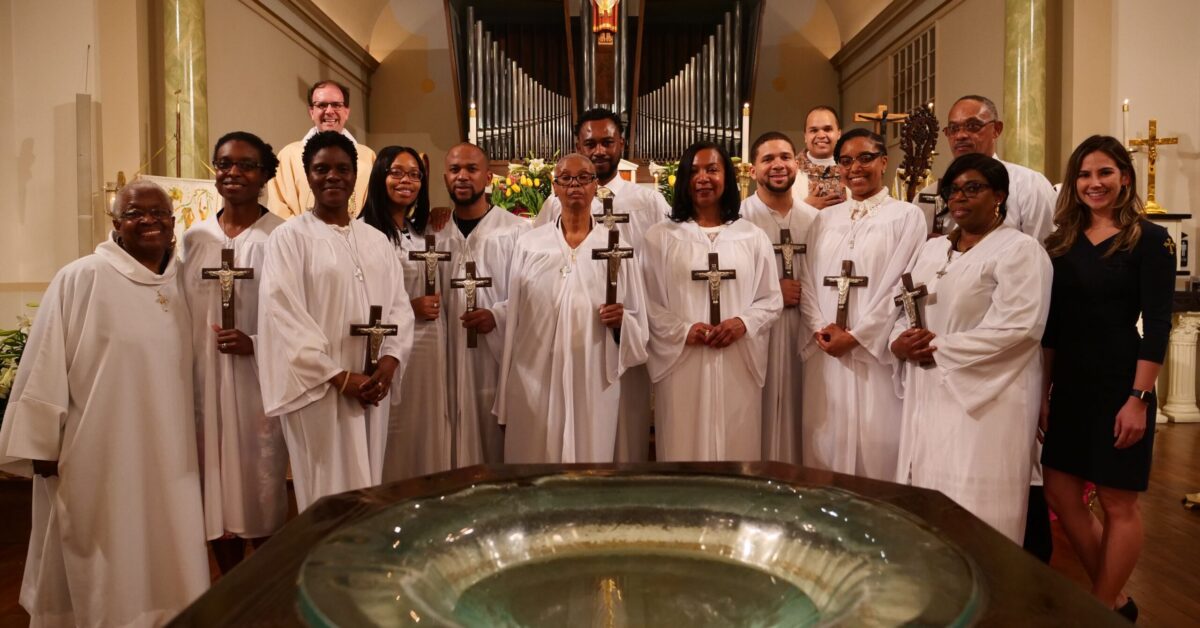
The Adult Catechumenate and Christian Formation: A Holistic Faith Formation Process
At the conclusion of our introduction to Part I of our book Journey to Jesus, Rhoda and I write: “A visit to each of these four congregations on a Sunday would reveal differences in styles of worship, preaching, and communal expressions—all part of the contextualization of the ministry in these disparate congregations. But they share a commitment to a holistic faith formation process that has shaped the missional ethos of each congregation in similar ways” (Journey to Jesus, 16-17). As my students prepare to read about those four congregations next week, they asked these questions about this holistic faith formation process, or The Way, as it is called at Phinney Ridge Lutheran Church in Seattle, Washington (as we read the first several chapters of Paul Hoffman’s Faith Forming Faith). I’ll give brief answer to these questions, perhaps questions you, the readers of our blog, have asked as well.
- In the context of a post-modern world that doesn’t inherently embrace the Christian
faith, how do you get people to buy into their faith journey?
With intentionality and commitment. The unbaptized are seeking something that has theological, spiritual, and embodied depth and substance. The assembly’s commitment to a process that bears witness to their own formation into biblical and evangelical depth and substance is the strongest witness toward buying into such a faith journey.
- From where has the disconnect come between faith life and church life? How can post-baptismal instruction bridge that gap?
The enlightenment and normal nihilism have bred this disconnect. Faith life is considered an individual, inner-spiritual matter devoid of public expression. Church is a voluntary association of like-minded individuals, not the body of Christ engage in a journey together into Christ’s kingdom in the power of the Spirit. Post-baptismal instruction (mystagogy) explicitly seeks to connect the experience of the rites of initiation with the baptismal life within this particular baptismal assembly and to show how the baptized live out together their baptismal identity.
- Should one encourage current members to participate in the catechumenate as you introduce it for the first time?
Yes, without question! This is the best way for the catechumenate to take hold of the imagination of a congregation and to seek to form its baptismal identity.
- How does the catechumenate fit into other educational opportunities at a congregation?
Since the catechumenate is ultimately a way of life for the congregation, it should provide the metanarrative shape and direction to all the other educational endeavors of the congregation. Those offering should “fit” the general aim and direction of the catechumenate.
- What is the intent of the timing of the principal catechumenal rites within the church year? What are the connections between the rites and the biblical metanarrative?
The principal rites—Rite of Acceptance/Enrollment; Rite of Election; and the Rites of Initiation—are all organized around their culmination in the Rites of Initiation. The Rites of Initiation are often associated with the Paschal Triduum, and much of the imagery and ritual symbolism arises from the primary baptismal metaphor of death and resurrection. But they don’t have to be. They can be associated with other principal feasts such as Epiphany or Pentecost or All Saints’ Day. When associated with those feasts the catechumenal language needs to draw upon other primary baptismal imagery such as new birth and the pouring out of the Spirit. The other rites fall in sequence with the Rites of Initiation and so have no inherent association with certain feast or seasons, although when organized around a paschal cycle the Rite of Acceptance often falls on Advent 1 and the Rite of Election on Lent 1.