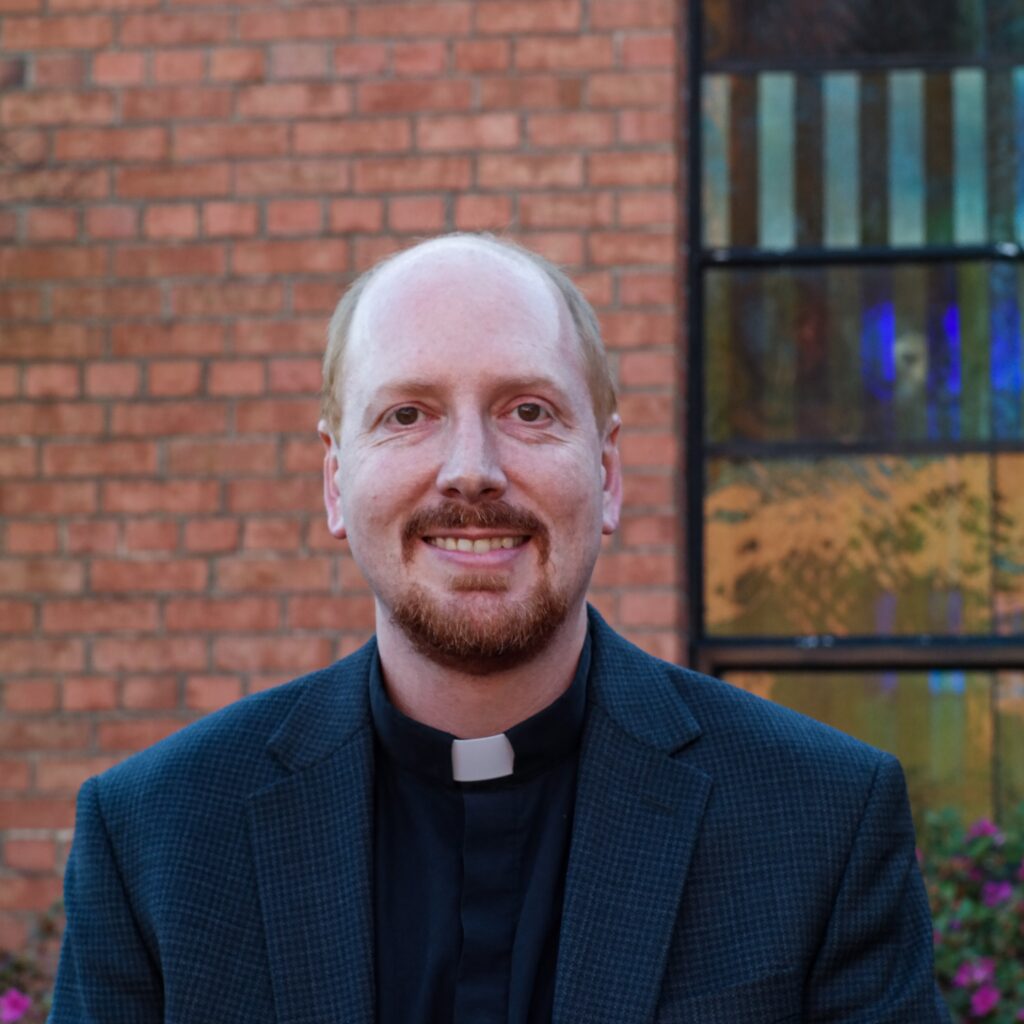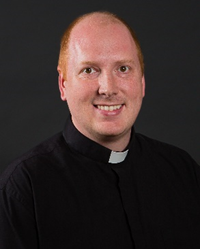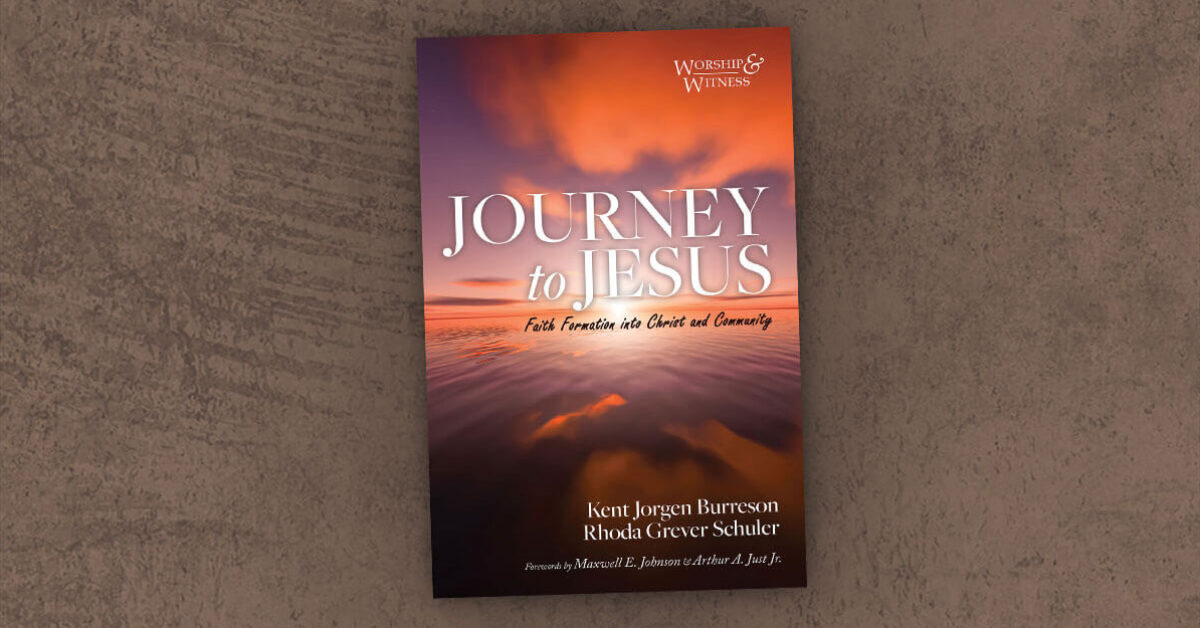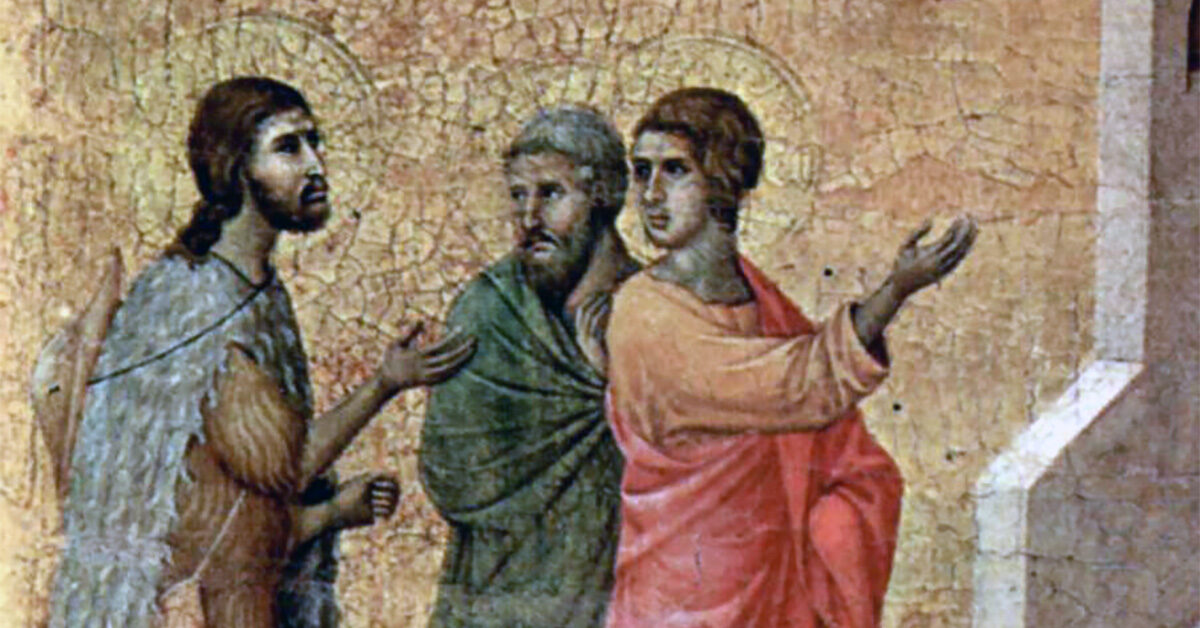
Last month I (Rhoda) had the privilege and joy of serving as the keynote speaker at the LCMS Northwest District Youth and Family Ministry Conference, held at Camp Lutheridge in Coeur d’Alene, Idaho. The theme of the conference, “Formed,” was a great opportunity to introduce some of the resources Kent and I have promoted through this website and our book, Journey to Jesus. For two of the sessions, the whole group (about 50 people) practiced the African Scripture Reflection Method and Luther’s Four-Strand Garland Scripture Reflection. I also facilitated a breakout session for those interested in the Visualization Method. Three people attended: DCE Scott Thurman (St. John Lutheran Church, Vancouver, WA), Deaconess Amanda Mumm (Immanuel Lutheran Church, Twin Falls, ID), and DCE Ethan Mirly (St. John Lutheran Church, Palmer, AK).
At our next plenary gathering, the three reported to the whole group what the process was like and presented their end “product,” a haiku poem based on the biblical text they had heard and discussed. Scott kindly wrote this narrative of their creative process.
I was so amazed by the workshop breakout session entitled Visualizing Scripture. I worked with two other individuals, Amanda and Ethan, and we confronted the text involving Jesus washing the feet of the disciples. After reading it several times we shared important takeaways from this story. Each of us was experiencing the passage from different angles, and I was so impressed with the way our group shared things that stood out; images that caught our attention. After we shared and listened to each other, we began to imagine how we might present discoveries and excitement. At first, we were reaching far and wide, making connections with Old Testament and New Testament passages. But Dr. Schuler gently encouraged us to narrow our focus and to pay attention to strong motifs. Hands, feet, towel, water, baptism. After some struggle to distill our thoughts, we fashioned our ideas into a haiku. From 45 minutes of great discussion and shared insights, three short lines, a handful of words and syllables, emerged. In a haiku every word counts, and we took some time shaping and clarifying our poem. The learning from each of us felt meaningful, and we had grown closer through the process.
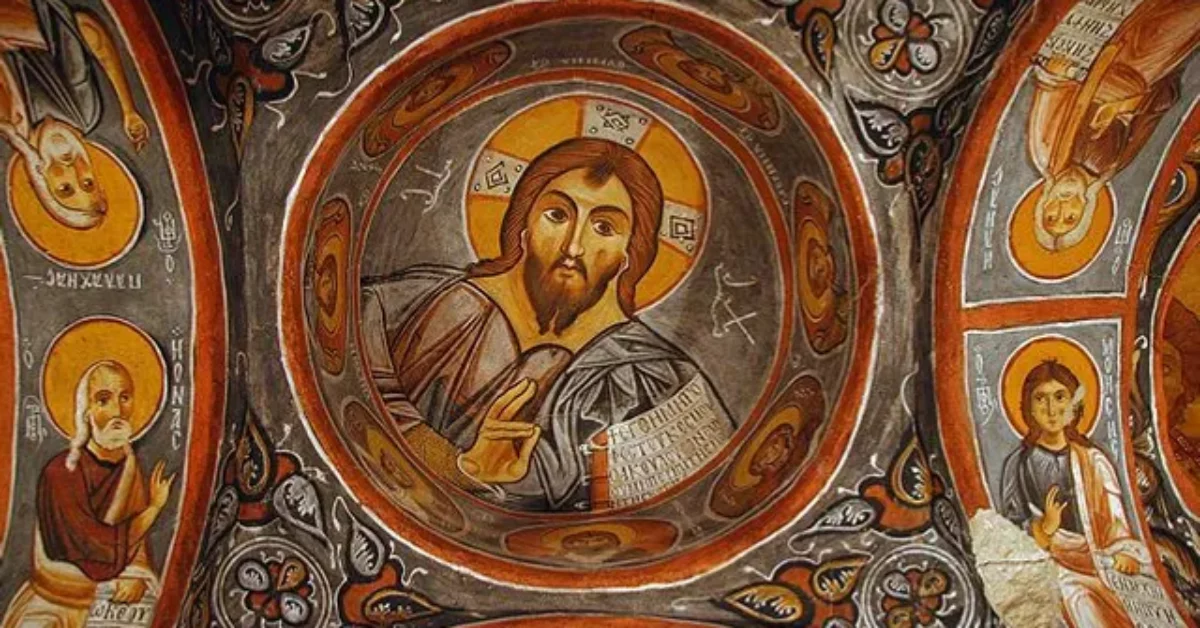
Here’s their haiku. Click on the image to watch it; Scott is in the middle.
By reflecting on the process, he named the strengths of this method. First, it deepens the meaning of the particular Scripture passage for the participants, forming their faith in Christ; and second, it forms the participates into community. Scott wrote:
Although the presentation of the poem took just seconds to share, we all felt that the time spent would last for a very long time. In this process the audience takes in a “product or presentation” that they did not have a hand in shaping. They may receive it and it does not have nearly the impact it had on each of us who created it. Their reaction, somewhat subdued, was not a measure of the experience we had as a team. In debriefing the presentation afterwards, it became clear to my colleagues and me that we had gained so much more from the process, and that the learning was much deeper and more significant for us. We realized that regardless of how seemingly simple our creation of a haiku was, what we created had a lasting impact. The joy and blessing in our discussion and the listening to one another had built friendships.
This past week brought this 7 week catechumenate course to a close. With some regret for me personally, because I can no longer, as I tell me students, be the apostolate for the catechumenate—at least to them in the course. But I can in this blog post toward you. In this last reflection I’ll highlight a number of things from the last week of class that I believe brought light and life to the students, and, of course, to me.
Family Discipleship Initiative
One of the aims of the catechumenate is forming disciples for life. That means that discipleship formation continues after the catechumenate ends, including in the home. My colleague, Dr. Mart Thompson, spoke to the class about extending discipleship formation in the home through the LCMS Family Discipleship Initiative. It’s goal is to shape the discipled life of parents so that they might disciple their children.
Fostering a Missional Habitus
These and similar efforts aim to foster a mission habitus upon which we reflect in chapter 6 of Journey to Jesus. In the words of Alan Hirsch, the catechumenate shapes a congregation that lives as “people of the Way,” or as one of our catechumens put it, living the “forever walk.” We have embraced the vision of the “forever walk” through the course’s rhythm.
A congregation that journeys as people of the Way is Redeemer Lutheran Church, The Bronx, New York. Rev. Dr. Dien Ashley Taylor and Deaconess Raquel Rojas spoke to the class about this “praying community of service that receives, teaches, celebrates and shares Christ Jesus” (Redeemer’s mission statement). Seeing the catechumenate “in the flesh” of Redeemer’s life through the ministry of these two servants of God was enlivening and emboldening.
Catechumenal Resources
Interacting with Pastor Taylor and Deaconess Rojas provided the students with resources for shaping a catechumenate in their calls. That has been one of the primary aims of the course, to resource the students. I bring some of those resources to you now:
Images of Baptismby Maxwell Johnson, an excellent resource for study of baptism
The Baptismal River by Richard Davenport, another excellent resource for baptismal study
Sacramental Streams by Richard Davenport for informing preaching and teaching on baptism
Living Under Waterby Kevin Adams a Reformed pastor’s baptismal reflections
Resilience
This resourcing aims to strengthen resilience in catechumenal practice and in congregational life. As we demonstrate in the Epilogue to Journey to Jesus all the congregations we explored manifested a hearty resilience throughout the Covid pandemic, a significant amount of that resilience attributable to their catechumenates. And as we observe at the very end, while we make no claim that the catechumenate is “the answer” to the 21st century malaise of the church, we commend these congregations’ “deep wisdom, infectious joy, and confidence in the power of the gospel that permeates their reflections. We, too, believe that Jesus knows his way out of a grace, and so does his bride, the church” (175). And so, by the grace of God, do all of us who journeyed in the catechumenate course together.
Throughout the 7 week catechumenate course—which comes to a close next Thursday— I have tried to expose students to primary ritual experiences and the methods of Bible study that introduce catechumens to the biblical metanarrative centered in the Lord Christ Jesus. We have experienced the rites of acceptance, election, and baptismal thanksgiving, the latter this past Thursday. We gathered around the font in the Chapel of St. Timothy and St. Titus, gave thanks for the Word and waters of baptism and of all the waters that pour over us, affirmed the Lord’s baptism of us into the name of the Father, Son, and Holy Spirit, and prayed that God might lead us into the baptismal way of truth and life. [If you are interested in this rite of baptismal thanksgiving, send me an email, burresonk@csl.edu. Some of the texts are copyrighted and so I can’t provide them here, but I’ll aim to make an outline of the service available on my Substack site (https://substack.com/@kentjburreson).] The students asked questions about how and when to incorporate this rite into the Sunday liturgy, and all recognized how it could be formational toward a baptismally oriented life.
We have also experienced three primary Bible study methods often employed in the catechumenate: The African (Lambeth) method, the Luther 4-Strand Garland method, and the Visualization method, the latter on Monday. The Visualization method entails:
The Gospel text is read two times.
Each team collaborates creatively to visualize the story in some way. They may choose to
Act it out
In a very literal way; or
By setting it in a new context
Draw it out, using
A cartoon format or
Artistic rendering
Write a song. Could be a simple, memorable refrain, or a metered hymn employing imagery conveying the text. Perhaps …
To the tune of a familiar hymn or
To the tune of a secular, popular song
Write a poem or haiku.
Once the groups have completed their visualization each in turn conveys the piece to the entire group in a manner appropriate to the genre they chose: acting it out; discussing the drawing; singing it; reading it.
As is always the case my students were creative in reflection on the gospel reading for the 6th Sunday of Easter, John 14:15-21. Centering things on Jesus’ words, “I will not leave you as orphans; I will come to you,” they composed a hymn set to Luther’s “Lord, Keep Us Steadfast in Your Word,” an AI-generated contemporary image of Jesus welcoming an orphan through the baptismal waters, a poem, and a haiku. Summarizing what students said regarding the strengths of this approach, “It incorporated them into probing the text and developing something that represented that encounter. Since this was done in small groups, everyone contributed and each of their lives of faith were valued by their incorporation into the body of Christ through this creative process.” It’s as though the Visualization method is deepening the baptismal life reflected in the rite of baptismal thanksgiving. What the students did in class had a formative power upon their baptismal lives, and certainly on the baptismal life of this unworthy professor.
The last two weeks of my catechumenate class we have focused on the history of conversion and the catechumenate in the church and conversion from the divine side. Alan Kreider’s The Change of Conversion and the Origin of Christendom has facilitated the exploration of this history emphasizing the intertwining elements of believing, belonging, and behaving for the early church’s process of conversion. If you haven’t ever read Kreider’s book, it was an eye-opening experience the first time I read it. I think it was similarly revelatory for my students. Kreider decidedly focuses on the human elements of conversion manifest within the writings of the ante-Nicene and post-Nicene church fathers. He indicates how the Christian community attended to those who were attracted to the Christian community’s way of life as exemplified in what they believed, how they engaged community life, and how they behaved in ways that were at odds with cultural manners and ways. Believing—belonging—behaving all intertwined to create the crucible for a profound experience of conversion. The church today needs to give attention to the balance of those human experiences in conversion. I am convinced that the catechumenate facilitates that balance of experience in the church’s witness and life.
Focusing on the human elements in the history of conversion led to consideration of a Lutheran theology of conversion. Lutherans, perhaps surprisingly to my students, recognize the dual realities in conversion, the divine side and the human side (Francis Pieper uses the terms transitive and intransitive). Unsurprisingly, Lutherans navigate a tension in these two sides to conversion and don’t resolve them. On the divine side, God is entirely the agent of conversion through the Word and God’s means of grace (divine monergism). But, as the Lutheran Confessions indicate, people are not blocks of wood or stone in conversion. God is not working on inanimate objects, but upon God’s creatures. Working on us to bring us to trust in God, the Father employs his spoken and visible Word upon our creaturely facilities: minds, hearts, and bodies. While we humans contribute nothing to our own conversion, nonetheless we are actively involved in our conversion through God’s working upon us through these decidedly creaturely channels. As I indicated to the students, this is one of the most important elements of the course theologically. In facilitating conversion through the catechumenate, the church must give attention to both dimensions in conversion. God converts us to himself, but we humans perceive the effect of God’s working through creaturely and tangible means: our thinking, feeling, behaving, repenting, sense of belonging and relationship, etc… God alone converts US through our very creatureliness. Next week we’ll begin to explore the various dimensions of that human side of conversion.
Last week I took a hiatus from blogging on the catechumenate course I am teaching at the seminary. The last three class periods, however, have provided some “eye-opening” moments. It’s not surprising that an experience that leads catechumens to the revelation of the mysteries of the rites of initiation should pop with eye-opening moments. In this case at least three things have proven so revelatory. The first unit of the course has focused upon the catechumenate’s liturgies, from the rites of acceptance and election to the rites of initiation. As we have been exploring the rites, we have been reading through Journey to Jesus as part of introducing the contours of the catechumenate in specific contexts, in this case the four congregations that Rhoda and I researched. I would point to three things as eye-opening to the students (and they never cease to have the same effect on me): 1) The unique stories of the catechumenate in our four congregations; 2) The catechetical potentials of the African Bible Study method; 3) The profound effect of the post-baptismal anointing in initiation.
First, the unique stories. I had the students give demonstrations to the class representing each of the congregations, trying to convince us of the benefits of that congregation’s catechumenal structures and practices. They all sought to enter into the individual, contextual character of the catechumenates at St. John, St. Mary’s, Living Faith and Redeemer. It was “eye-opening” to see how very diverse catechumenates can be so compelling in initiating new Christians into the Christian assembly.
Second, the African Bible Study presents to many students a completely new way of exposing people to the Word of God. They noted that it introduces catechumens to the primary gospel story, facilitates the kinds of questions they bring to the text, provides an opportunity for theological and spiritual exploration without having to feel that one has to provide the right answers, and allows—as one student said—the Holy Spirit through the Word to do the primary work of bringing people to faith in the God and Father of our Lord Jesus Christ in the Spirit. What would not be “eye-opening” about that?
Third, I had them watch the movie This is the Night about the catechumenate at a Roman Catholic congregation in Texas in the early 90’s. While the movie is dated, now some 30+ years old, I can remember the first time I watched it in my doctoral studies at Notre Dame (it was new at the time) and how “eye-opening” it was for me. The post-baptismal anointing (confirmation) was “eye-opening” because the priest pours so much oil on the neophytes’ heads and then rubs it into their faces. “Do all Roman Catholic congregations use that much oil?” (Answer: No) “How would most LCMS members receive an anointing like that?” (Answer: Probably in 90% of cases, not well. But that doesn’t mean oil can’t be used.) But their eyes were opened to how anointing can be part of the way in which the neophytes experience the pouring out of the Spirit in their baptism.
I am thankful that my students’ eyes have been opened in these ways by catechumenal practices even as the church rejoices in all the “eye-opening” experiences of these Great 50 Days!
Back from July 15-August 20, 2021 Rhoda and I ran a series of blog posts on Diana Macalintal’s aptly titled book published by Liturgical Press in Collegeville, Minnesota. Macalintal is one of the founders, along with her husband Nick, of TeamRCIA.com, A Roman Catholic group promoting best practices in the Rite of Christian Initiation of Adults or RCIA. Macalintal in her excellent book by affirming that the parish is the curriculum grounds the basic recognition of why there is faith formation at all: it is for incorporating a person into the life of the Body of Christ. And that person is incorporated into a specific Christian community that lives together in a particular place at a particular time. The person being incorporated comes to know Christ in and through the life of that community gathered around Word and sacraments. But it is the community that mediates that relationship to the neophyte (whether unbaptized, baptized, or confirmed). Thus, the parish IS the curriculum.
My students explored Macalintal’s first chapter this week and highlighted these quotes from the 1st chapter as beneficial for attending to her argument:
We start to see Baptism more like a verb than a noun (17).
Living the Christian way of faith requires, then, a daily discernment of how God is calling us to respond by faith to our baptism (18).
Not a textbook or a program but rather our full, conscious, and active participation in the liturgy of the church is the primary and essential way we learn what it means to live as Christians (18).
Good parish life fosters and nourishes faith. Poor parish life may weaken and destroy it (23).
Because your parishioners have been washed, anointed and clothed as priests, prophets, and kings, enlightened with knowledge of Christ, endowed with the gifts of the Holy Spirit and strengthened by the Eucharist to grow into the full stature of Christ for doing Christ’s mission, they are the best teachers for your catechumens and candidates (24).
If we are to announce this at every level and moment, we cannot limit our method of proclaiming it and teaching it to just a weekly meeting in a classroom, no matter how excellent that gathering might be (26).
Your parish as the curriculum is aimed toward forming the baptized to live out of their baptismal identity. Formation to live out baptismal identity comes not primarily through “head” knowledge but through experiential knowledge. As Macalintal says, “We learn by doing, especially by praying” (18). This experiential learning comes through participation in the community of Christ, especially through the assembly’s gathering for worship. Through the corporate liturgical experience catechumens and neophytes are drawn into life with Christ. They receive the eyes needed to see the world as God sees it and perceive the Triune God’s story as being brought to completion for, in, and on behalf of His creation. Everything that the church does flows from its corporate worship and catechizes everyone in the body of Christ. As Macalintal indicates, “Catechesis is helping believers open their hearts to encounter the living Christ active in the church” (21). When baptism matters in this way then the baptismal community—the parish—matters, because it immerses all into Christian life within the community. In this way the catechumenate is an apprenticeship in faith and in the life of faith led by the parish that responds to God’s living voice; encounters Christ’s mercy among those who receive and offer forgiveness; turns to the Father in prayer; walks with and serves those in need (27).
Hopefully these quotations help you focus on what is at the center of your catechumenal and baptismal formation in this Holy Week as the elect reach the foundational pinnacle of their formation.
Blessings as you celebrate the Paschal Feast in sincerity and truth in this most Holy Triduum!
At the conclusion of our introduction to Part I of our book Journey to Jesus, Rhoda and I write: “A visit to each of these four congregations on a Sunday would reveal differences in styles of worship, preaching, and communal expressions—all part of the contextualization of the ministry in these disparate congregations. But they share a commitment to a holistic faith formation process that has shaped the missional ethos of each congregation in similar ways” (Journey to Jesus, 16-17). As my students prepare to read about those four congregations next week, they asked these questions about this holistic faith formation process, or The Way, as it is called at Phinney Ridge Lutheran Church in Seattle, Washington (as we read the first several chapters of Paul Hoffman’s Faith Forming Faith). I’ll give brief answer to these questions, perhaps questions you, the readers of our blog, have asked as well.
In the context of a post-modern world that doesn’t inherently embrace the Christian
faith, how do you get people to buy into their faith journey?
With intentionality and commitment. The unbaptized are seeking something that has theological, spiritual, and embodied depth and substance. The assembly’s commitment to a process that bears witness to their own formation into biblical and evangelical depth and substance is the strongest witness toward buying into such a faith journey.
From where has the disconnect come between faith life and church life? How can post-baptismal instruction bridge that gap?
The enlightenment and normal nihilism have bred this disconnect. Faith life is considered an individual, inner-spiritual matter devoid of public expression. Church is a voluntary association of like-minded individuals, not the body of Christ engage in a journey together into Christ’s kingdom in the power of the Spirit. Post-baptismal instruction (mystagogy) explicitly seeks to connect the experience of the rites of initiation with the baptismal life within this particular baptismal assembly and to show how the baptized live out together their baptismal identity.
Should one encourage current members to participate in the catechumenate as you introduce it for the first time?
Yes, without question! This is the best way for the catechumenate to take hold of the imagination of a congregation and to seek to form its baptismal identity.
How does the catechumenate fit into other educational opportunities at a congregation?
Since the catechumenate is ultimately a way of life for the congregation, it should provide the metanarrative shape and direction to all the other educational endeavors of the congregation. Those offering should “fit” the general aim and direction of the catechumenate.
What is the intent of the timing of the principal catechumenal rites within the church year? What are the connections between the rites and the biblical metanarrative?
The principal rites—Rite of Acceptance/Enrollment; Rite of Election; and the Rites of Initiation—are all organized around their culmination in the Rites of Initiation. The Rites of Initiation are often associated with the Paschal Triduum, and much of the imagery and ritual symbolism arises from the primary baptismal metaphor of death and resurrection. But they don’t have to be. They can be associated with other principal feasts such as Epiphany or Pentecost or All Saints’ Day. When associated with those feasts the catechumenal language needs to draw upon other primary baptismal imagery such as new birth and the pouring out of the Spirit. The other rites fall in sequence with the Rites of Initiation and so have no inherent association with certain feast or seasons, although when organized around a paschal cycle the Rite of Acceptance often falls on Advent 1 and the Rite of Election on Lent 1.
As the baptismal season of Lent reaches its culmination in Holy Week and the Great Triduum, so we’ll transition our blog into a series of reflection on teaching the catechumenate. I (Kent) will start my 7 week half-semester course on the adult catechumenate and Christian formation at Concordia Seminary, St. Louis. This is now the fourth time I have taught this course, itself a fruit of Dr. Schuler’s and my work on the catechumenate. It will be the first time I have used our book, Journey to Jesus, as part of the course. Here in the blog I intend to reflect on the questions, observations, and issues posed, addressed, and critiqued in our class of eighteen students. This time they all come from our residential pastoral formation program, both post-internship and pre-internship students, and some international students.
With this being the fourth time I have taught the course, I think I have developed some measure of pedagogical wisdom in terms of how I teach it, although I am sure the students will teach me more this time around as well. I have realized that exposure to the experiential elements of the catechumenate—especially the rites of acceptance, election, and baptismal remembrance and the Bible study methods often employed in the catechumenate—need to be a formative pedagogical experience in the course. To provide a glimpse of the structure of the course, here is the course outline:
Unit #1: The Structure, Rituals, and Rites of the Catechumenate Course Introduction and the Ritual Context for Baptism and Conversion The Modern RCIA and the Lutheran Equivalent Welcome to Christ A Holistic Congregational Model: The Road to the Catechumenate Experiencing the Rite of Enrollment The Catechumenal Journey Visit to RC Easter Vigil The Catechumenal Journey Experiencing the African Bible Study Method Reflecting on Ritual and the Catechumenate Unit #2: History of the Catechumenate
History of Baptism and The Historical Contours of Conversion until Constantine Experiencing the Rite of Election The Historical Contours of Conversion through the development of Christendom The Historical Contours of Conversion: Reformation to the Present Experiencing the Luther 4-Strand Bible Study Method Unit #3: Adult Faith Formation The Theology of Conversion Experiencing the Rite of Election The Shape of Conversion Experiencing the Rite of Affirmation of Baptism Personal and Congregational Transformation through the Catechumenate Unit #4: The Future of Adult Faith Formation Issues in Adult Faith Formation: Catechesis, Mystagogy, and Congregational Education Experiencing the Visualization Bible Study Method Issues in Adult Faith Formation: Mission, Vocation and Hospitality Planning a Catechumenate
If you are interested in seeing the entire syllabus I’m happy to share it. Email me at burresonk@csl.edu.
The author of Hebrews, alluding to the account in Genesis 18 of the three men/angels/the Lord visiting Abraham and Sarah, wrote,
“Let mutual love continue. Do not neglect to show hospitality to strangers, for by doing that some have entertained angels without knowing it” (Heb 13:1-2).
Shortly after returning home from the Best Practices Ministry 2026, all the attendees (I assume) received an email from Jeff Schrank, pastor of Christ Lutheran in Phoenix, which hosts the conference. Jeff wrote:
“Would you please be willing to reflect upon how this event impacts you, your team, your church? I will share these thoughts with the congregation and the army of volunteers that wanted to encourage you last week.”
Here, Jeff, is my response to your email. This year was my third time attending BPM, and what amazed me that first year continues to blow me away, namely the astonishing love and hospitality of the people of Christ Church, especially those who serve behind the scenes. This year was the first time I was able to thank in person the women who clean and replenish the restrooms during sessions. In all my restroom breaks at BPM I have never encountered an empty paper towel or soap dispenser, trash on the floor, an unflushed, dirty toilet, or (most amazingly) a stall lacking toilet paper. To walk into fully stocked, clean restrooms at all times and in all places (on the church/school campus) is no small thing; it is emblematic of the beautiful hospitality that is a hallmark of BPM. And hospitality, while it may not be among the fruits of the Spirit, is a concrete way of expressing the love of Christ for all.
This year was also the first time I had occasion to speak with one of the hundreds of volunteers (pictured here) who make attending BPM an extraordinary experience of love and hospitality. Since I have forgotten her name, I’ll call her Grace. She was cleaning the tables outside the entrance to the building where the meals were served and took time to share with me that the people of Christ Lutheran consider it an honor and joy to serve in any way, even the lowliest of tasks. Grace used to be on restroom duty and was a bit miffed to have been transferred to the more public task of table wiping! That she and others did this service without seeking honor or praise for their work was clear; they were motivated by the love of Christ for them and their desire to provide a few days of encouragement, community, and respite for professional and lay workers in God’s Kingdom.
The author of Hebrews is not the only New Testament writer who exhorts Christians to practice hospitality and to pair this virtue with love; no less that Peter and Paul did so as well.
The end of all things is near; therefore be serious and discipline yourselves for the sake of your prayers. Above all, maintain constant love for one another, for love covers a multitude of sins. Be hospitable to one another without complaining. Like good stewards of the manifold grace of God, serve one another with whatever gift each of you has received (1 Peter 4:7-11).
Let love be genuine; hate what is evil, hold fast to what is good; love one another with mutual affection; outdo one another in showing honor. 11 Do not lag in zeal, be ardent in spirit, serve the Lord. Rejoice in hope, be patient in suffering, persevere in prayer. Contribute to the needs of the saints; extend hospitality to strangers (Romans 12:9-13).
Thanks be to God for the love and hospitality of all at Christ Church Lutheran!
I, Rhoda, also had the joy of presenting at a breakout session at Best Practices Ministry last week. After a brief presentation that began with the “grim statistics” of the decline in church membership in recent decades, moved to the need for adult faith formation, and zipped through a quick summary of the stages of the adult catechumenate, my formal presentation ended with brief descriptions of three models for small group reflection on Scripture. Common to all three is use of the Gospel texts from the three-year lectionary. The focus on Gospel readings in these small groups introduces those unfamiliar with the Bible to the person of Jesus – not doctrines or teachings about Jesus – but the stories of Jesus, what he said and did. One resource on the adult catechumenate, describing the African method, says, “this method turns Bible study away from the intellectual pursuit of knowledge about the text toward an attitude of listening to what God is saying through the text” (Go Make Disciples, 140).
After my introductory presentation, we broke up into small groups that experienced the three models, led by three of my former students, all serving as Directors of Christian Education in parishes. The joy I felt observing these young women leading the small groups with a gentle but firm hand, with the skill of servant leadership, and with empathy as participants shared their reactions to the text was overwhelming — so much so, that I completely forgot to take photos of them; but I found these on their church’s websites.
Thanks be to God for these women and their service to the church!
Alanna Davis CSP ’16 Epiphany Lutheran Church Kenmore, WA
Jackie Druckhammer CSP ’14 St. John Lutheran Church Vancouver, WA
Heather McCormick CSP ’14 Faith Lutheran Church Topeka, KS