
Biblical Literacy and Catechesis
A January 2026 study by the American Bible Society reveals that 42% of Americans did not read the Bible this past year. An additional 20% read the Bible only once or twice. Those who read the Bible once a month or less were 13%. So, 75% percent of Americans are “Not Bible Users” or “Occasional Bible Users.”[1] Even more staggering, in February 2017, a similar survey revealed only 57% knew Mary Magdalene was the first person to see Jesus after the resurrection. And 56% knew Peter was the disciple who denied Jesus.[2] What research reveals, and my 17 years of pastoral experience confirms, is that Americans, Christians included, are becoming increasingly biblically illiterate. We don’t know the basics of the Christian story and how it all connects.
In some respects, there is “nothing new under the sun” (Eccl 1:9). Luther faced biblical illiteracy in his day. It was bad enough that he exclaimed, “Mercy! Dear God, what great misery I beheld! The common person, especially in the villages, has no knowledge whatever of Christian doctrine.”[3] Before Luther, there were Deacon Deogratias of Carthage and Bishop Augustine of Hippo, who struggled with biblical illiteracy amid the influx of new converts following Emperor Constantine’s edict of Milan.[4]
The response of biblical illiteracy for Luther, Deogratias, and Augustine was not mere lament, but a deliberate, meticulous, systematic, and nuanced approach to catechesis that sought to cultivate a love of the One True God and a desire to dwell with him here in time: weekly in the Divine Service, and daily through confession and absolution, witness, service, and acts of mercy in the assumption of our respective vocations; and there again in eternity. For Luther, this response was his Small and Large Catechisms. For Augustine, it was a revamp of Hippolytus’s, Tertullian’s, and especially Ambrose’s third-century Catechumenate.
Since there is no thorough, detailed, catechetical plan given in Scripture, the Church has and must always struggle to faithfully answer the question, “How do we form Christians to live their lives in, with, and under Christ?”
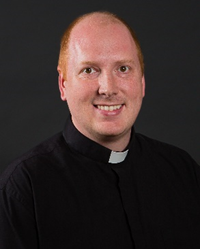
My pastoral encounters with biblical illiteracy, theological studies of catechesis, and reflection on this question led me to implement a comprehensive and cohesive approach to Christian formation, termed “Life in Christ,” which takes the genius of Luther’s Small Catechism and joins it to the framework of the Augustinian Catechumenate.
“Life in Christ” is one attempt at deliberately, meticulously, and systematically answering the catechetical question in light of our 21st-century American biblically illiterate context. My hope is that this blog series not only causes you to reflect but also helps you reflect more deeply on how we, as the Church, might form Christians to live their lives in, with, and under Christ in 2026.
[1] American Bible Society, “State of the Bible, 2026,” January 2026. https://sotb.americanbible.org/report/state-of-the-bible-usa-2026 . 6.
[2] American Bible Society, “State of the Bible, 2017,” February 2017. https://1s712.americanbible.org/cdn-www-ws03/uploads/content/State_of_the_Bible_2017_report_032317.pdf . 71-78.
[3] Concordia Publishing House, “‘Preface of Dr. Martin Luther’ in The Small Catechism,” Concordia: The Lutheran Confessions, Pocket Edition, accessed September 21, 2026, https://bookofconcord.cph.org/en/small-catechism/preface/ .
[4] William Harmless, Augustine and the Catechumenate, (Collegeville, MN: The Liturgical Press, 1995), 53