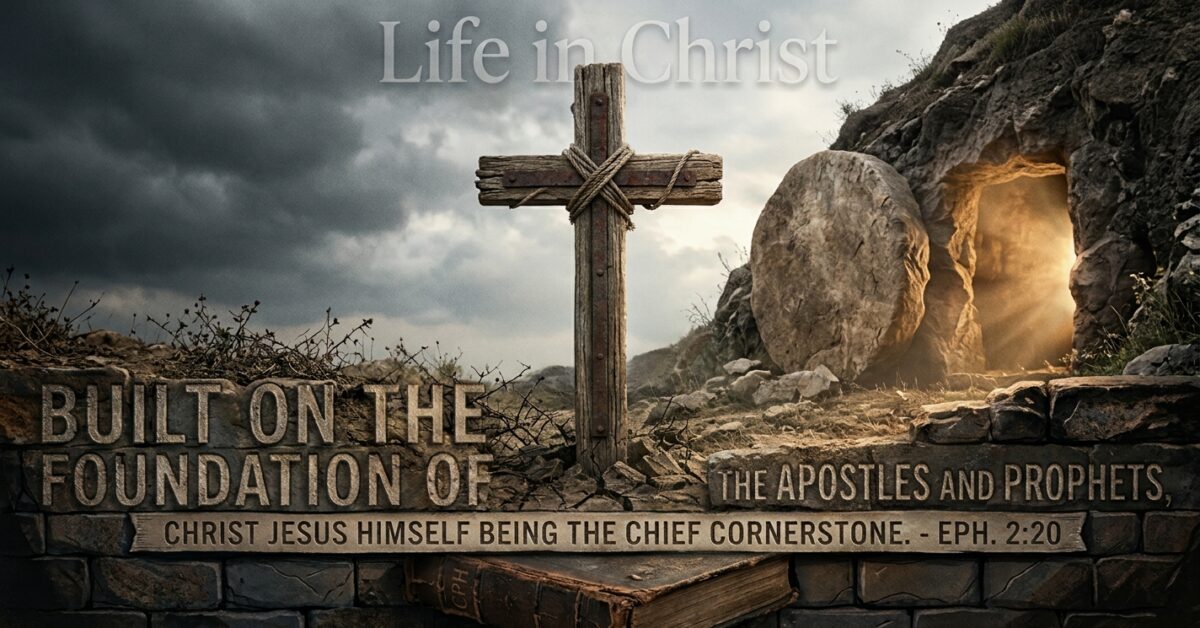
Building on the Foundation
Life in this world inevitably brings inconceivable pain: divorce, suicide, violence, betrayal, miscarriage, infertility; depression, cancer, dementia; failing health, natural disasters, and the loss of a job, home, or loved one. How can we prepare people to face the onslaught of evil from the devil, the world, and our own sinful flesh—an onslaught that makes them cry out, “Where is God in the midst of this?”
Life in Christ, the merging of the catechetical narratives of Luther’s Small Catechism and Augustine’s Catechumenate, not only situates Christians’ lives firmly in the context of the Biblical narrative of Divine presence and gives them the firm foundation of being built on “the apostles and prophets, Christ Jesus himself being the cornerstone” (Eph. 2:20), but it also gives them a broad, high, and deep framework on which to continue building and relying during life’s most difficult ethical circumstances.
Life in Christ allows Christians to encounter core theological truths: the God who is and loves life; our fearfully and wonderfully made bodies, marriage, family, and human dependency; sin, suffering, and death; the person and work of Jesus typologically connected to the vigil narratives; forgiveness, vocation, resurrection, the Church as the body of Christ, and the certainty of eternal life with our Eternal Lord. But they have not been encountered as mere propositions to be memorized, regurgitated, and graduated from. Instead, they are inwardly digested through a living narrative:
God, the Alpha and the Omega, is the God of life. He spoke creation into existence in six days. All except humans. He fashioned man’s body from “the dust of the ground and breathed into [man’s] nostrils His breath of life.” (Gen. 2:7) Knowing it was “not good that the man should be alone” (Gen. 2:18), God created his perfect complement, his wife. (Gen. 2:18, 24) God created them in his image, that they might image his goodness, love, and beauty as they care for creation. What’s more, He created them to live together in perfect unity and fellowship with Him and with each other.
When humanity threw it all away—bringing corruption, illness, and death into the world—the Lord of Life did not abandon His creation (Gen. 3:15). In the fullness of time, God took on human flesh and entered our suffering. Jesus bled, died, and paid for your sin, engraving your name on the palms of His hands. He has redeemed you, even your suffering. And risen from the dead in His immortal human body, He promises that you will join Him in your flesh/body for all eternity, free from sin, suffering, illness, corruption, pain, and death. Until that day, He has not left you or forsaken you. He remains present where two or three are gathered in His name—in Word, Sacrament, and the Christian community—until we are with him, face to face, in eternity. (Matt. 18:20, 28:19–20; Rev. 21:3–5).
As we live our lives in Christ here in time, there will certainly be myriad questions that plague us concerning morality and ethics from the beginning of life to the end of life. However, my hope in articulating Life in Christ in this brief narrative way is that you will be able to see clearly not only the foundation and cornerstone that your catechumen is firmly established on, but also how you might more easily build upon that foundation in a way that helps both you and them to be faithful unto death, and receive the crown of Life (Rev. 2:10).