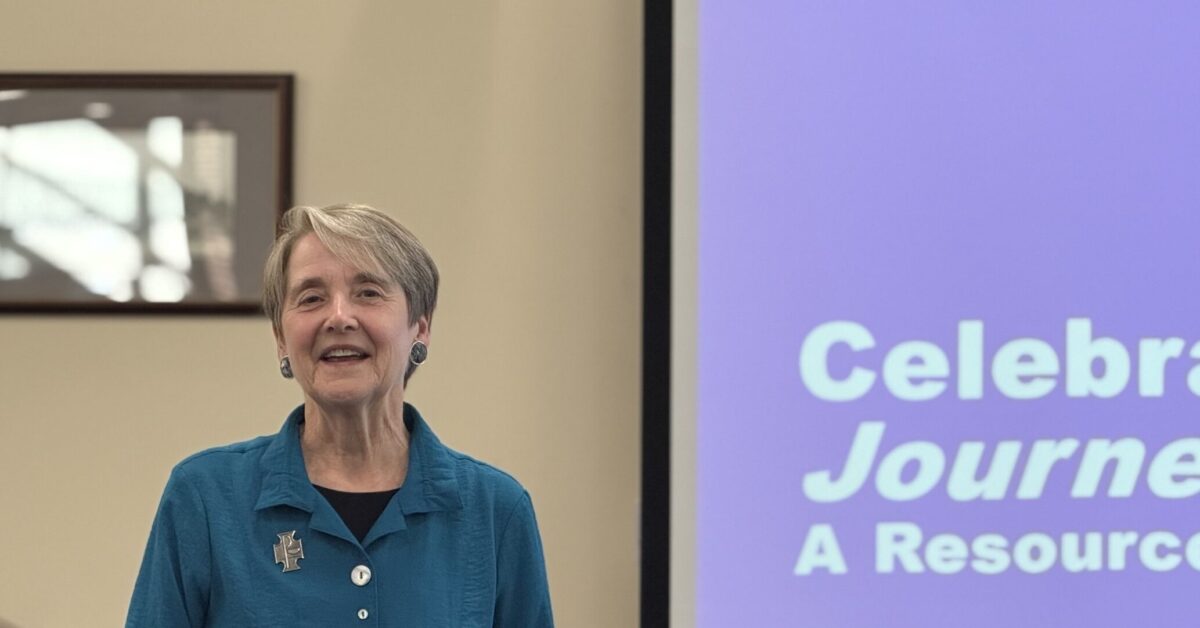
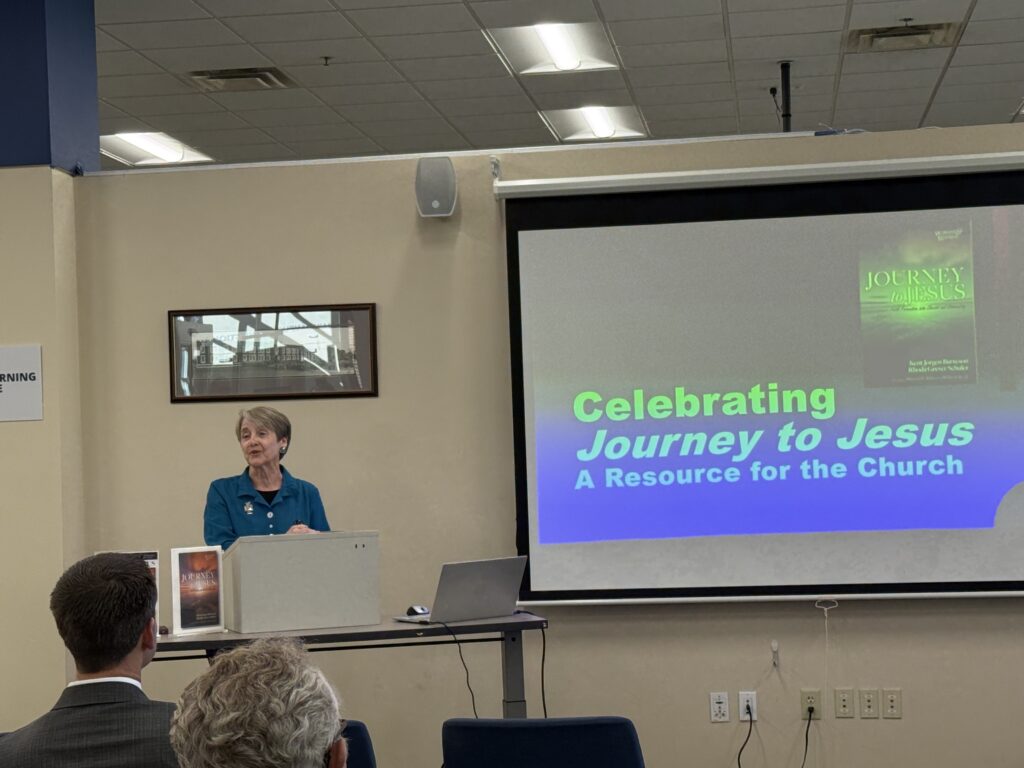
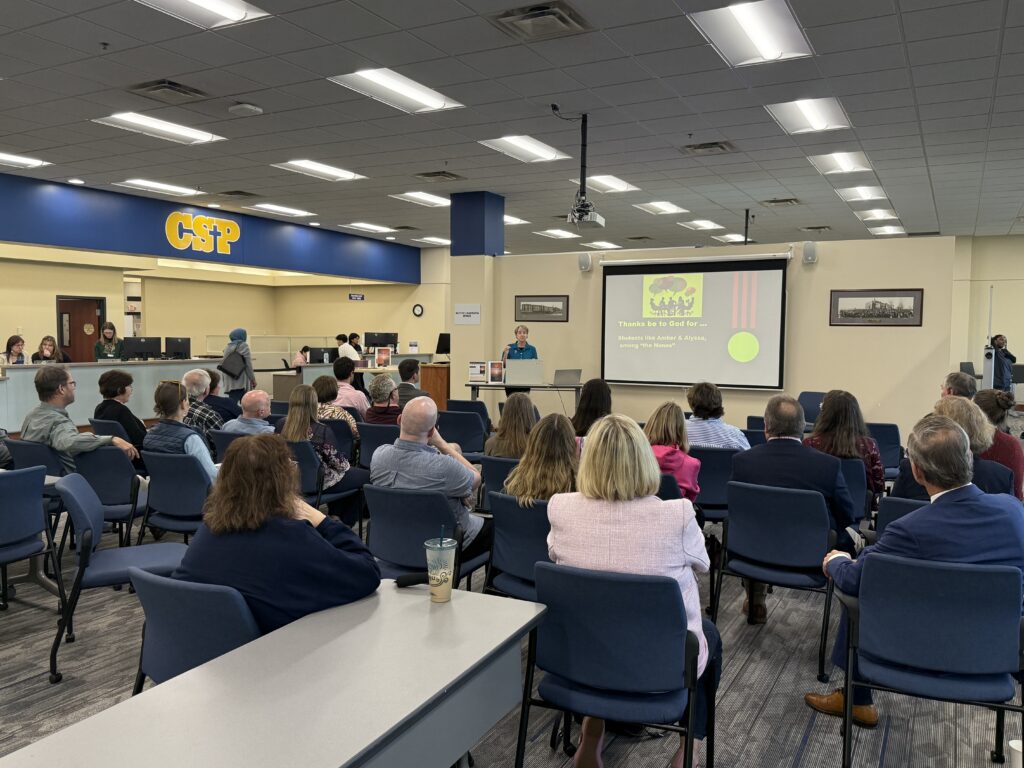
Earlier this week Concordia University, St. Paul hosted a book event to celebrate the publication of Journey to Jesus as a resource for the church. I had the “opportunity to thank publicly a host of people who helped bring this book to birth,” from my co-author, Kent Burreson—who had a vision for conducting research on the adult catechumenate and who invited me to join him in this project—to the student worker, Madi Patrow (now a DCE graduate serving in a congregation in the Twin Cities area) who “transformed my scribbled, chaotic [handwritten] interview notes into pages of order and beauty” (the quotations are from my comments at the event).
In addition to my public thanks to many, I also shared a bit about the book itself and our goals. Here’s what Kent and I submitted as our goal for the grant from the Calvin Institute of Christian Worship, which funded our initial research: “… to identify, implement and disseminate our findings about successful catechumenate practices in order to reshape and renew congregational life for American Lutherans” (emphasis added). We were a bit more modest in Journey to Jesus, closing chapter 1 with these words:
We make no claims of a magic bullet to save declining congregations,
nor do we offer a step-by-step “program” to implement
an adult catechumenate in congregations.
Instead, our research has led us to be descriptive, not prescriptive;
we narrate stories of individual lives changed
and of congregations with an ethos of outreach
in order to inspire pastors
and other church professionals committed to making disciples
to think in new ways (10).
It is our hope that people who read the book envision how they might structure an adult faith formation process that both “makes disciples” and imbues the entire congregation with a missional ethos, eager to be a winsome witness in the world.
++++++
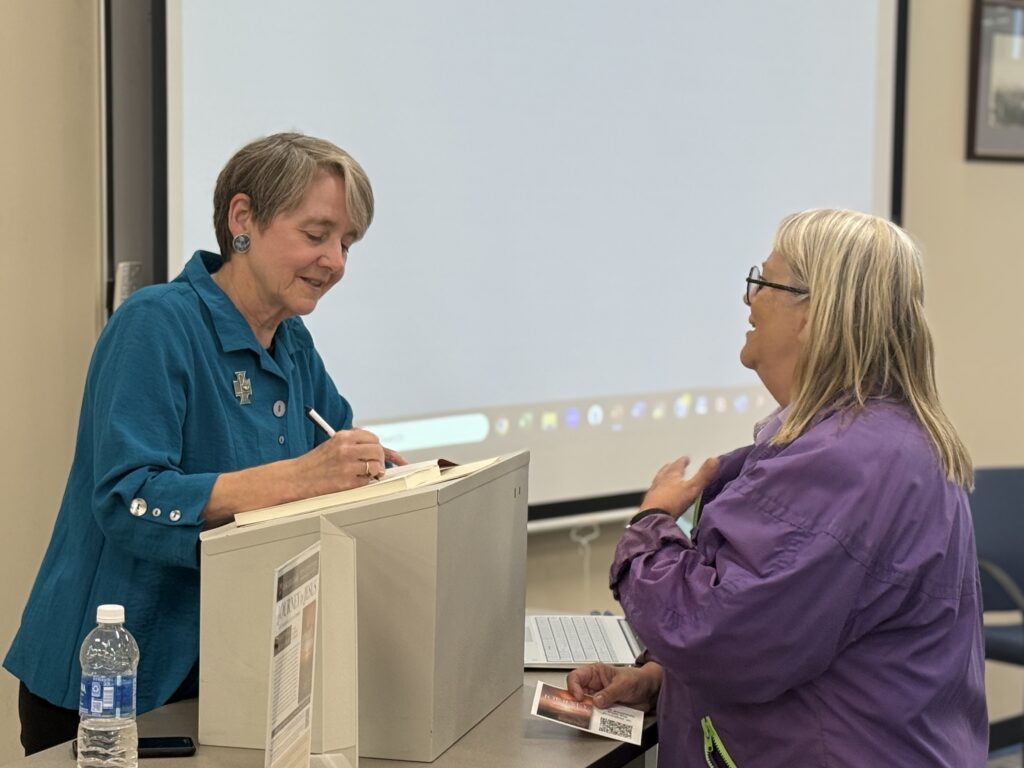
It was wonderful to have many friends and colleagues attend this event at CSP. And yes, I sold and signed more books!
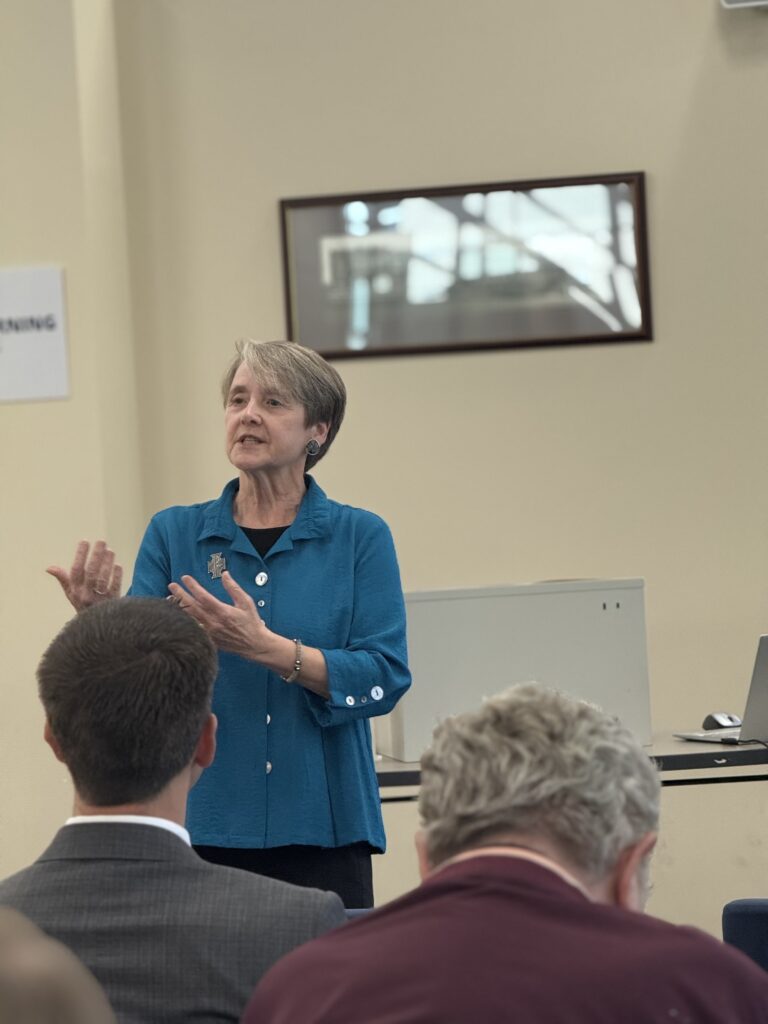
I spoke briefly, thanking lots of folks.Book signing for my colleague Dr. Suzanne Hequet!The Q & A time included many thoughtful questions.It was a good crowd for a Tuesday afternoon.
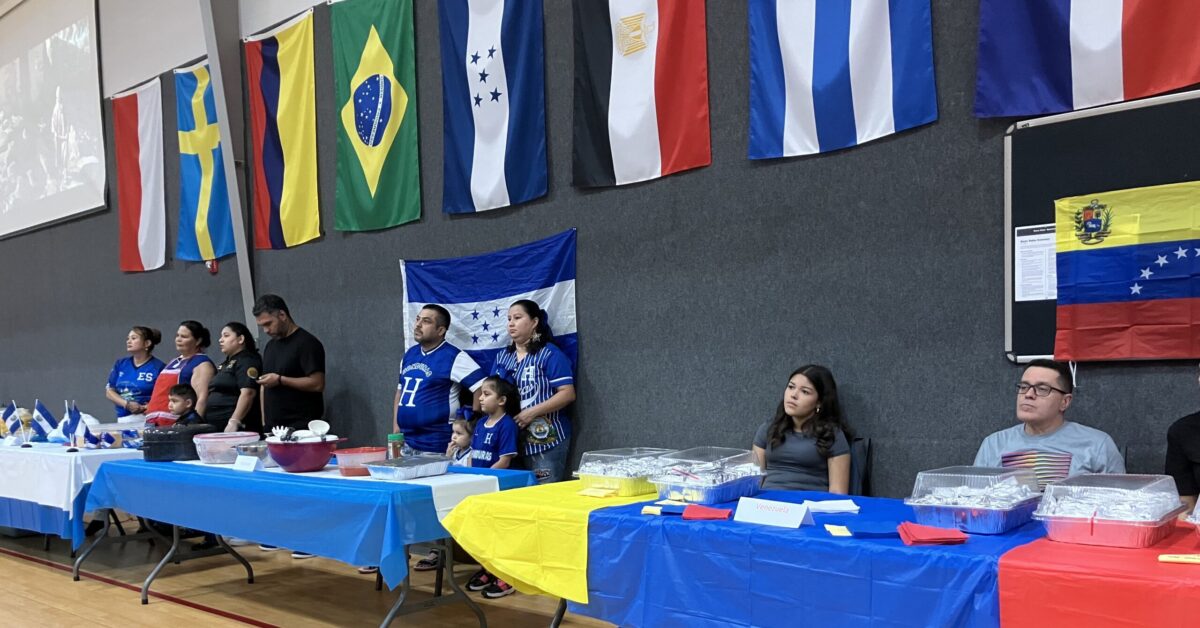
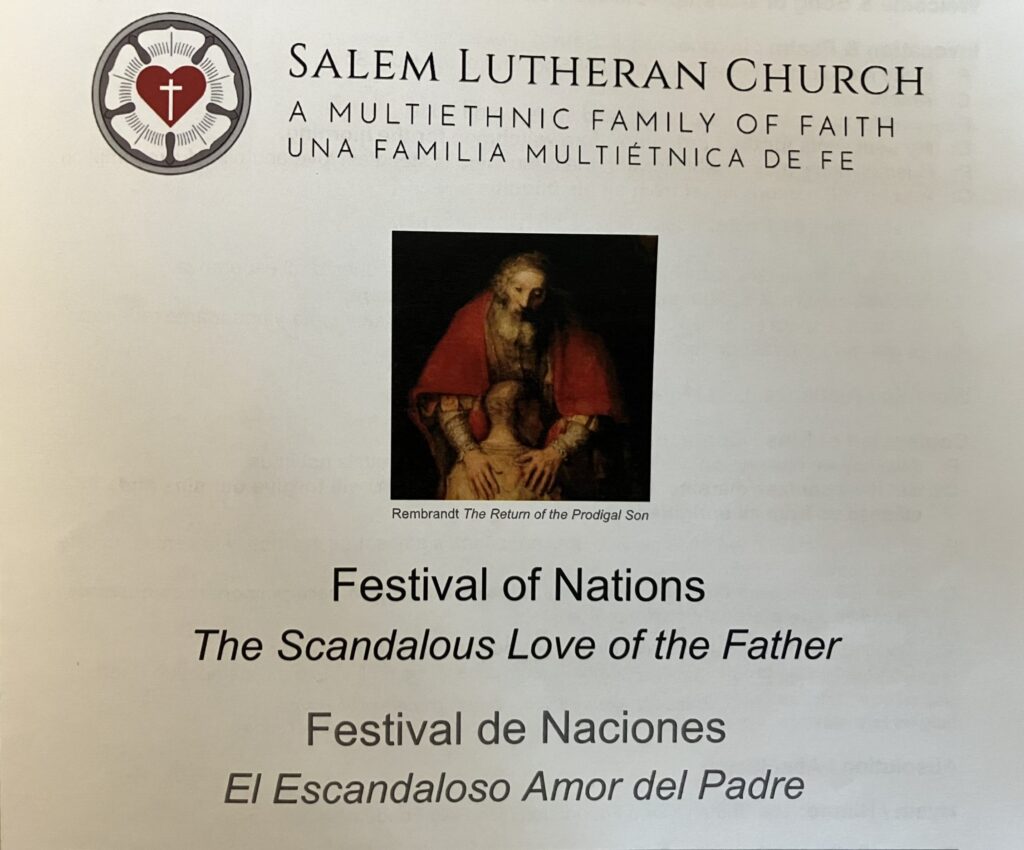
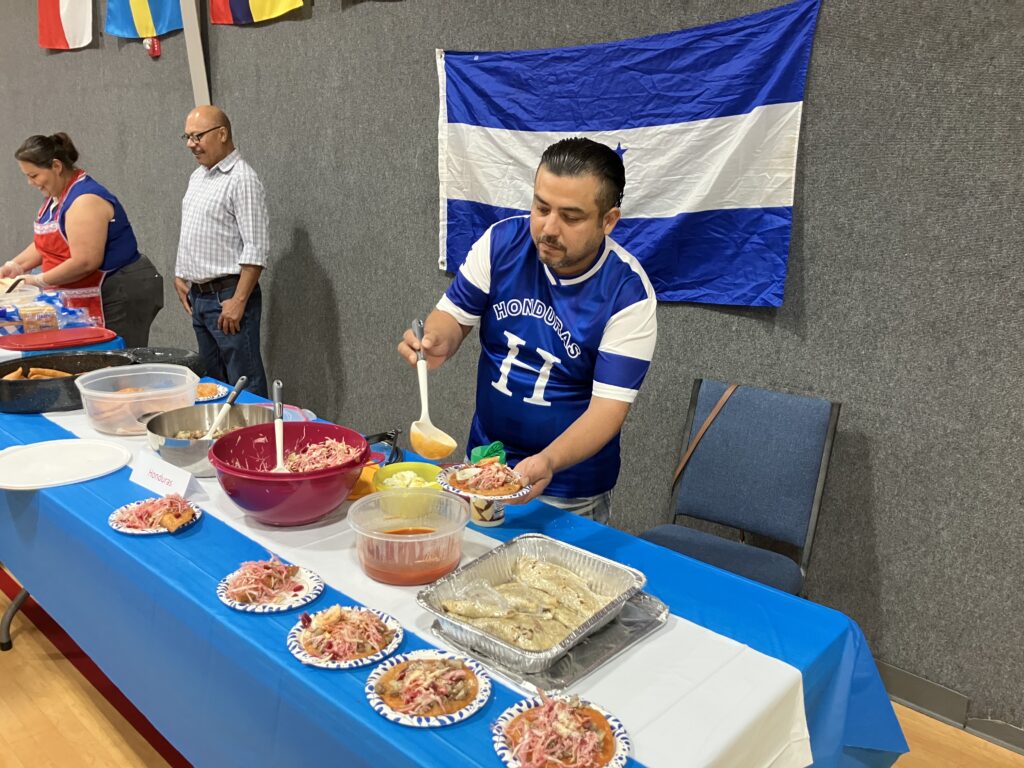
It started in May 2024 with an email from Pastor Adam Gless, a former student of Kent’s, inviting us “to come and visit Salem,” in order to provide “material for your research and presentation.” Pastors Gless and Martin, who serve at a bilingual congregation, had heard that Kent and I were giving a plenary address at the Multi-Ethnic Symposium at Concordia Seminary. And so, we came; we traveled to Springdale, Arkansas in February 2025, and as I wrote in a previous post, “During our four-day visit we worshipped with the congregation; broke bread with congregational members; attended Bible studies and faith formation gatherings for adults and for youth and their parents; and interviewed a variety of members” and heard from everyone about their wonderful “Festival of Nations” event. We incorporated this rich material into our presentation at the Symposium.
Two weeks ago, we returned to Salem Lutheran congregation, and wearing the hats of “church consultants,” we reported to various groups in the congregation about their strengths and areas for growth: to the congregational leaders and Anglo people we had interviewed; to the Sunday morning Bible class; and to Hispanic congregational members (with Pastor Brandon serving as translator). Because only the summary of our full report was translated into Spanish, we asked Pastor Brandon to translate the conclusion from the report. Here’s what he read:
Each interview closed with the question, “Is there anything else you’d like us to know?” One woman responded, “Thank you for coming and helping us to be a better church.” We are confident that, by the power of the Holy Spirit, Salem congregation can become “a better church,” by building on the solid foundation you currently have. A long-time member who has served in a leadership role in the last decade said of past challenges, “We prayed our way through it all; God has blessed us.” And like Abraham, who was blessed by God to be a blessing to “all the families of the earth” (Gen 12:3), Salem congregation is a blessing to the strangers and sojourners in your community. This excerpt from Pastor Martin’s sermon from November 17, 2024, testifies to the blessing you are to your Hispanic members.
Since the election, I have met with many of our Hispanic members. And you should know, many of these brothers and sisters in Christ are struggling! Some are overwhelmed with fear. Others live with a heavy anxiety about the increased hatred in our nation. Our president-elect has vowed to deport them, or their hard-working family members, on his first day in office. His rhetoric implies most immigrants are criminals and incites suspicion and hatred toward them. This has only increased the fear, anxiety, and suffering of our own church members.
But one couple told me this: “When we are tempted to believe that all North Americans hate us, and when fear begins to overwhelm us . . . we remember our church. Here is our family of faith! Here are people that love us, even though we don’t speak English that well. Here is a place we belong, where we feel welcome and safe. Here we are given new strength to trust in Jesus. We don’t know what the future holds for our family, but we know we can get through it with the support of our church.”
What a blessing Salem congregation is for all its members! Your generous spirit, your faith in Christ, your desire to serve others and be a witness of God’s love shines through in every person we interviewed.
As Pastor Martin translated his own words from the November 2024 sermon he had preached in English to the Anglo members of Salem, tears welled up in the eyes of two women in the front row; their children, who had been playing quietly in another part of the room, suddenly appeared at their mother’s side, hearing the words and sensing their mothers’ emotional response. After he finished translating, the adults spoke in Spanish to Brandon. When asked by us to translate, he said these or similar words, “They are saying that they had no idea I shared their fears and anxiety with the Anglo members of the congregation; they are grateful that I have done so. To hear the words from this sermon is another way that Salem is for them a place where they feel welcomed and safe.” What a holy moment we shared with these faithful followers of Christ and their beloved pastor! Thanks be to God!
+++++
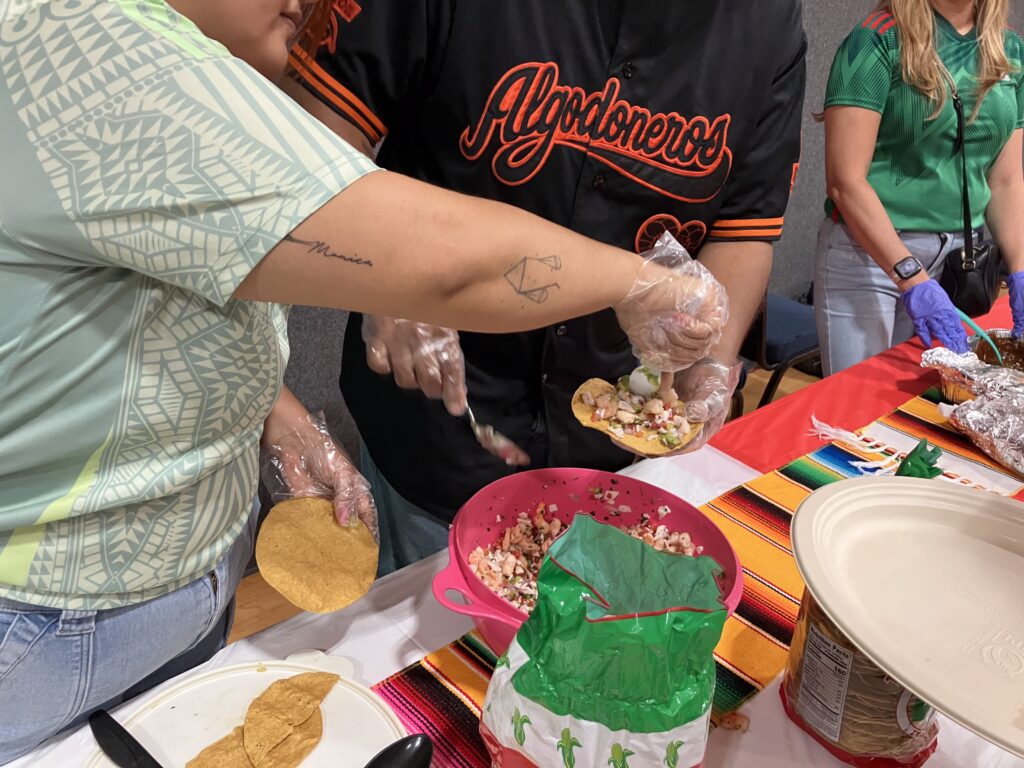
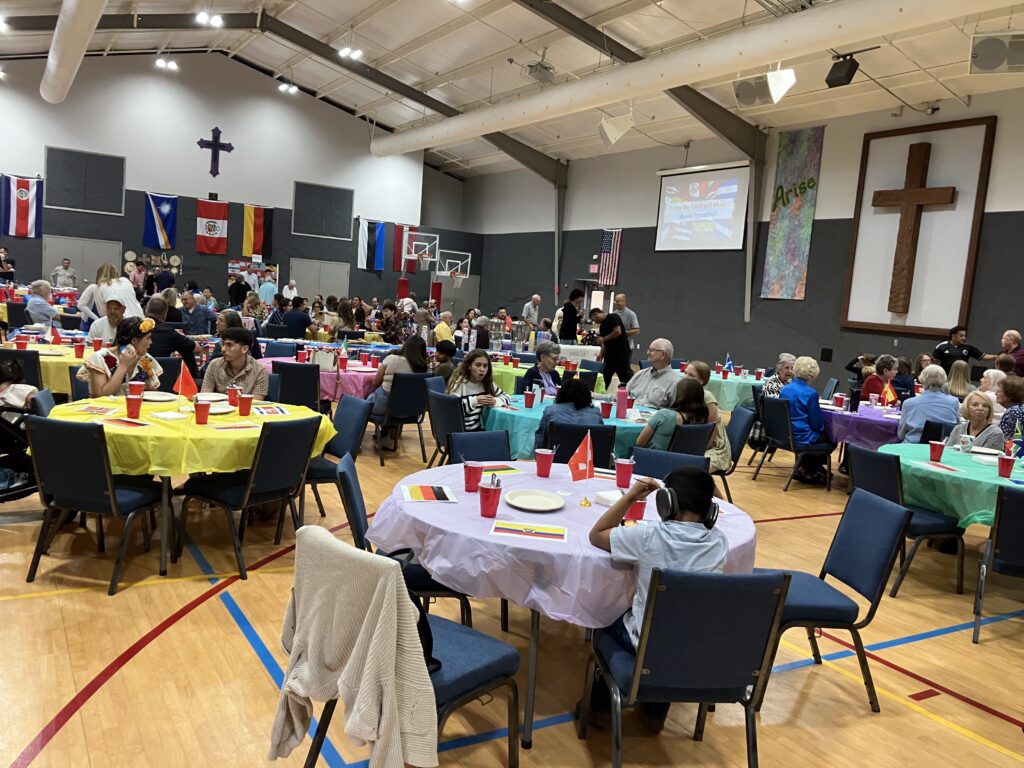
On Sunday afternoon Kent and I enjoyed the food, fellowship, and festive dancing by a Colombian woman and a couple from Chile at the Festival of Nations. Here, too, we experienced holy moments as people from a myriad of cultures shared with all gathered that day culinary delights from their homelands. Gloria, one of the woman who had attended at the presentation to the Hispanic congregation the previous day, made sure Kent and I each left with a sample of her pupusas.
Following Rhoda’s post two weeks ago on joint rituals and last week’s aside celebrating Rhoda’s book signing event at St. John, Wheaton, IL, this week we turn to the most mundane, and potentially disruptive of topics: Money or Financing a Joint Catechumenate. I believe it helpful to preface this topic with Jesus’ words from Luke 16:13: “No servant can serve two masters, for either he will hate the one and love the other, or he will be devoted to the one and despise the other. You cannot serve God and money.” Organizers of a joint catechumenate should embrace our Lord’s admonition: Too much anxiety over money could completely derail efforts toward a joint catechumenate. Whatever finances are committed to the joint catechumenate are committed for the sake of the kingdom of God. A congregation can’t serve two masters and love its financial resources, whatever they might be, more than the kingdom of the Lord.
So where might financial resources be needed for a joint catechumenate? At least three areas come to mind (with a potential fourth): Meals; Resources for the Catechumenate; and Paid Positions. Eating together, whether full meals or snacks, should be at the center of every catechumenal gathering. At what time of day the gathering is taking place will determine what kind of eating occurs: breakfast, lunch, dinner, or a snack. Who should bear the cost of those meals? Presumably the congregations in some way. Is it catered or prepared by members? Resources will be needed for the formation of the catechumens. These could vary from printed handouts to study booklets to gifts for the catechumens (such as Bibles or hymnals or catechisms or crosses) to baptismal robes. Who will pay for those? The individual congregations? The congregations jointly? Would the sponsors/mentors be asked to consider contributing to the gifts for their individual catechumens? Is the joint catechumenate going to consider any paid positions? While a called church worker, such as a DCE, might be possible, it is unlikely in many of the contexts we outlined at the beginning of this series: rural, urban, and small town. Paid lay positions would be a more likely possibility. A paid part-time lay director of the catechumenate? A financial manager for the catechumenate? Paid lay catechists? Paid primary musician for the catechumenate services? Pastoral staff from one of the congregations paid for their primary oversight of the catechumenate? There are many possibilities. The congregations would need to decide jointly what positions they need in their context to organize a competently and efficiently executed catechumenate. And they would need to decide what financial resources they could commit to these financial commitments. (A fourth area could be travel expenses between the congregations, either for a called or lay worker or for the pastors?)
These financial commitments ask the congregations to consider how they will all contribute to these commitments. Will each congregation support the costs in relationship to their catechumens with the costs coordinated on a yearly basis. Or will the congregations organize a common budget for the catechumenate, a budget external to all the individual congregations? The latter might be the least complicated and unwieldy. If the latter, how much will the congregations contribute toward that budget? Will it be the same every year regardless of how many catechumens each congregation has? Will all congregations commit uniformly to the budget, regardless of congregational size? If this is truly a joint catechumenate then it seems all the congregations need to share the financial burden equally. There needs to be trust between the pastors and congregations that this joint effort is an expression of fellowship in Christ across the congregations. Any points of conflict need to be handled through confession and absolution.
All of these mundane matters need to be addressed clearly and with shared governance by the congregations before the start of the joint catechumenate. Only in that way will the financial resources of a joint catechumenate serve the one Master and His kingdom.
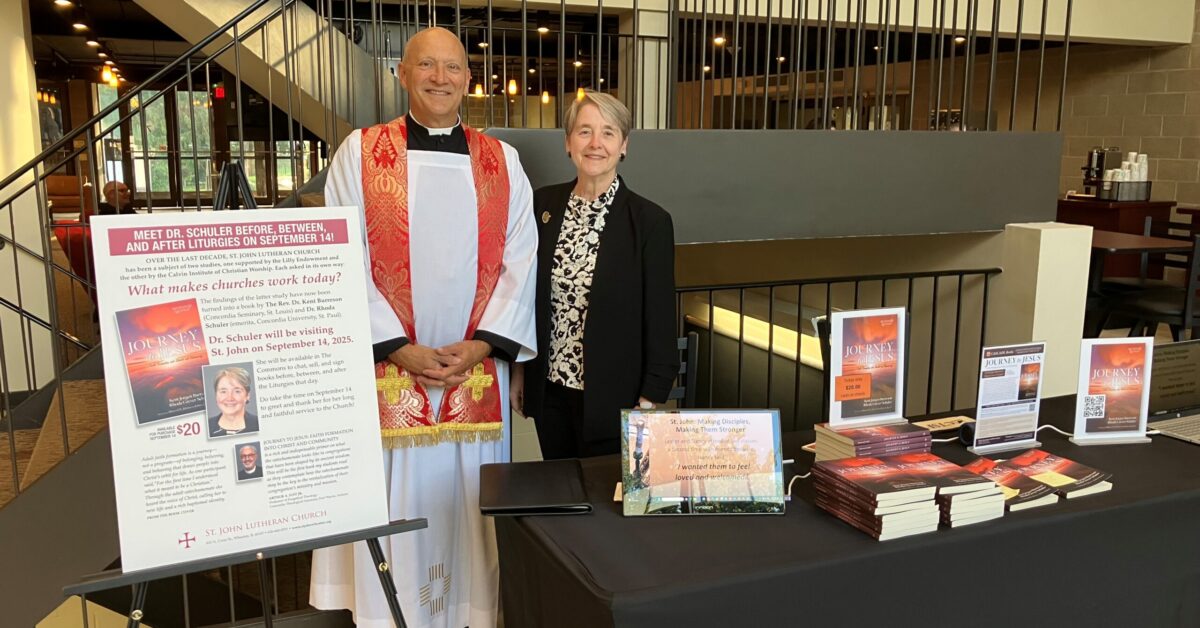
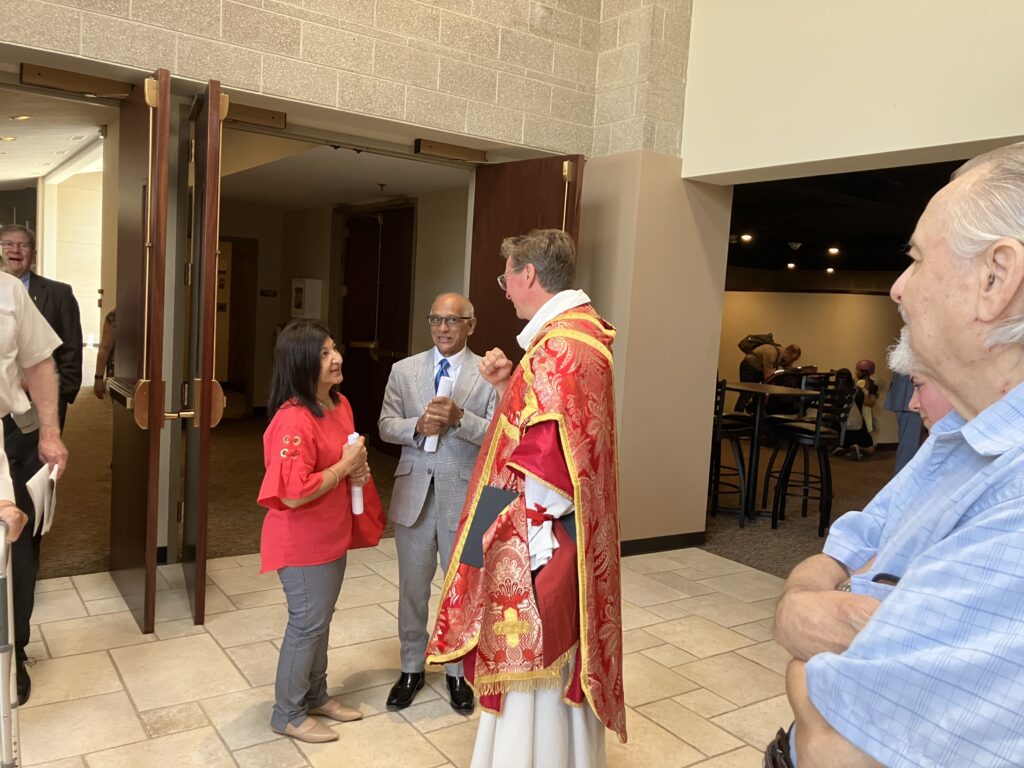
St. John Lutheran Church is one of the four congregations that we researched for our book Journey to Jesus; chapter 2 features the story of the adult catechumenate at St. John. One couple I interviewed described the weekly catechumenal sessions as “Ted Talks for Lutherans,” their way of emphasizing the vast knowledge and polished delivery of the catechetical teachings by Pastor Scott Bruzek (pictured with me in the banner photo). On Holy Cross Day the people of St. John welcomed me as I promoted Journey to Jesus in their gathering space all Sunday morning.
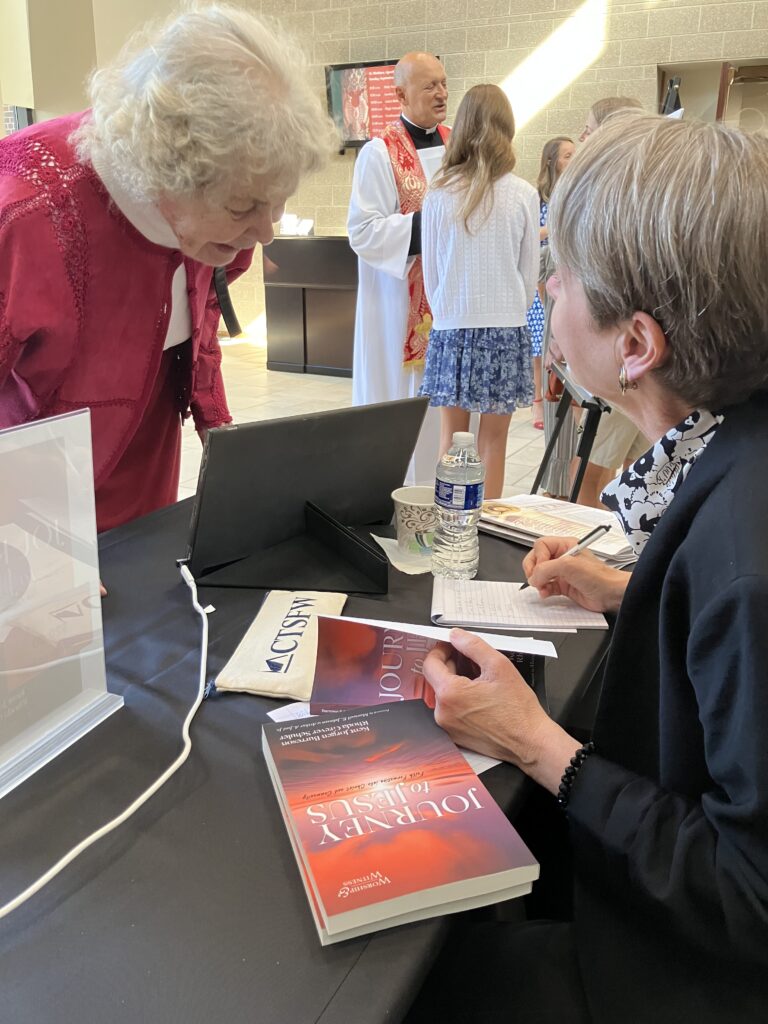
As I signed books that members had purchased, I chatted briefly with each person; many spoke of the special ethos of St. John. In Pastor Bruzek’s words, “The primary virtue is love” at this congregation. I was delighted when one member purchased two copies, one for herself and another for her son, who is a pastor. To have the book in the hands of pastors (and other church professionals) is our goal.
But I was also thrilled (and amazed) when a young man, a student at Wheaton College, came to the table with cash in hand to purchase a copy. We had a brief conversation about the trend of his generation: discovering the beauty and grace of the historic liturgy and the powerful way it can communicate the Gospel message.
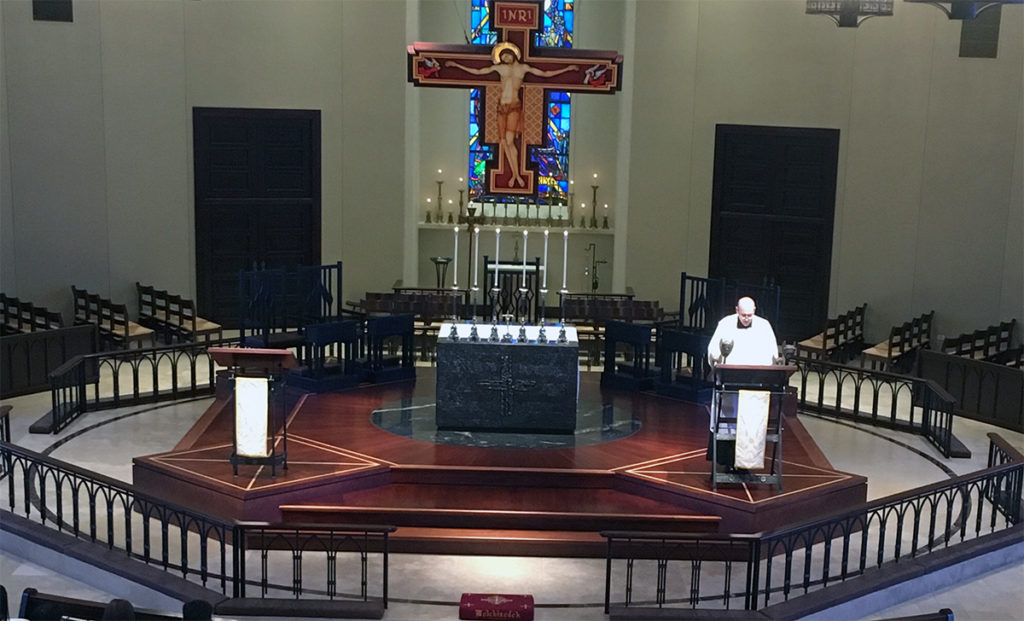
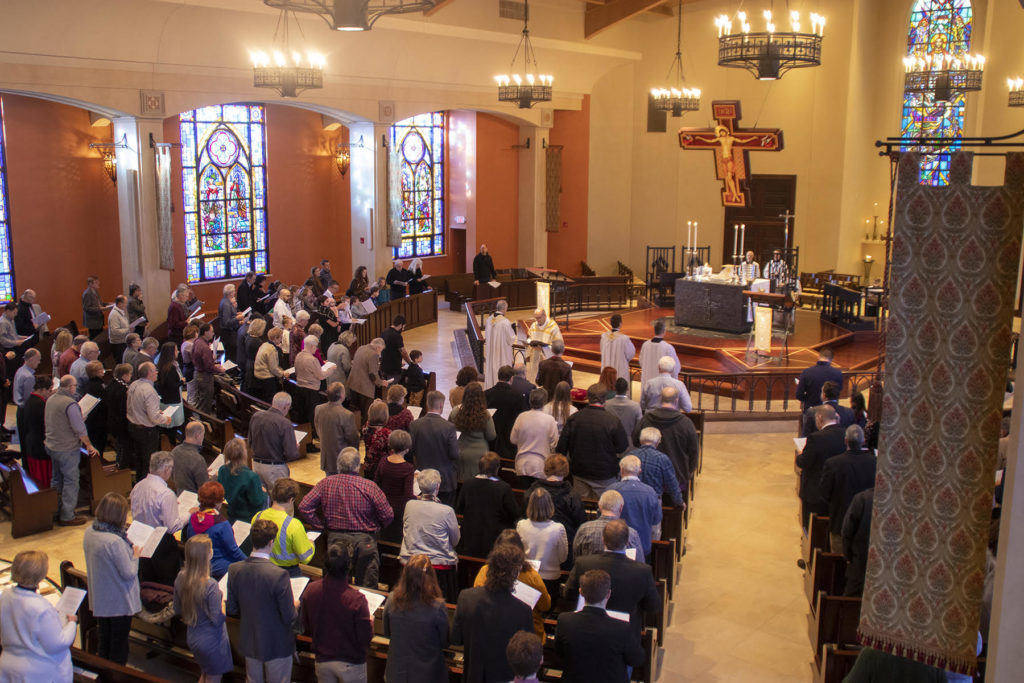
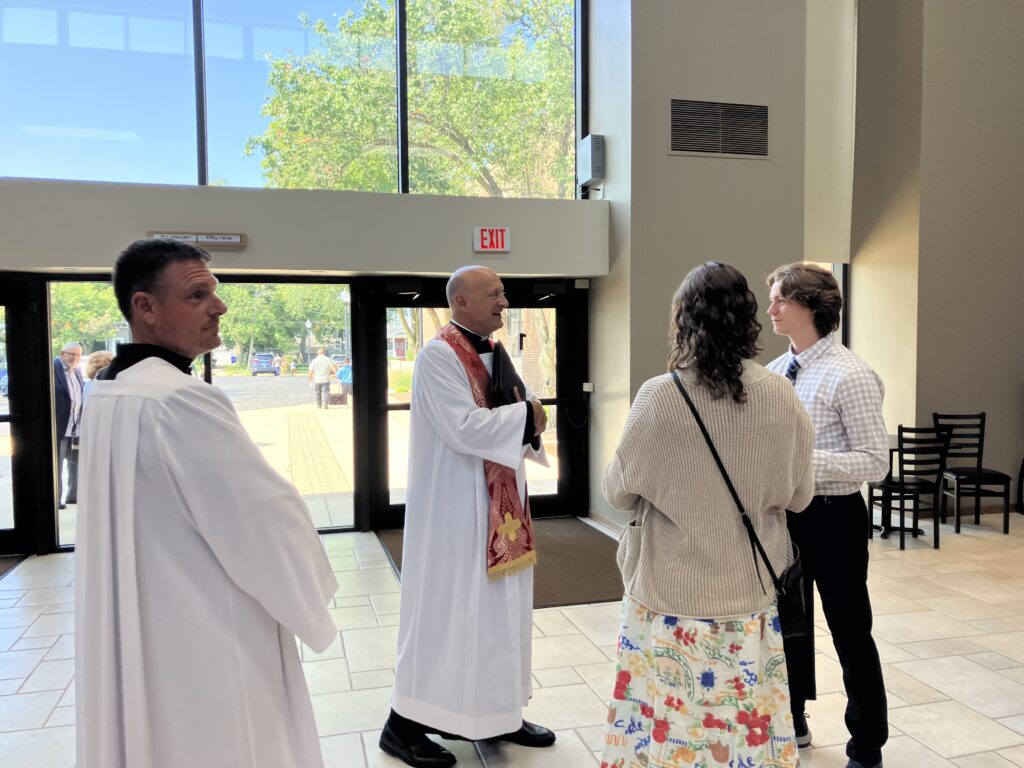
Altar area of St. JohnBook signingPastor Nelson chatting with membersThe people of God in the Divine ServiceConversing with member of St. JohnPastor Bruzek chatting with members
Thanks to be God for the people of St. John, their faithful pastoral staff, and their witness to the love of Christ in their community.
Many congregations with an adult catechumenate include rituals that mark the transitions from one stage of the catechumenate to the next. Our regular readers know that Kent and I are strong proponents of ritual for a variety of reasons. These are suggestions for how and where the traditional rituals might be celebrated throughout a catechumenal process conducted jointly by several congregations. Titles for rites and quotations are from Welcome to Christ: Lutheran Rites for the Catechumenate (Minneapolis: Augsburg Fortress, 1997).
Rite of Welcome of Inquirers to the Catechumenate
The opening rubric states “This welcome of those inquiring into the Christian faith and life may be used whenever there are people who desire to begin a more public relationship with a Christian congregation” (9). We suggest that this ritual could be included in a jointly sponsored Reformation service that involves all the congregations in the catechumenal process; this is a fitting date, since fall is also the preferred time to begin the process. The core ritual moment is “Signing with the Cross” on various parts of the body: forehead, ears, eyes, lips, heart, shoulders, hands, and feet. Each has a specific blessing spoken as the signing is done (11). Here are two examples.
Receive the cross on your ears, that you may hear the gospel of Christ, the word of life.
Receive the cross on your heart, that God may dwell there by faith.
The action of signing will make a deeper impression on the recipient than a plethora of words spoken without gesture and touch would.
Rite of Enrollment of Candidates for Baptism
This rite can also be adapted for a rite of remembrance and renewal for those already baptized but who are seeking to reconnect to the church or those preparing for confirmation in the Lutheran church. It marks the transition from an inquirer to one who is has heard God’s call to follow Christ in a life of discipleship; the weekly gatherings can take on a more intense time of instruction and faith formation. The recommended day for this ritual is the First Sunday of Lent (19). We recommend that this ritual take place in the congregation where the “inquirers” will become formal members. Thus, participating pastors will need to have individual conversations with participants to determine which congregation each will join. Such decisions might be easily made. For example, if a person has friends or relatives in a congregation; or in a rural area, the closest congregation to the person would be the logical choice; or if the person was drawn into the catechumenate because of a relationship with one of the pastors who provided pastoral care in a major crisis, this would be the obvious choice.
Vigil of Easter
If one participating congregation has a tradition of celebrating the Vigil of Easter, it would be appropriate to hold the service at that congregation and encourage members of all the participating congregations to attend as well. If no congregation has this tradition, we suggest starting a tradition of a joint Vigil of Easter. To encourage participation among the membership of the congregations, good musicians from the various congregations could be recruited to chant the opening Service of Light; strong lay readers could be recruited for the Service of Readings; all the pastors could participate in the Service of Holy Baptism (which would include the Rite of Confirmation, if appropriate). The rite in Welcome to Christ includes a thanksgiving for baptism (45) full of rich biblical imagery of water as source of death (the flood) and life (deliverance at the Red Sea), and language from Romans 6; the whole assembly participates in the renunciations and confession of faith. For those baptized and/or confirmed, this is also their first partaking of Holy Communion; what rich meaning would be conveyed as those participating for the first time would do so with people of faith from several congregations!
Affirmation of the Vocation of the Baptized in the World
This ritual marks the end of the post-baptism teaching, called mystagogy in the early church, because it included teachings about the “mysteries,” that is, the sacraments of baptism and Eucharist, which the neophytes had experienced for the first time at the Vigil. Ideally, this ritual would take place on or near the Feast of Pentecost, the end of the Easter Season. We suggest a potluck meal hosted by one participating congregation, at which the ritual could be done prior to the meal in the church sanctuary as part of brief service of preaching and prayer. The ritual also marks the end of the catechumenal process of weekly gatherings.
Has this series piqued your interest in exploring a joint catechumenal process? Do you still have questions about next steps to implement such a venture? We would love to hear from you! Scroll to the bottom of the web page for our contact information.
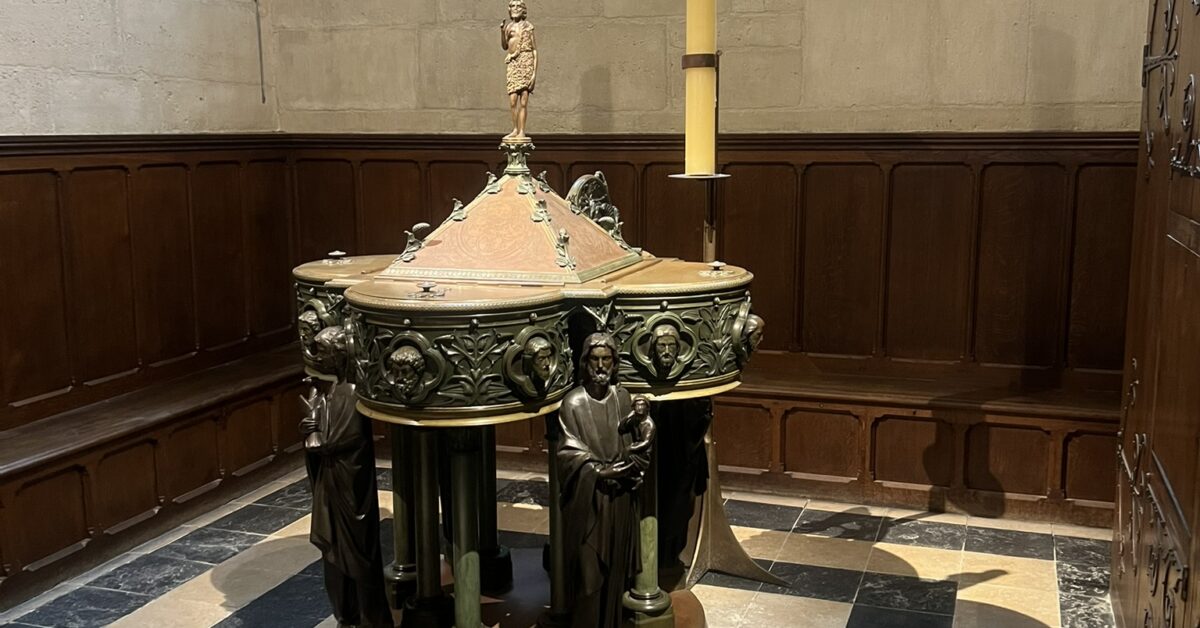
+++++++ Photo: Baptismal font, St. John’s Abbey, Collegeville, Minnesota Photo by Rhoda Schuler
As I wrote in the blog post several weeks ago regarding congregations working together in a catechumenate, a joint catechumenate expands the pastoral and ministerial resources with two or more pastors and ministerial associates leading the catechumenate together. This mitigates against the demands of time and energy for the pastors and coalesces the imaginative, planning, and teaching gifts of all those involved. Within such a vision one of the challenges is coordinating pastoral care and oversight for the catechumens—the shepherding of the catechumens. The origin of responsibility for nurturing the catechumens is with the pastors. As Paul encourages the pastors in Acts 20:28, “Pay careful attention to yourselves and to all the flock, in which the Holy Spirit has made you overseers, to care for the church of God, which he obtained with his own blood.” A pastor has primary responsibility within his congregation for the catechumens that the congregation incorporates into their life together. It is critical that he build a pastoral relationship with them individually. That cannot devolve only onto the other pastors. Especially so since the nurturing is oriented toward life within that particular congregation. The catechumens are learning to life by faith within the particularity of that congregation’s way of life. The pastor of that congregation must ensure that happens. Even as catechumenal classes and formation are shared responsibilities, it is important for pastors to arrange times to “meet” with the catechumens of his congregation. These don’t need to be formal. It could be through regular contact by phone, email, text, or other forms of social media. It could be through meeting at a coffee shop occasionally. Or it could be some kind of regular gathering with the pastor. Establishing and maintaining the personal, pastoral relationship is vital.
Yet, in a collaborative catechumenate the pastor is not solely responsible for pastoral oversight and nurture. As we discovered in all the congregations explored in our book Journey to Jesus, but especially at St. John, Wheaton, Illinois, the pastors nurturing of the catechumens is a practice that permeates the entire congregation. The members own and share that responsibility as a community. As Paul says in Ephesians 4:4-6, “There is one body and one Spirit—just as you were called to the one hope that belongs to your call—one Lord, one faith, one baptism, one God and Father of all, who is over all and through all and in all.” God’s mission to his creation is one and is shared by the one church of Christ. The shepherding of the catechumens is shared by the entire congregation and by all the pastors and congregations in a collaborative catechumenate. All are responsible for nurturing the catechumens’ faith. For this practice of shared pastoral responsibility to take form necessitates a unified catechumenal vision among the pastors and congregations. Pastors need to be in regular communication with one another about the catechumens and their newly-springing lives of faith. Catechists, sponsors, and members of the congregation actively involved in this responsibility need to regularly communicate with the pastors and with one another about the growth and the challenges to growth in faith of the catechumens. Healthy communication is central to this shepherding task. But the result of such a collaborative approach to pastoral care is as Luke describes in Acts 15 regarding the conversion of the Gentiles: it “brought great joy to all the brothers,” and sisters!
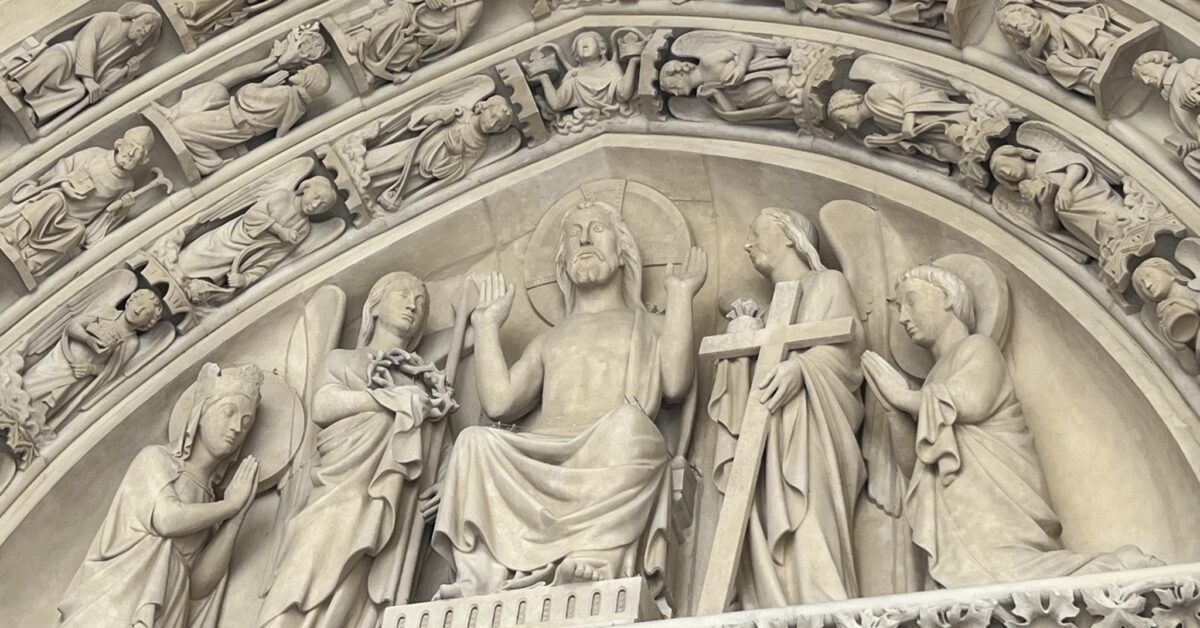
+++++++ Photo by Kent Burreson Façade of Notre Dame Cathedral of Paris
In Acts 13 as Paul and Barnabas are proclaiming the Word of the Lord to the synagogue in Antioch, some of the Jews willingly hear what they have to say while others contradict and contend with them. Which leads Paul to say, “For so the Lord has commanded us, saying, ‘I have made you a light for the Gentiles, that you may bring salvation to the ends of the earth’” (Acts 13:47). So, the church, receiving this apostolic commission through the apostles, likewise seeks to bring the message of salvation to the ends of the earth. One of the ways in which the church fulfills its calling is through the catechumenate. For compact congregations, teaming up with other congregations can be a very effective way to, as Rhoda put it last week, follow the voice of Jesus’ calling. Coordinated, collaborative team-taught catechumenal classes can be an effective part of the church’s living into its identity and life together.
Accomplishing this, as I observed two weeks ago, brings together the imaginative, planning, and teaching gifts of all those involved and enriches the teaching with manifold gifts. But four basic questions come to mind with cross-congregational classes: Why? How? Where? When?
Why?
Beyond the eliminating duplication of effort and effectively deploying the energy and time of pastors and laypeople involved, toward what end should we pursue coordinated classes? The end is not just information. The end is the formation of disciples of the Lord Jesus Christ. Coordinated catechetical classes allow all the resources of several congregations in one area to be deployed toward fully forming disciples for the long haul of life. The catechetical riches of each congregation forming disciples toward the abundant life in Christ.
How?
Rhoda highlighted the visioning that pastoral and congregational leaders across congregations need to engage. The pastoral leaders need to “fling wide the door” to consider all the possibilities for shaping rich, substantive, and formative collaborative classes. Be creative! As Rhoda indicated, both pastoral and lay leaders can and should be involved. Identify responsibilities and roles for pastors and laity. Pastors could rotate the teaching across the periods of the catechumenate. Or they could rotate on a monthly or weekly basis. What would work most effectively in your context?
Where?
The natural, default setting for the classes is the congregations. But think outside the box. Is there a gathering place that would be in the middle of the congregations? A coffee shop? A pub? A restaurant? An outdoor venue in nice weather? Even if you use some other space, it is beneficial to have classes in one of the congregations occasionally to remind the catechumens of their approaching baptism and discipleship centered in the body of Christ. When classes are in the congregations, they could rotate between congregations on a weekly or monthly basis, or across the four periods of the catechumenate.
When?
Context will be the determinative factor here. Demands on time are going to vary between a rural, small town, and urban context. In a rural context, one might imagine that later in the evening would not be a good time during harvest season when farmers are rising early. Perhaps early Saturday mornings are best in a small town. Or maybe Sunday late afternoon/evening would work well in an urban context. And remember the need to provide childcare. Without that, many younger adults might be unable to attend.
The questions are intended to prompt the kind of visionary thinking that needs to happen. When it comes to coordinated, collaborative catechumenal classes—to a collaborative catechumenate across congregations—forward-looking thinking is essential. In Paul’s words, “But one thing I do: forgetting what lies behind and straining forward to what lies ahead, I press on toward the goal for the prize of the upward call of God in Christ Jesus” (Philippians 3:13-14).
This week’s blog expands on two points Kent made last week:
the need for two or more pastors from different congregations to band together to envision a joint adult catechumenate; and
the need for lay volunteers to move such a joint venture from vision to reality.
I make one assumption, namely, that most “compact congregations” have one pastor and no “second chair” paid staff (in LCMS jargon, no commissioned minister on staff). As I mulled over this topic, the words of the hymn, Hark, the Voice of Jesus Calling (Lutheran Worship, #318) kept floating through my head. Click here if you’d like an instrumental version of the tune playing as your read the rest of the post.
Stanza One: A group of pastors in the visioning process
The grammar of stanza one implies my assumption: that pastors of compact congregations have harkened to “the voice of Jesus calling, ‘Who will go and work today?’ Field are white and harvest waiting, Who will bear the sheaves away?” And each has answered “gladly saying, ‘Here am I. Send me, send me.’” (Note use of first person single in the response). These faithful servants toil as the sole pastor of a congregation. To explore starting a joint adult faith formation process with neighboring pastors can be both daunting, yet has “rich reward [that Christ] offers free.”
As a pastor’s wife, I can vividly recall the burdens my husband shouldered when he was a solo pastor in rural Iowa; and I remember well the joy he discovered in a local lectionary group that met weekly. The task of textual study brought them together, but the mutual support they all experienced was also a “rich reward.” To come together with pastoral colleagues to envision ways of beginning an adult catechumenate has similar potential to provide support for one another and to think creatively about collaborate ministry in smaller congregations—there are rich rewards to be discovered. Such an endeavor calls for intentional prayer by the group as they engage in a visioning process over several weeks or months. Resources about adult faith formation might be divided among the members, with each person providing a summary and review to the group for discussion and brainstorming.
Stanza Two and Three: Identifying lay volunteers
Both these stanza begin “If you cannot …” and continue later with “You can tell/say/lead/do …” Last week Kent wrote, “It would be beneficial to have one pastor, ministerial, and/or lay coordinator [to] plan and organize the catechumenate across the congregations.” The planning (after the visioning process is done) ought be done by the pastoral leaders; but once there’s agreement on a schedule and timeline for the four stages and structure for the weekly gatherings, the identification of lay leaders begins. These are some roles to which Jesus may be calling lay people from your congregations:
Logistical Coordinator for the adult formation process: Think about that person with excellent organizational skills who knows how to attend to planning details and who is comfortable with basic tech skills (emails, texting, etc.) to keep others informed with regular updates and reminders. Ideally this person would also be a skilled writer to handle informational materials for bulletins, websites, etc. Or the writing and logistics duties could be split into two positions.
Hospitality teams: Two or three people from each congregation would be ideal to share the responsibilities. These folks would be in charge of the meal or light refreshments served at the weekly catechumenal gatherings; each team would decide on the menu and purchase, prepare, and serve the food on their scheduled week. Each host church would have a person designated to open the building, help in the kitchen, and oversee the clean-up.
Catechists and mentors for the “seekers” going through the catechumenal process: These folks need to be people of mature faith with good people skills, able to listen with empathy, not be quick to judge, and be comfortable praying with and for others. Much more could be said about these roles, but there are many resources available that describe the qualities needed.
In each of these roles, the laity function in a supporting role, using God-given gifts to serve “like faithful Aaron, holding up the prophet’s hands.” I, too, as Kent wrote last week, believe that such collaborative efforts are needed to develop catechumenates among compact congregations. We’d love to hear your ideas by contacting us at Kent@FormingLutherans.org or Rhoda@FormingLutherans.org.
The challenges for compact congregations in developing robust catechumenates are apparent, as we have expressed in this series’ first two posts. We turn to addressing collaborative opportunities that would allow compact congregations to address those challenges. The first opportunity is for congregations to collaborate in developing an adult catechumenate. These could be congregations in the same denominational jurisdiction (in the LCMS’ case: circuits) or that are in the same geographical region. Developing a joint catechumenate in congregations in relatively close proximity to one another can address some of the challenges that we isolated:
The relatively small number of adult catechumens in a congregation
Conflict within a congregation and/or lethargy relative to a new approach toward making disciples
Lack of pastoral, ministerial, and lay staffing and insufficiency of time and energy to lead an adult catechumenate
Congregations joining forces to develop an adult catechumenate can address all these challenges. I believe congregations could work together to develop a join catechumenate in rural, urban, and suburban contexts.
So, what are the benefits of developing a joint adult catechumenate between two, three, or more congregations?
The Pastoral and Ministerial Team: A joint catechumenate expands the pastoral and ministerial resources. Instead of one pastor, and perhaps another church worker, in one congregation, two or more pastors and ministerial associates could lead the catechumenate together. This also mitigates against the demands of time and energy imposed upon a solo pastor in one congregation. It also brings the imaginative, planning, and teaching gifts of all those involved to the development of the catechumenate in that area. The planning efforts are not born by only one person.
Lay Volunteers: As with the ministerial team, this would expand the pool of lay volunteers to conduct the catechumenate. Catechists, sponsors, and volunteers could be drawn from several congregations, dispersing the service load and preventing burnout. With both the ministerial team and the lay volunteers, it avoids duplication of effort and drains on energy and time for those engaged in the catechumenate.
Larger Cohort of Catechumens: If a congregation has only one or two catechumens in any given year, associating with other congregations could significantly grow the cohort. Instead of 1 catechumen, when four congregations join there might be 4-8 in any given cohort. This decreases the sense of isolation, catechumens now making the journey with others walking the same path. It develops an awareness of the body of Christ, not only within the congregations, but also within the cohort. The gifts and challenges of becoming a disciple of the Lord Jesus are shared with others.
Video Communication Software: If the distances are simply too large for the catechumens to gather on a weekly or regular basis, then software such as Zoom could be used to bring the catechumens together. Such software would also allow catechumens to join when they cannot attend the weekly/regular gathering.
Through such a joint catechumenal effort, congregations would develop a clearer vision of the unity of the body of Christ across a geographic region and between congregations.
There are challenges with developing a collaborative adult catechumenate.
Congregational Isolationism: As with any congregation developing an adult catechumenate, the vision for it would have to be embedded in the leadership of the congregations. I would bring them together to share fellowship over a meal and to lead them through what the initial experience of the catechumenate might look like. These joint sessions would hopefully break down the walls between the congregations.
Distance between Congregations: If there is a significant distance between the congregations, there are a number of ways to tackle this challenge. I already mentioned video communication software. Classes could rotate between congregations on a weekly basis. Or they could be rotated between congregations during the four periods of the catechumenate. The rites that mark the catechumenate could be done individually within each congregation. Or they could be done in special services that would be shared among the congregations. There could be one Easter Vigil service at one of the congregations, rotated on a yearly basis.
Coordinated Planning and Leadership: It would be beneficial to have on pastoral, ministerial, and/or lay coordinator that would plan and organize the catechumenate across the congregations.
Financial Commitments: A plan would have to develop for the congregations to jointly share any costs associated with the catechumenate. Perhaps a joint fund to which all the congregations would contribute could finance any costs associated with the catechumenate. This might include ways to offset the fuel costs for catechumens.
This week we are taking a break from our series on “Compact Congregations,” as both of us have been traveling. I’m recently returned from Pewaukee, Wisconsin where I attended the annual gathering of the Lutheran Deaconess Conference, whose membership is deaconesses trained by the Lutheran Diaconal Association, founded in 1919. One of the highlights of our annual gathering is hearing the stories of diaconal ministry by those celebrating a major anniversary of their consecration as deaconesses. It’s always inspiring to hear how God has been at work, often leading us to unexpected places and serving the church and the world in ways we could not have imagined.
Kent has been in a more exciting location, Paris, attending the 2025 Congress of Societas Liturgica, where he presented a paper, “Lectern, Pulpit, and East Axis: Liturgical Developments in American Lutheran Churches in the 20th Century.” Societas Liturgica, founded in 1965, is “an association for the promotion of ecumenical dialogue on worship, based on solid research, with the perspective of renewal and unity.” Since he was in the neighborhood (and perhaps inspired by my post from last year), Kent is making a pilgrimage to St. Michel after the congress was over.
Today’s banner photo is from within the monastery complex and depicts the legend surrounding the establishment of this location as a pilgrimage site in a stone-carved relief. The Archangel St. Michael (identifiable by is his armor and wings) appeared to an eighth-century bishop in a dream and instructed him to build a chapel in his (St. Michael’s) honor on this rocky outcrop off the coast of Normandy (on the left side of the carving).
Like my deaconess sisters, Bishop Aubert and, later in its history, Benedictine monastics were called to an unexpected mission, serving God in a unique place and in unimagined ways.
++++ To read last year’s post, click here. Photos by Rhoda Schuler (June 2024)