Last month I (Rhoda) had the privilege and joy of serving as the keynote speaker at the LCMS Northwest District Youth and Family Ministry Conference, held at Camp Lutherhaven in Coeur d’Alene, Idaho. The theme of the conference, “Formed,” was a great opportunity to introduce some of the resources Kent and I have promoted through this website and our book, Journey to Jesus. For two of the sessions, the whole group (about 50 people) practiced the African Scripture Reflection Method and Luther’s Four-Strand Garland Scripture Reflection. I also facilitated a breakout session for those interested in the Visualization Method. Three people attended: DCE Scott Thurman (St. John Lutheran Church, Vancouver, WA), Deaconess Amanda Mumm (Immanuel Lutheran Church, Twin Falls, ID), and DCE Ethan Mirly (St. John Lutheran Church, Palmer, AK).
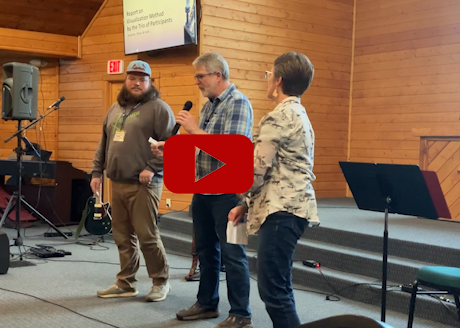
At our next plenary gathering, the three reported to the whole group what the process was like and presented their end “product,” a haiku poem based on the biblical text they had heard and discussed. Scott kindly wrote this narrative of their creative process.
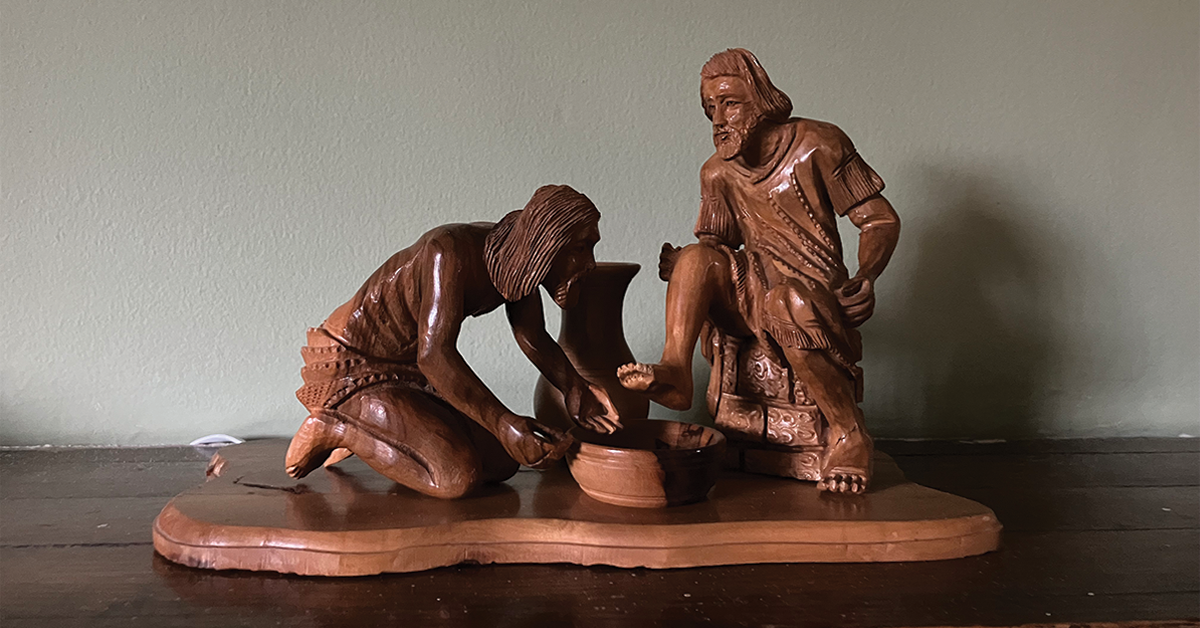
I was so amazed by the workshop breakout session entitled Visualizing Scripture. I worked with two other individuals, Amanda and Ethan, and we confronted the text involving Jesus washing the feet of the disciples. After reading it several times we shared important takeaways from this story. Each of us was experiencing the passage from different angles, and I was so impressed with the way our group shared things that stood out; images that caught our attention. After we shared and listened to each other, we began to imagine how we might present discoveries and excitement. At first, we were reaching far and wide, making connections with Old Testament and New Testament passages. But Dr. Schuler gently encouraged us to narrow our focus and to pay attention to strong motifs. Hands, feet, towel, water, baptism. After some struggle to distill our thoughts, we fashioned our ideas into a haiku. From 45 minutes of great discussion and shared insights, three short lines, a handful of words and syllables, emerged. In a haiku every word counts, and we took some time shaping and clarifying our poem. The learning from each of us felt meaningful, and we had grown closer through the process.
Here’s their haiku. Click on the image to watch it; Scott is in the middle.
By reflecting on the process, he named the strengths of this method. First, it deepens the meaning of the particular Scripture passage for the participants, forming their faith in Christ; and second, it forms the participates into community. Scott wrote:
Although the presentation of the poem took just seconds to share, we all felt that the time spent would last for a very long time. In this process the audience takes in a “product or presentation” that they did not have a hand in shaping. They may receive it and it does not have nearly the impact it had on each of us who created it. Their reaction, somewhat subdued, was not a measure of the experience we had as a team. In debriefing the presentation afterwards, it became clear to my colleagues and me that we had gained so much more from the process, and that the learning was much deeper and more significant for us. We realized that regardless of how seemingly simple our creation of a haiku was, what we created had a lasting impact. The joy and blessing in our discussion and the listening to one another had built friendships.
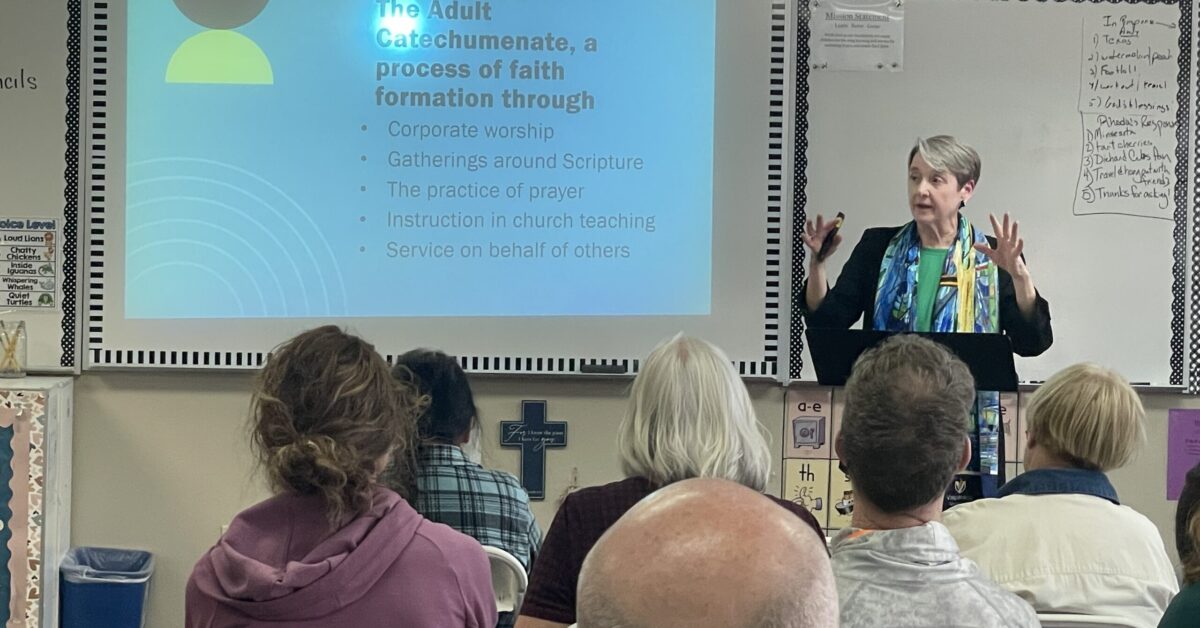
I, Rhoda, also had the joy of presenting at a breakout session at Best Practices Ministry last week. After a brief presentation that began with the “grim statistics” of the decline in church membership in recent decades, moved to the need for adult faith formation, and zipped through a quick summary of the stages of the adult catechumenate, my formal presentation ended with brief descriptions of three models for small group reflection on Scripture. Common to all three is use of the Gospel texts from the three-year lectionary. The focus on Gospel readings in these small groups introduces those unfamiliar with the Bible to the person of Jesus – not doctrines or teachings about Jesus – but the stories of Jesus, what he said and did. One resource on the adult catechumenate, describing the African method, says, “this method turns Bible study away from the intellectual pursuit of knowledge about the text toward an attitude of listening to what God is saying through the text” (Go Make Disciples, 140).
After my introductory presentation, we broke up into small groups that experienced the three models, led by three of my former students, all serving as Directors of Christian Education in parishes. The joy I felt observing these young women leading the small groups with a gentle but firm hand, with the skill of servant leadership, and with empathy as participants shared their reactions to the text was overwhelming — so much so, that I completely forgot to take photos of them; but I found these on their church’s websites.
Thanks be to God for these women and their service to the church!
Alanna Davis CSP ’16 Epiphany Lutheran Church Kenmore, WA
Jackie Druckhammer CSP ’14 St. John Lutheran Church Vancouver, WA
Heather McCormick CSP ’14 Faith Lutheran Church Topeka, KS
Kent and Rhoda will both be presenting at Best Practices in Ministry, “a conference hosted by Christ Church Lutheran [in Phoenix, Arizona]. For over 10 years we have offered this FREE conference to remind professional and lay church workers that you are loved, you are not alone, and you matter. And when we say free, we truly mean that: free meals, free shuttling, free speakers, free snacks, free activities, free registration.” For any of our readers who will be with us in Phoenix next week, here are the details about our respective breakout sessions.
Luther’s Contemporary Worship: Worship that is Always of, by, and for Faith, by Kent Burreson, will explore how Luther’s vision of the church’s worship life was always contemporary: oriented toward birthing, strengthening, and nurturing the baptismal life of faithful trust in God the Father here and now. For Luther, worship’s contemporaneity always entailed freedom and responsibility, freedom to create new rituals that nurtured faith and responsibility to the church’s ritual tradition, filled with elements that continued to nurture faith. Through Luther’s own words we will construct a dialogue that seeks to bridge the various approaches to worship within the LCMS and the church at-large. Thursday, February 12, 3:00 – 4:30 pm
+++++++++
Searching the Scriptures, Discovering Jesus: Small group Scripture reflection tools for both seekers and disciples, by Rhoda Schuler, begins with a presentation on the four stages of an adult catechumenal process and the central role of small group reflection on Scripture (especially the four Gospels) in that process, before moving into experiential learning for participants. Attendees at the session will be placed into small groups and put into practice three distinctive Scripture reflection tools: 1) the aural or African method; 2) Luther’s four-strand garland; 3) the visualization method. Participants will reflect on their small group experiences with whole group; discussion will focus on the three Scripture reflection tools in relation to the stages of the adult catechumenate and on assessing each one’s potential use in participants’ ministry contexts. Friday, February 13, 2:00 – 3:30 pm
We look forward to connecting with new people and reconnecting with friends and colleagues at this conference, and we pray that our presentations with inspire others to faithful service to Christ, church, and the world.
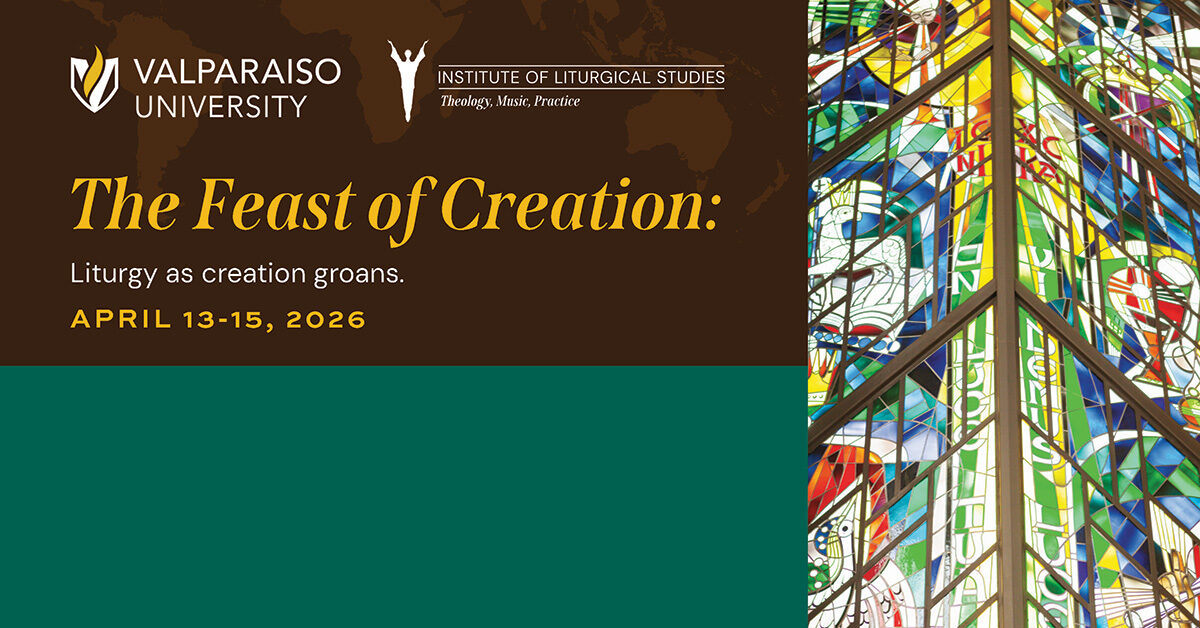
Since both Kent and I are alumni of Valparaiso University, we wish to remind our readers that the early-bird registration for the Institute of Liturgical Studies at VU ends on January 31. To save $100 on the registration cost, click here by Saturday, January 31. The Institute meets April 13 – 15, 2026. It’s a great post-Holy Week retreat for pastors and musicians.
In April and May 2025, an ecumenical seminar was convened for the second time in Assisi, Italy. They met under the banner of The Feast of Creation and the Mystery of Creation: Ecumenism, Theology, Liturgy, and Signs of the Times in Dialogue to continue a conversation begun a year earlier.Organized by the Laudato Sì Research Institute of the Roman Catholic Church in partnership with the Anglican Communion, Lutheran World Federation, the World Communion of Reformed Churches, the World Council of Churches, and the World Methodist Council, the seminar met to examine the history of Christian engagement with the creation story, described in the book of Genesis, in the context of the growing climate justice movement. They developed a proposal that a creation season be incorporated into the liturgical calendar to run from A Feast of Creation on September 1 through to October 4, the Commemoration of Francis of Assisi. The 77th meeting of the Institute of Liturgical Studies will consider the possibilities of such a festival and season. We will reflect on creation, incarnation, and Jesus’s death and resurrection, all received by us through the created materiality of our sacramental life together. Furthermore, we will examine how petroleum culture has influenced our sacramental life and begin to envision ways to counter its impact. A model lectionary will be used, and sample liturgies will be celebrated. Join us April 13 – 15, 2026, for The Feast of Creation—liturgy as creation groans.
Click here for details about the program, schedule, plenaries, and workshops.
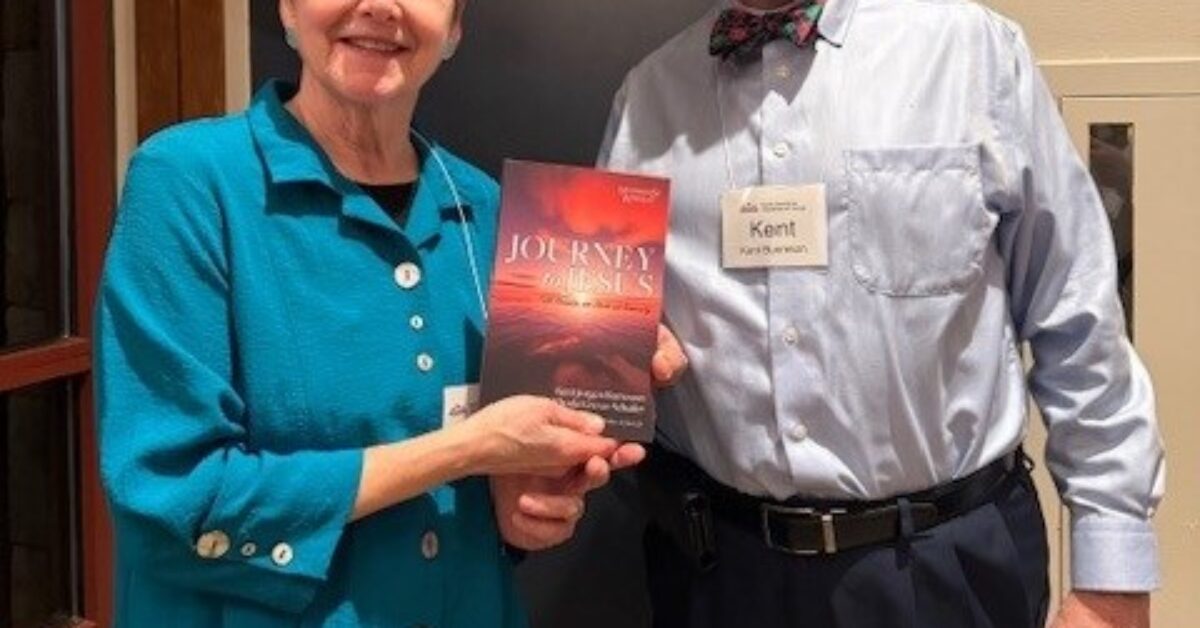
Journey to Jesus arrives at the North American Academy of Liturgy (NAAL)! Here are Rhoda and I standing in a room at Candler School of Theology on the Emory University Campus where the Academy Meeting of NAAL took place in early January. Rhoda and I have been members of NAAL for over 20 years. And it was at NAAL that the original research that led to the publication of Journey to Jesus was conceived. NAAL is the professional society for scholars and leading practitioners of worship and liturgy. It meets annually to discuss research and publication throughout the history of worship and into the present across Judaic and Christian traditions. We were pleased to “debut” the book at NAAL.
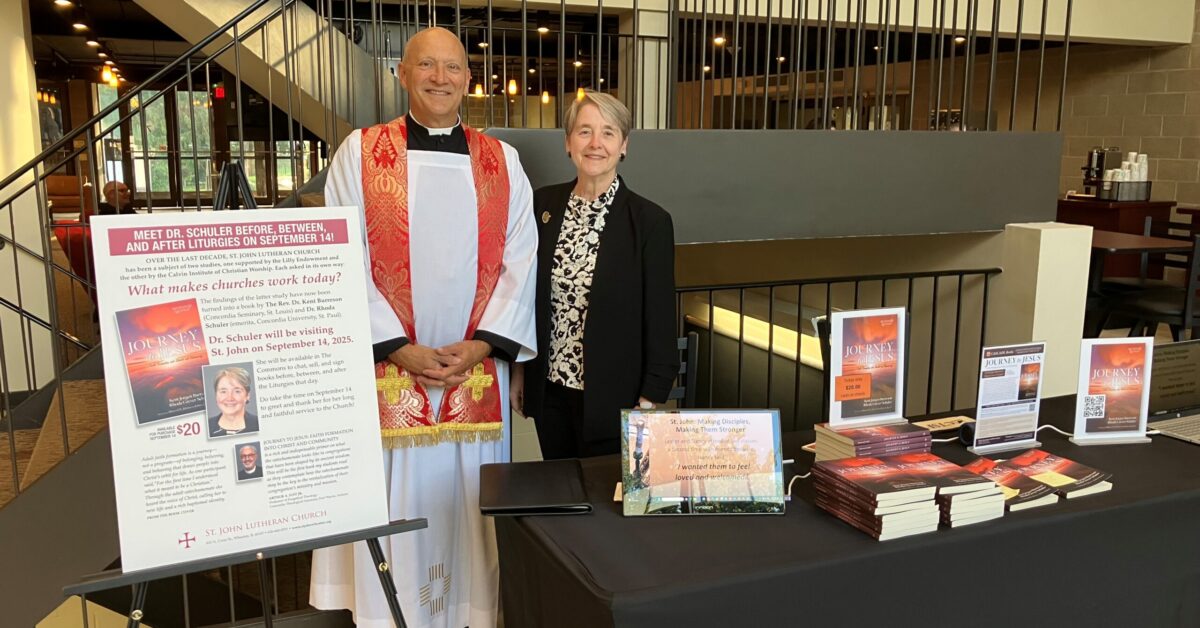
St. John Lutheran Church is one of the four congregations that we researched for our book Journey to Jesus; chapter 2 features the story of the adult catechumenate at St. John. One couple I interviewed described the weekly catechumenal sessions as “Ted Talks for Lutherans,” their way of emphasizing the vast knowledge and polished delivery of the catechetical teachings by Pastor Scott Bruzek (pictured with me in the banner photo). On Holy Cross Day the people of St. John welcomed me as I promoted Journey to Jesus in their gathering space all Sunday morning.
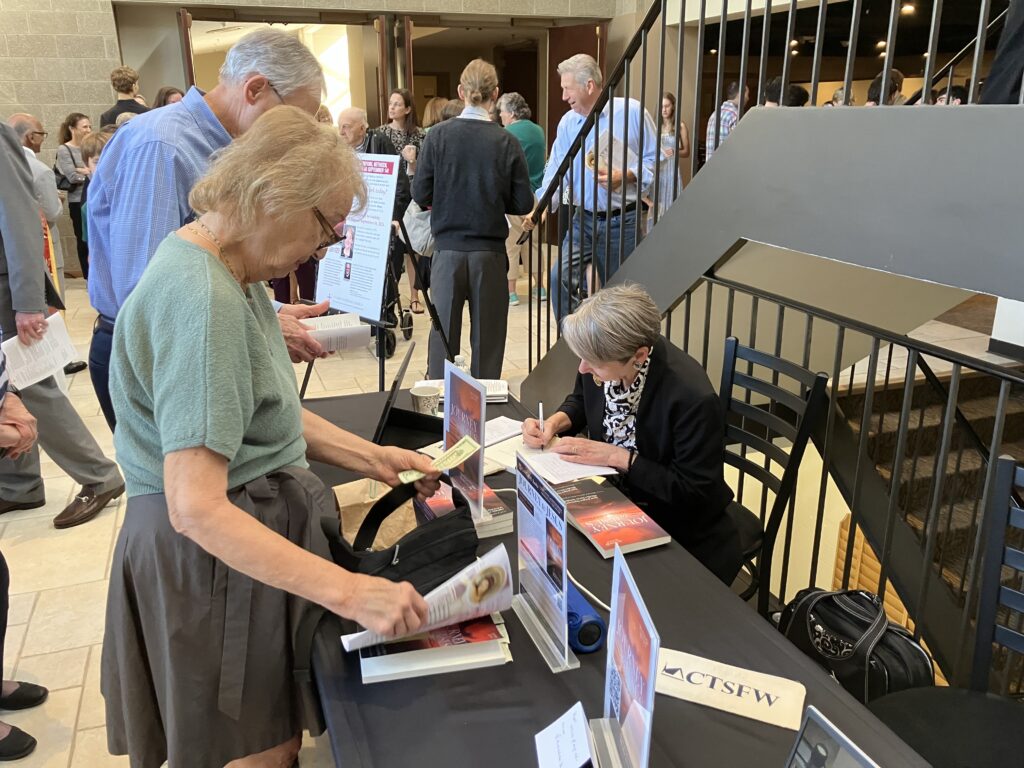
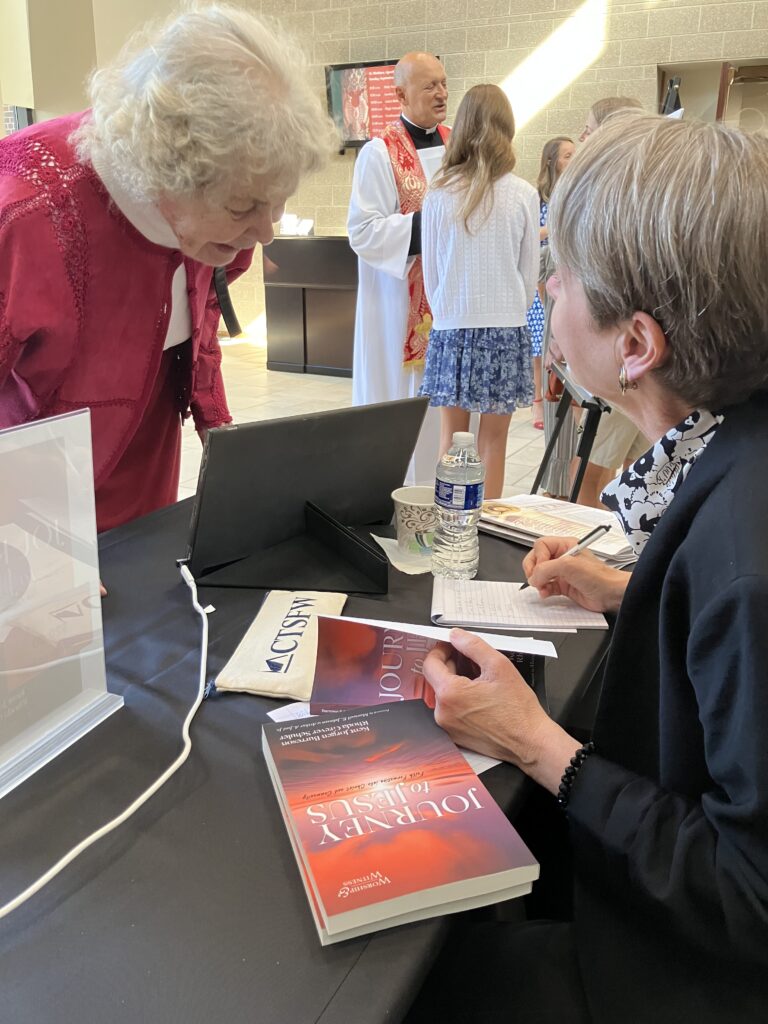
As I signed books that members had purchased, I chatted briefly with each person; many spoke of the special ethos of St. John. In Pastor Bruzek’s words, “The primary virtue is love” at this congregation. I was delighted when one member purchased two copies, one for herself and another for her son, who is a pastor. To have the book in the hands of pastors (and other church professionals) is our goal.
But I was also thrilled (and amazed) when a young man, a student at Wheaton College, came to the table with cash in hand to purchase a copy. We had a brief conversation about the trend of his generation: discovering the beauty and grace of the historic liturgy and the powerful way it can communicate the Gospel message.
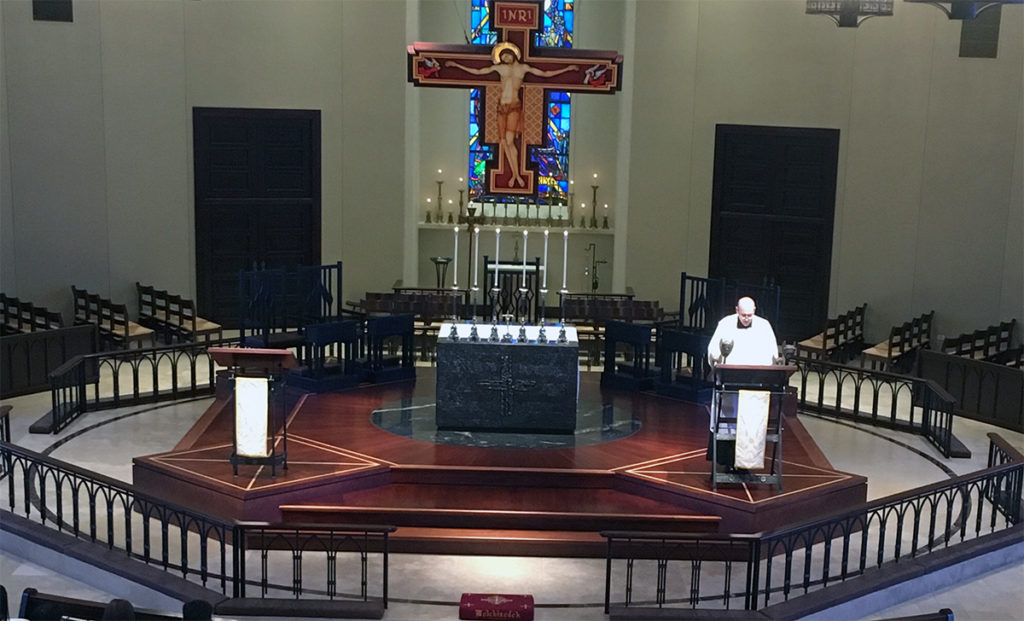
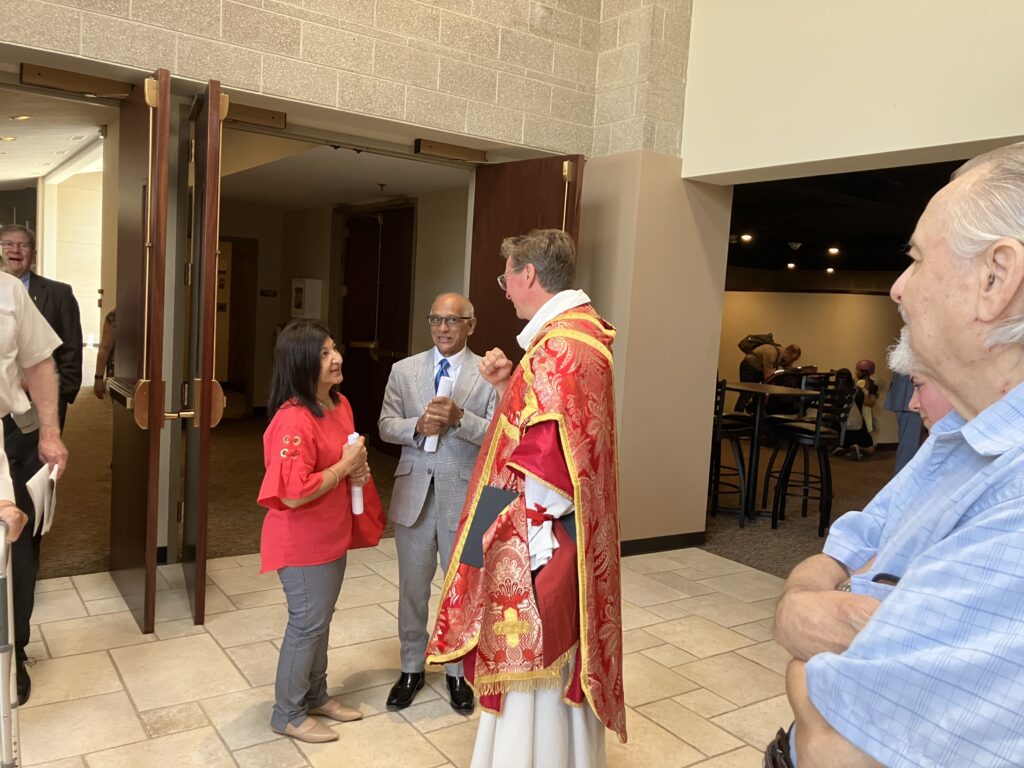
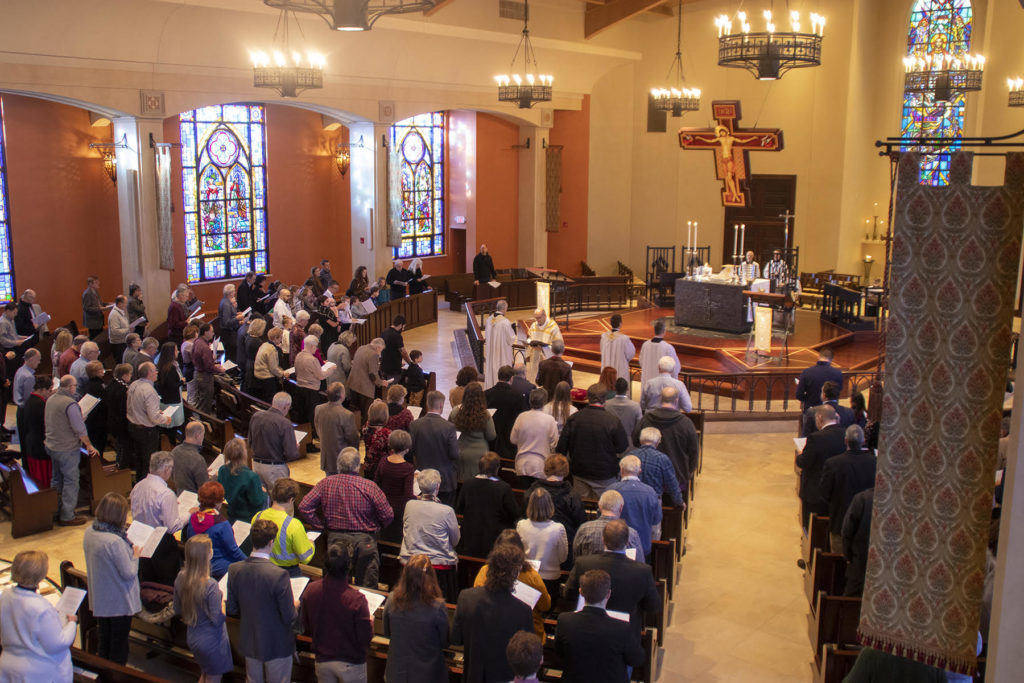
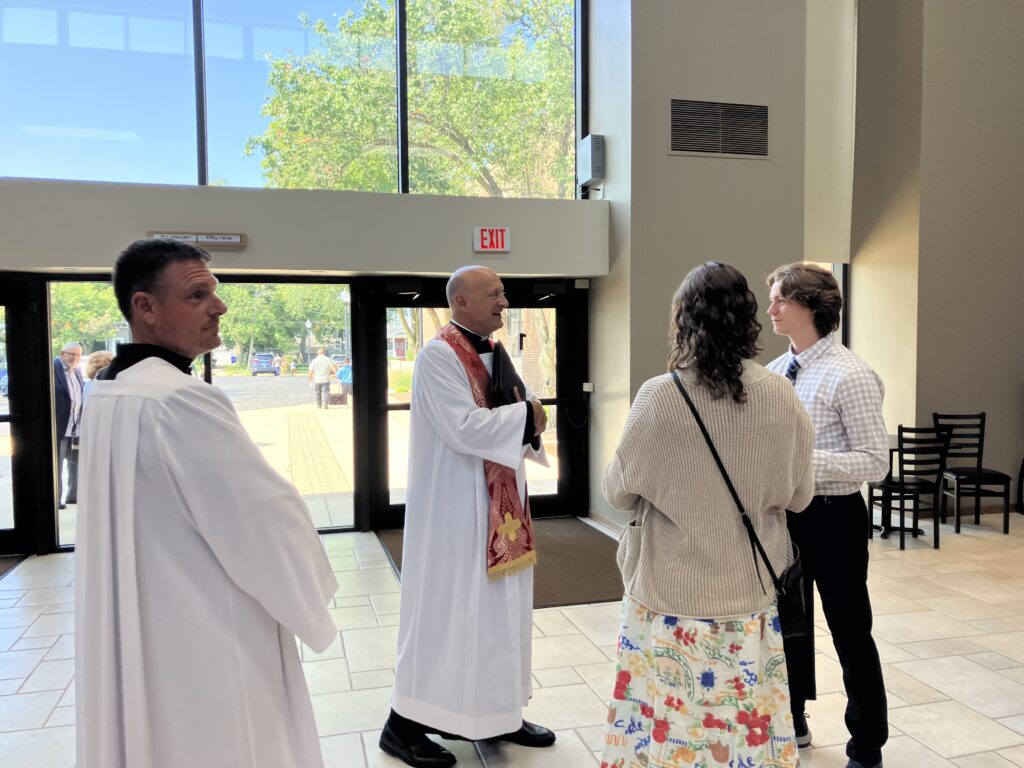
Altar area of St. JohnBook signingPastor Nelson chatting with membersThe people of God in the Divine ServiceConversing with member of St. JohnPastor Bruzek chatting with members
Thanks to be God for the people of St. John, their faithful pastoral staff, and their witness to the love of Christ in their community.
This week we are taking a break from our series on “Compact Congregations,” as both of us have been traveling. I’m recently returned from Pewaukee, Wisconsin where I attended the annual gathering of the Lutheran Deaconess Conference, whose membership is deaconesses trained by the Lutheran Diaconal Association, founded in 1919. One of the highlights of our annual gathering is hearing the stories of diaconal ministry by those celebrating a major anniversary of their consecration as deaconesses. It’s always inspiring to hear how God has been at work, often leading us to unexpected places and serving the church and the world in ways we could not have imagined.
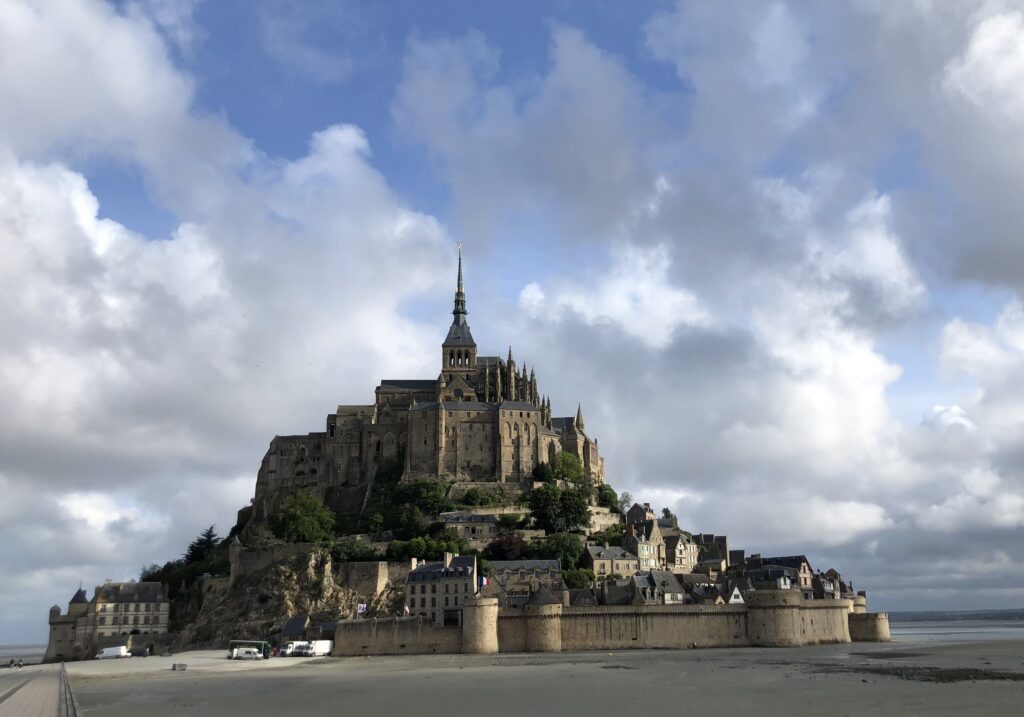
Kent has been in a more exciting location, Paris, attending the 2025 Congress of Societas Liturgica, where he presented a paper, “Lectern, Pulpit, and East Axis: Liturgical Developments in American Lutheran Churches in the 20th Century.” Societas Liturgica, founded in 1965, is “an association for the promotion of ecumenical dialogue on worship, based on solid research, with the perspective of renewal and unity.” Since he was in the neighborhood (and perhaps inspired by my post from last year), Kent is making a pilgrimage to St. Michel after the congress was over.
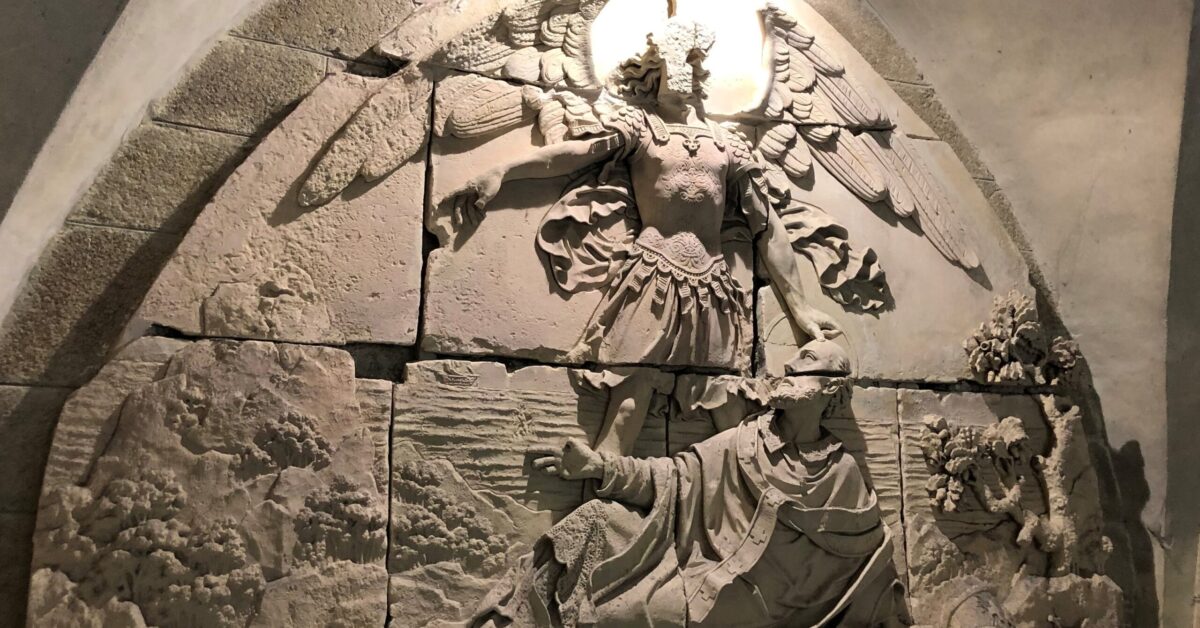
Today’s banner photo is from within the monastery complex and depicts the legend surrounding the establishment of this location as a pilgrimage site in a stone-carved relief. The Archangel St. Michael (identifiable by is his armor and wings) appeared to an eighth-century bishop in a dream and instructed him to build a chapel in his (St. Michael’s) honor on this rocky outcrop off the coast of Normandy (on the left side of the carving).
Like my deaconess sisters, Bishop Aubert and, later in its history, Benedictine monastics were called to an unexpected mission, serving God in a unique place and in unimagined ways.
++++ To read last year’s post, click here. Photos by Rhoda Schuler (June 2024)
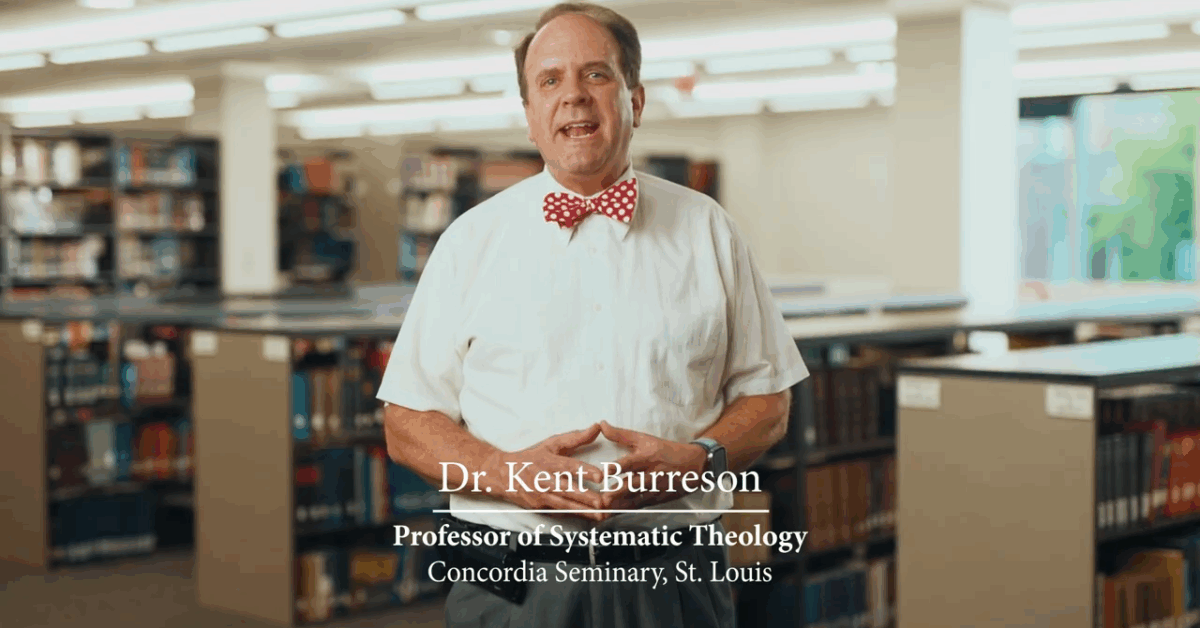
Dr. Kent Burreson’s workshop on the adult catechumenate, part of Concordia Seminary’s Prof Insights Series, will be in Vesper, Wisconsin. Located in central Wisconsin, Vesper is 30 miles west of Stevens Point. The workshop is hosted by Trinity Lutheran Church.
Deadline: MONDAY, JULY 7 Dates of the workshop: Starts Monday, July 21at noon; ends at noon on Wednesday, July 23 Cost: $150.00
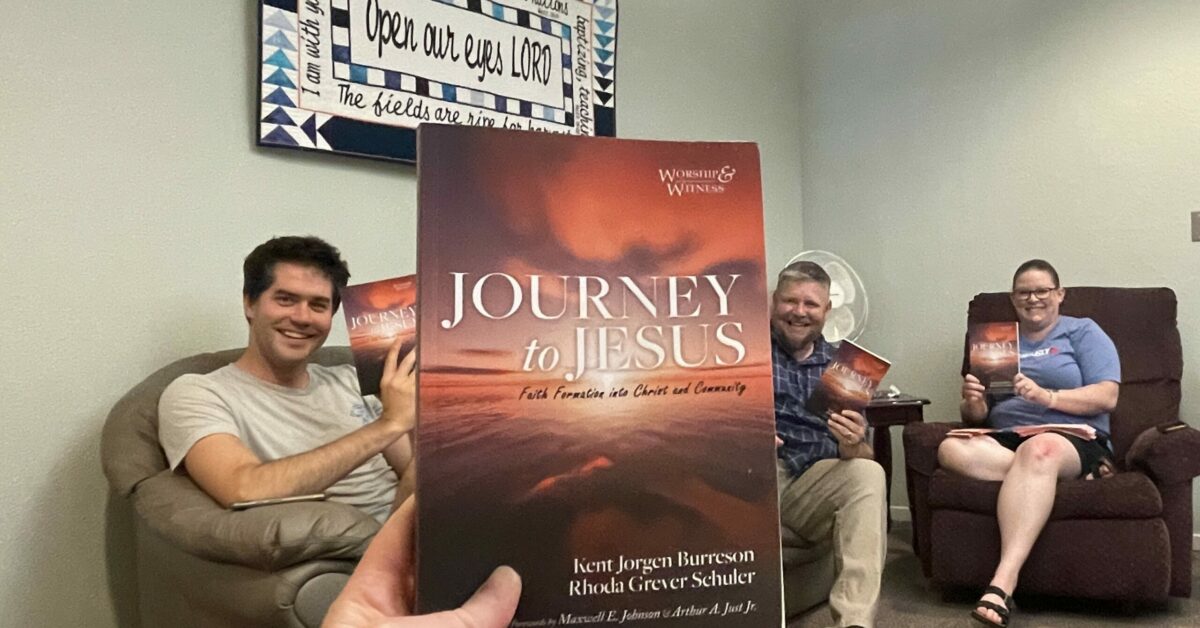
On June 9, one of my former students from Concordia University, St. Paul, DCE Jackie Druckhammer, texted me today’s banner photo. Her pastor had pre-ordered copies of our book for the church staff at St. John Lutheran Church, Vancouver, Washington. Pictured from left to right are DCE David Schrampfer, Pastor Brian Larson, and Office Administrator Erin White.
Kent and I are thrilled not only to have the book published but also to see it in the hands of church professionals, for they are the primary audience of our book. Part I of the book describes the adult faith formation process at four Lutheran congregations. As we wrote in the introduction, “We tell these inspiring individual stores of faith formation and present the missional mindset of congregations in the hope that the creative power of the Spirit will spark imaginative thinking among pastors and other church professionals, and lay leaders” (10).
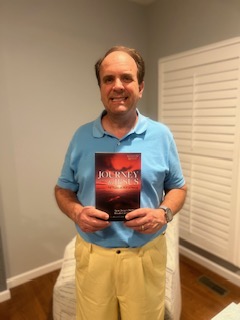
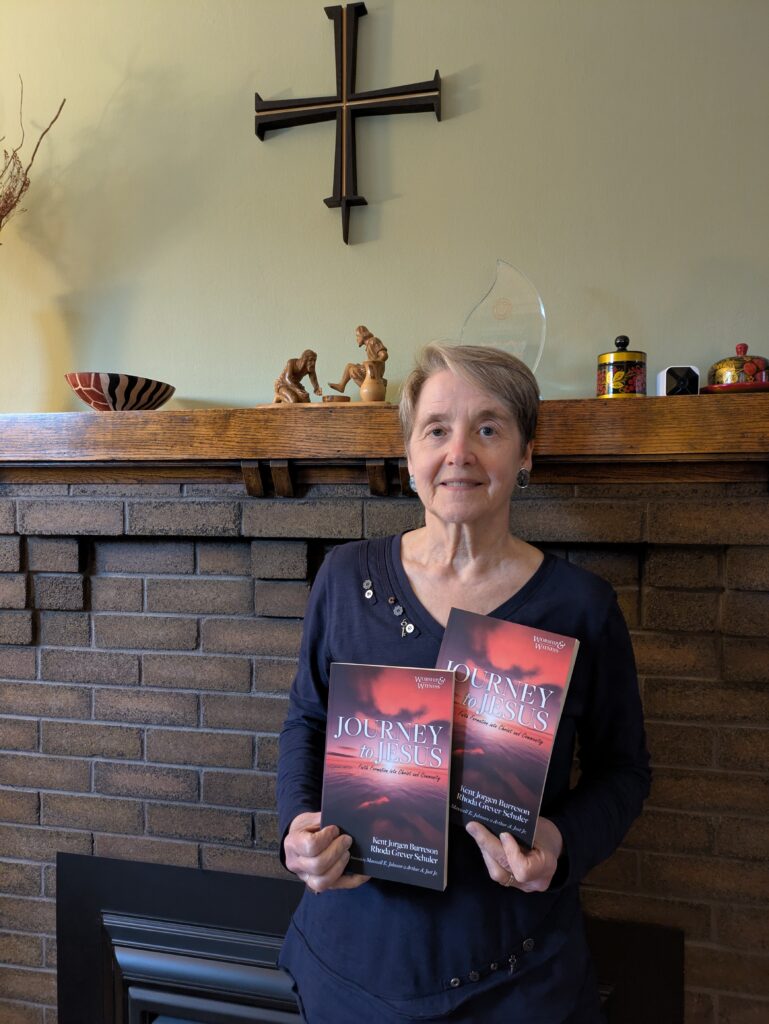
Our own “author” copies arrived a few days later, as the photos, below, show.
We’re pleased to announce that Kent will be leading a workshop on the adult catechumenate next month in Vesper, Wisconsin, as part of Concordia Seminary’s Prof Insights Series. Located in central Wisconsin, Vesper is 30 miles west of Stevens Point. The workshop is hosted by Trinity Lutheran Church.
Cost: $150.00
Dates: Noon, Monday, July 21 through noon on Wednesday, July 23
Registration deadline: July 7
Treasures Old and New: A Workshop on Adult Faith Formation
This workshop addresses the missional challenges pastors and leaders in the LCMS face in a “post-Christian” context. It introduces a model of adult faith formation based on early church catechumenal practices. Participants will explore new ways to form disciples, shape Christian identity through the Bible and sacraments, and foster hospitality in congregational life. Focused on a broader approach to adult faith formation, this workshop emphasizes faith formation as a flexible process rather than a “new program.” Stories from three exemplary parishes will show how faith formation practices can revitalize parish life and engage the entire congregation in shaping the faith of new Christians.