Inverting the Three “BEs”: Believing, Behaving, Belonging
Rhoda’s First Adventure at a Lutheran Camp – Part 3
This will be my final installment of my first experience at a Lutheran camp (as the keynote speaker at the LCMS Northwest District Youth and Family Ministry Conference, held at Camp Lutherhaven, Coeur d’Alene, Idaho). My apologies to CAMP LUTHERHAVEN! I have been using the wrong name for the camp, but corrections have been made on the previous blog posts.
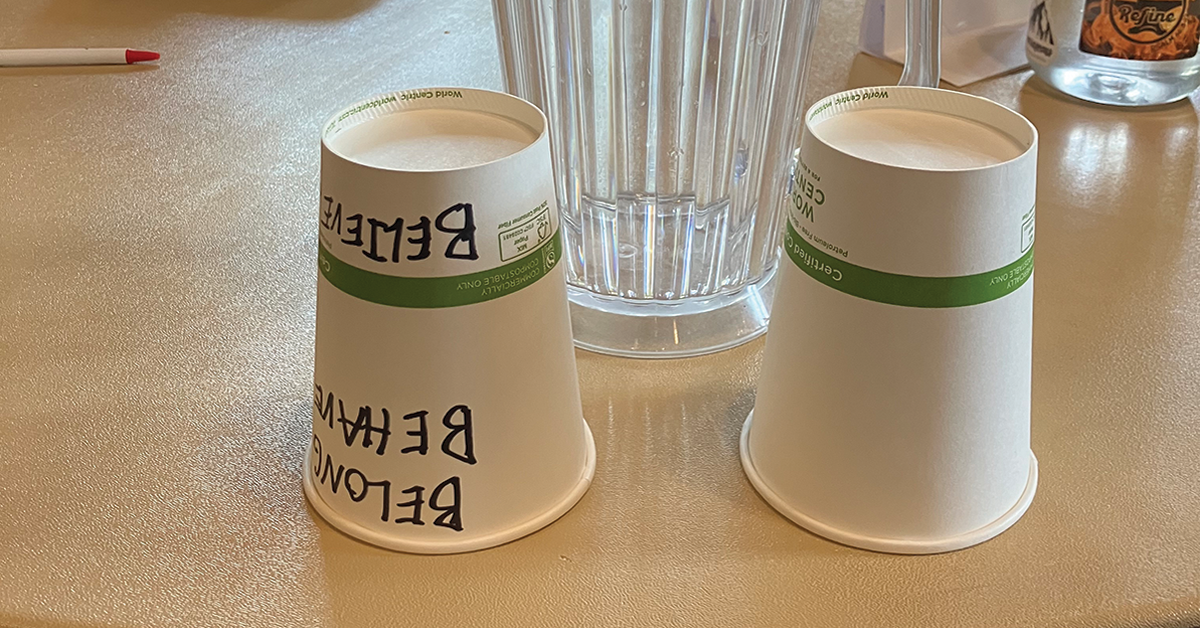
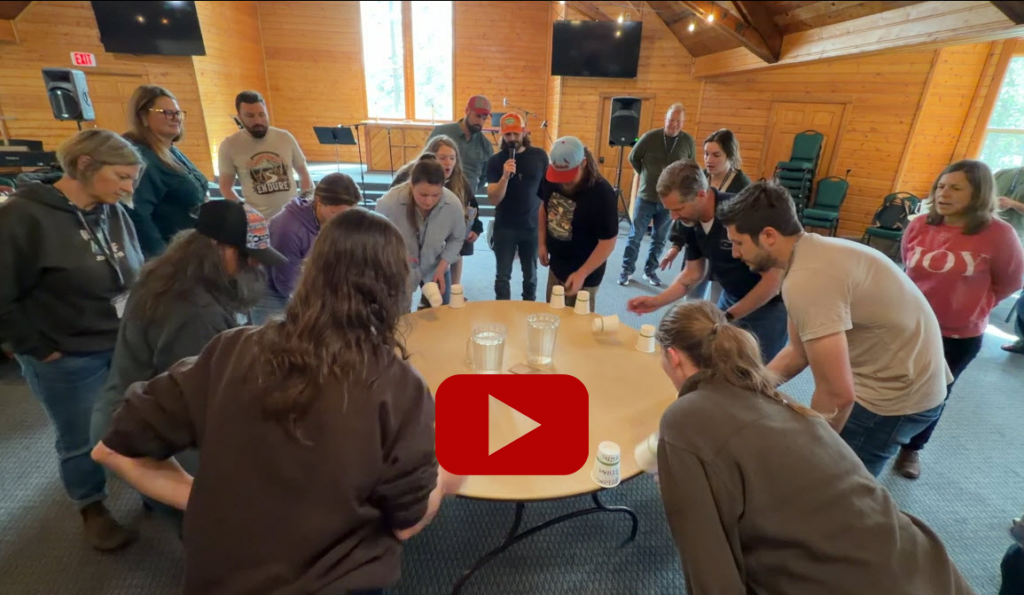
The video, below, is a quick look at the Dexterity Competition, another event at the “Name the Gift Olympics.” This Olympic event was based on chapter 7 of Journey to Jesus, “The Path to Conversion: Belonging, Believing, Behaving.” For the Dexterity Olympic event, participants had to flip the two upside down cups upright and then fill both with water (another baptismal allusion). One of the two cups had the words (from top to bottom) “belonging, behaving, believing” written on the side (see the featured image, above). The “inversion” indicates one of the major research findings Kent and I discussed in chapter 7. Here’s the relevant excerpt from our book:
[Diana Butler] Bass asserts [in Christianity after Religion] that, at least since the Reformation, Western Christianity has followed this sequence: belief, then behavior, “and finally belonging, . . . [a] pattern [that Protestants and Catholics] turned into rituals of catechism, character formation, and Confirmation.” Her assessment rings true to us, based on the historical evidence and on our personal experiences as “cradle Lutherans” in the LCMS, where full membership was attained through the rite of confirmation, which was also the gateway to the Lord’s Supper (when one truly “belonged”) and the point at which the newly confirmed received contribution envelopes. Based on our research, we find compelling Bass’s assessment that our contemporary context calls for a reshuffling of the BEs, one that moves belonging to earlier stages of the process, for in three of our four case studies belonging is the dominant theme in participant interviews.
Worth repeating here is the wisdom of Pastor Bruzek: “When I was young, we used to ask people what they thought [or perhaps, believed]; now people ask, ‘How do you feel?’” In answer to that question, people today respond that they feel “empty, lost, broken, listless, betrayed, miserable, angry, loveless, afraid, victimized, alienated, oppressed, in despair”—all of which can be compressed into the statement “I feel alone and unloved.” … That so many of those interviewed in our research used language of belonging persuades us that social disconnection and loneliness are the spiritual crises of today that the church is called to address (Journey to Jesus, 124-25).
Just as it was a challenge to invert the cups in this event, it’s challenging to think about reordering what we have done for scores of years. We do point out that it’s less about reordering—each of the three BEs is essential to the process of faith formation—and more about a matter of emphasis.
Our research reveals a predominance of “belonging” language from those interviewed at St. Mary’s, Redeemer, and St. John; at Living Faith, “believing” was the dominant theme. A deeper analysis of the data uncovers the presence of all three BEs in all four congregations in varying degrees and emphases. But rather than a clear succession of formation and incorporation into the life of the church one B-word at a time, the interviews disclose a simultaneity of belonging, believing, and behaving within the stages of the formation process. By exploring this simultaneity along with the “dominant” BE-language in each congregation, we hope to awaken readers to the creative possibilities inherent in an adult faith formation process in their contexts (Journey to Jesus, 126).