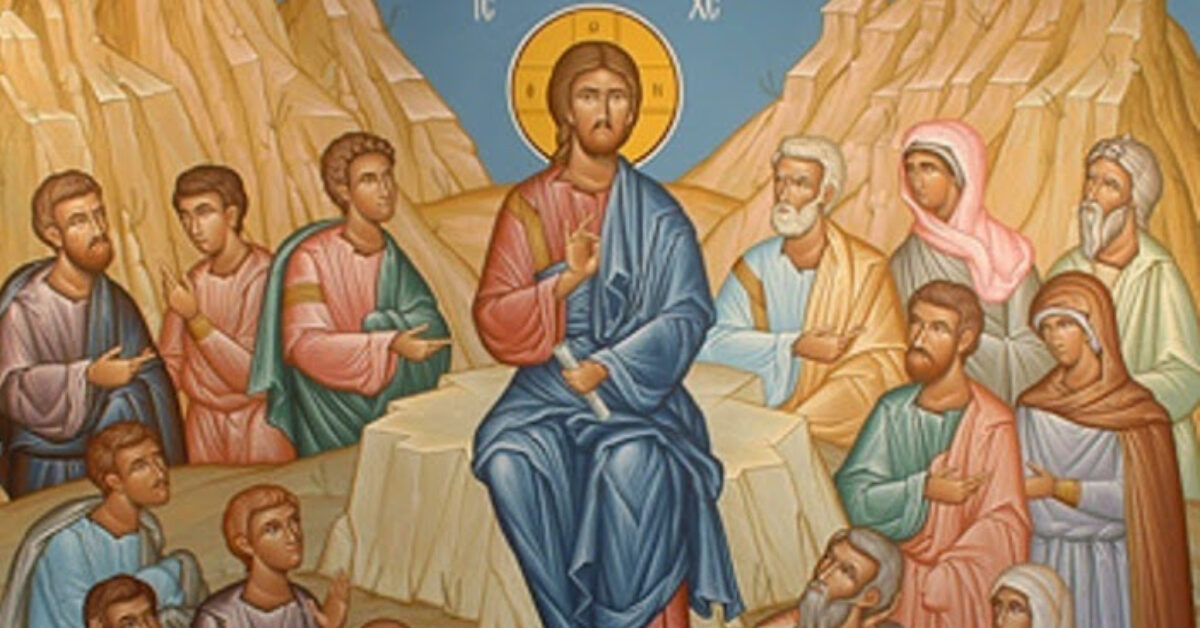
Although it is (apparently) an urban legend that the origin of the carol “The Twelve Days of Christmas” stems from a time when Roman Catholics in England (16th to early 19th centuries) were not allowed to practice their faith openly, we’re featuring the modern legend on today’s post. The carol was purportedly written as a catechumenal song to teach youth Catholics about their faith, with each gift holding the hidden meaning of a Christian truth. As critics have pointed out, the 12 “hidden meanings” are shared by Christians across denominational boundaries; there is nothing distinctive to Roman Catholicism in them, and the hypothesis is rather recent. Nevertheless, I find the “hidden meanings” a lovely way to christianize an otherwise secular “carol,” especially since the celebration of Christmas by those for whom it is a secular and cultural holiday ends on “the second day of Christmas.”
Here are the 12 hidden meanings:
The Partridge in the pear tree is Jesus Christ.
Two turtle doves are the Old and New Testaments.
Three French hens stand for faith, hope, and love.
The four calling birds are the four gospels of Matthew, Mark, Luke, and John.
The five golden rings recall the Torah or law, the first five books of the Old Testament.
The six geese a-laying stand for the six days of creation.
Seven swans a-swimming represent the sevenfold gifts of the Holy Spirit: prophesy, serving, teaching, exhortation, contribution, leadership, and mercy.
The eight maids a-milking are the eight beatitudes.
The nine ladies dancing are the nine fruits of the Holy Spirit: love, joy, peace, patience, kindness, goodness, faithfulness, gentleness, and self-control.
The ten lords a-leaping are the ten commandments.
Eleven pipers piping stand for the eleven faithful disciples.
Twelve drummers drumming symbolize the twelve points of belief in the Apostles’ Creed.
This list could be a great way to teach some basics of the faith to both children and adults in a fun and festive atmosphere, perhaps as a Bible class or Sunday School lesson in early January (during the 12 days).
++++
Banner image: Photo by Rhoda Schuler, 2026
Sources consulted about the “hidden meaning” of the carol:
When preaching or teaching Luther’s SmallCatechism, I did so with two primary thoughts.
Interrelationship
First, I tried to illustrate the interrelationships of the parts of the Small Catechism. To understand what sin is and what should be confessed in preparation for coming to Holy Communion, one needs to learn the Commandments so that sin would be exposed. This followed Luther’s lead in beginning the Catechisms with an exposition of the Ten Commandments. Having had sin exposed, God’s Holy Spirit strives to move people to sorrow and penitence for sin.
Having been moved to a knowledge of sin and to penitence by the Spirit of God, it is necessary to know how to confess one’s sins using the Keys and prayer. Christians need to know that the Triune God has dealt with sin in the justifying work of Christ. Thus, the teaching of the Creed. Christians also need to know who they are — baptized, redeemed, and forgiven sinners, God’s sons and daughters, believing saints of God in Christ. Hence the teaching of Baptism. Since baptized Christians are at the same time both sinner and saint, there is the need for teaching about the Keys and the Confession of Sins. Luther emphasized that the most important part of the Keys is the absolution — sinners knowing God’s pardon in Christ. All of this in preparation for coming to the Lord’s Table in a godly and worthy manner, knowing by faith that though one is sinful, Christ is giving sinners a blessed inheritance of eternal spiritual gifts – forgiveness, life, and salvation. These gifts Christ gained for sinners by His sinless life, death, and resurrection.
These interconnections in the Catechism helped me to better understand Luther’s movement through the Six Chief Parts of Christian doctrine in his Catechisms—beginning with teaching about the Ten Commandments, then moving to the Creed and the Lord’s Prayer, then on to the Sacrament of Holy Baptism, the Keys, and the Sacrament of the Altar. [SC Preface, 10; LC, Short Preface, 20; LC IV, 1; Robert Kolb, “Introduction to the Prefaces,” in John T. Pless and Larry M. Vogel eds., Luther’s Large Catechism with Annotations and Contemporary Applications (CPH, 2022), 53-54.]
Justification by faith – “a silken cord”
The second perspective guiding my preaching and teaching of the Catechism was its overarching Gospel orientation. As Louis Koehler stated it, “’Justified by faith without the deeds of the Law’ — that is the thought that runs through the Catechism like a silken cord.” [Louis H. Koehler, “Luther’s Catechism,” in Theodore Laetsch, ed. The Abiding Word: An Anthology of Doctrinal Essays for the Year 1946, Vol, 2 (CPH, 1946), 619.] For Luther, the Catechism was a tool for teaching the gospel of salvation by grace through faith in Jesus Christ.
This Gospel orientation is evident in the words of Luther’s Catechisms. The explanations of the Commandments emphasize the fact that Christians are to “fear, love and trust in God above all things” (SC I, 2; this reference and all that follow are from The Book of Concord, trans. and ed. T.G. Tappert ). The explanations of the Creed begin with “I believe” (SC II, 2, 4, 6;). In the Lord’s Prayer catechists are encouraged “to believe” that God is our dear Father in heaven Who will hear and answer our prayers, especially our prayer for forgiveness (SC III, 2]). Luther’s exposition of the Lord’s Prayer in the Large Catechism states that the fifth petition is “an appeal to God…to deal graciously with us” and “to forgive as He has promised” (LC III, 92). In Baptism people are to “believe…the Word and promise of God” that comes with the water (SC IV, 6, also 10). By the water and the Word, sinners are justified by God’s grace and become people who have the hope of eternal life. In Confession and Absolution Christians are encouraged to believe that “our sins are thereby forgiven before God in heaven” (SC V, 16, also 26-29). In the Large Catechism Luther emphasized the fact that Christians are to believe that the most important part of Confession and Absolution is not our word of confession but God’s Word of forgiveness or “absolution” (LC V, “A Brief Exhortation to Confession,” 22). In the Lord’s Supper penitent Christians are worthy and well prepared as they are led by the Spirit to “believe” the words of Christ that “the forgiveness of sins” and Christ’s true body and blood are “for you” (SC VI, 8-9). Luther emphasizes the fact that in the Lord’s Supper penitent sinners receive by faith in Christ the “forgiveness of sins, life, and salvation” (SC VI, 6).
May the preaching of these sermons build the faith of those hearing, move them to godly living in the world, and bear eternal fruit through Christ our Savior.
++++++++++++++
Resource for a Six-Week Series: To review or download the complete list of lectionary, sermon title and text, and hymn recommendations selections for the Six Week Series, click here.
For a bibliography of sources on preaching the catechism, click here.
To contact Dr. Boehme, send an email to Rhoda@FormingLutherans.org, and she will forward your questions or comments to him.
Banner Photo: König, Gustav Ferdinand Leopold. 1900. The life of Luther in forty-eight historical engravings. St. Louis: Concordia Publishing House.
I offer these comments about the selection of the Scripture readings and hymns to help the reader understand how I arrived at the scripture readings, hymns, and sermon texts and titles that were chosen for this part of the sermon series.
Sermons on the Sacrament of the Altar
The four passages that are the biblical basis for the Sacrament of the Altar are assigned as lectionary readings for this four-part series (Matthew 26:26-30; Mark 14:22-25; Luke 22:14-20; 1 Corinthians 11:23-34). The Sacrament of the Altar is stated to be Christ’s Last Will and Testament, reflecting the wording of the Verba in the LSB liturgies and in the text of LSB’s Catechism. See also Luther’s work “A Treatise on the New Testament, that Is, The Holy Mass” (LW 35, 75-111). Additional details about lectionary choices are included in the document with lectionary and hymn options.
When preaching on the Sacraments of Baptism and the Sacrament of the Altar, some mention needs to be made about the thread of blood and water running through the Old and New Testaments. Blood and water were the agents of cleansing from sin, consecration, and purification in the Old Testament (Leviticus 1:4-5, 8-9; 8:6, 15, 23-24; 16:3, 14-16, 23-28; Deuteronomy 21:3-9). The New Testament recounts Christ’s coming to His Church in blood and water (1 John 5:6-12). John in his Gospel emphasizes the truth that when Jesus’ side was speared on Good Friday, blood and water flowed out (John 19:31-37). Today Jesus comes to His Church and the world with the cleansing flow of blood (The Sacrament of the Altar) and water (The Sacrament of Holy Baptism), which delivers from sin and gives the blessing of eternal life (Matthew 26:26-29; Acts 2:36-39; 22:16). This blood and water thread can be included in the sermons or taught in a Bible class accompanying the sermons on Baptism and/or the Lord’s Supper.
Sermons on the Lord’s Prayer
The Lord’s Prayer has seven petitions and an Introduction and Conclusion, so there are nine parts to this series. A sermon on prayer in general was not included, although one could be added, bringing the total in the series to ten. The Explanation section in the LCMS’s edition of the Small Catechism includes a section on prayer in general [Luther’s Small Catechism with Explanation (CPH 2006), pp. 174-180]. These readings or others more fitting with one’s congregation could be used for a sermon on prayer in general – Genesis 18:23-32; Daniel 6:10; 1 Timothy 2:1-2; 1 Thessalonians 5:17-18; Matthew 7:7-8; Matthew 26:36-44; Luke 6:12.
For all the sermons on the Lord’s Prayer, I suggest that the biblical text of the particular petition be the basis for the preaching, using the text from the Sermon on the Mount in the Gospel of Matthew. Other Gospel readings have been included in the lectionary, reflecting variations over the years. And since the Lord’s Prayer is part of the liturgy, I suggest that the catechetical reading be read/confessed either before or after the sermon.
A number of scripture readings were selected because they were included in the explanation section of Luther’s Small Catechism.
Hymns and Themes for These Series
Two of Luther’s hymns on the Sacrament of the Altar accompany the sermons on the Lord’s Supper (LSB 617 & LSB 627), as well as his hymn on the Keys (LSB 607), and Luther’s catechetical hymn on the Lord’s Prayer (LSB 766) is sung in sections corresponding to the part of the Lord’s Prayer that is the theme of the sermon.
These sermons should encourage Christians to be regular in receiving the Lord’s Supper to be forgiven of their sins, to strengthen their faith in Christ, to be further equipped for their lives of service in the Church and the world, and to look forward to receiving their spiritual inheritance in heaven. Sermons on prayer should encourage regular daily prayer, family and personal prayer time, scripture reading, devotional time, a devotional use of the Catechism, the use of devotional tools like Portals of Prayer and other such aids.
To review or download the complete list of lectionary selections, sermon title and text, and hymn recommendations, click here. To contact Dr. Boehme, send an email to Rhoda@FormingLutherans.org, and she will forward your questions or comments to him.
Shrouded in legend, Bishop Nicholas of Myra (270-343) evolved over the centuries into the patron saint of children (in the West) and sailors (in the East). According to one Roman Catholic source, this devolution—my word, not that of my source—of a fourth-century saint revered for acts of mercy and charity into the King of consumerism at Christmas started in Protestant circles.
“…the giving of presents at Christmas … is not an old Catholic custom. It seems to have originated among the Protestants of the Low Countries and to have been taken to America by the Dutch immigrants of New Amsterdam” (Butler, Lives of the Saints, December vol., 60). The name “‘Santa Claus’” derives from “the Dutch ‘Sint Niklaas’” (ibid., 59).
Having long been horrified by the bad theology promoted in the secular song “Santa Claus is Coming to Town,” along with the threats I’ve heard parents say to their children (“If you don’t stop … if you’ve not nice to your sibling, Santa won’t …”), I long for a rehabilitation of St. Nicholas in Protestant circles. For readers who do not yet have an ear worm of the song in their heads, click here for the heretical lyrics.
Let us turn away from self-centered works righteousness, from seeking “rewards” of material gifts based on our distorted desires, from falling into do-ut-des transactional living promoted in this song. If, as Lutherans confess, “the saints are to be remembered so that we may strengthen our faith when we see how they experienced grace …. Moreover, it is taught that each person, according to his or her calling, should take the saints’ good works as an example” (Augsburg Confession XXI, Kolb/Wengert edition, p. 58), there are portions to embrace from St. Nicholas’ hagiography.
One legend tells of a poor father unable to provide doweries for his three daughters. With no way to provide for their future, the father considered a life of prostitution for them. Nicholas, hearing of the family, threw three bags of gold into an open window of the home. The legend is consistent with the Christian virtues attributed to him, a man of deep piety and generosity with a strong sense of justice for people on the margins. This saying, attributed to St. Nicholas, encapsulates not only sound biblical theology but also lifts up a spirit of generosity, an action for Christians to imitate in this season that reflects the legend of this saintly bishop:
The giver of every good and perfect gift has called upon us to mimic God’s giving, by grace, through faith, and this is not of ourselves.
+++ Next week’s blog will be another segment of Armand Boehme’s series on catechetical preaching.
Here are some comments to help the reader understand how I arrived at the scripture readings and hymns chosen for this part of the catechetical sermon series.
Sermons on Confession and the Keys
The Scripture readings for the sermons on Confession and the Keys were primarily chosen from the passages listed in each part of the explanation to Luther’s Small Catechism. The order of the sermons reflects the order found in the current editions of the Catechism and LSB. The first sermon should reflect the two parts of confession: 1) the act of confessing one’s sins, and 2) God’s pronouncement of absolution by either the pastor or a fellow Christian. The second sermon should reflect the fact that at our Baptism God bestows on us the Office of the Keys. The Keys are exercised both by Christian laity and clergy – the laity privately, the clergy publicly on behalf of the laity and for their spiritual benefit. The third sermon should center on the office of the Holy Ministry and the duties God calls the pastor to perform. Luther’s catechetical hymn on the Keys can be sung each Sunday. The Keys were given to the Church so that faith in Christ would be strengthened and exercised.
Sermons on the Creed
Some of the sermons on the Creed have a specific textual basis in all three scripture readings which are to be proclaimed in the sermon; for instance, when considering the person and work of Christ, each of the readings is tied to one of Christ’s threefold office of Prophet, Priest, and King. The sermon on seeing and hearing the forgiveness of sins is a proclamation of the Means of Grace – the Sacrament of Holy Baptism, Scripture, and the Sacrament of the Altar – with each reading speaking about each of the Means of Grace. The catechetical sermons are to be Law and Gospel proclamations of Christ and His saving work designed to help parishioners grow in their faith and love for Christ.
Liturgical Recommendations
Because the confession of the Creed is an integral part of the liturgy, my suggestion is that the reading of the creedal sections of the Catechism be spoken/confessed before or after the sermon.
I suggest the singing of Luther’s catechetical creedal hymn (LSB 954) in each service when preaching on the Creed. This may get a bit repetitive for some. A substitute creedal hymn could be LSB 953.
Accessing the Confession & the Keys and The Creed Series
To review or download the complete list of lectionary selections, sermon title and text, and hymn recommendations, click here. To contact Dr. Boehme, send an email to Rhoda@FormingLutherans.org, and she will forward your questions or comments to him.
++++++++++
Banner Photo: “Allegory to the Old and New Testament” carved relief from pear wood, by Peter Dell the Elder (1490-1552). Photo (by Rhoda Schuler) of photo in Martin Luther: Treasures of the Reformation, Dresden: Sandstein Verlag, 2016. Book prepared for the “Here I Stand: Luther Exhibition USA 2016.”
Here are some comments to help the readers understand how I arrived at my selection of the scripture readings and hymns for this part of the catechetical sermon series.
Baptismal Sermons
For each of the baptismal sermons I included in the readings the scriptural texts Luther used in his Catechism (Matt. 28:16-20; Mark 16:15-16; Titus 3:3-8; Romans 6:1-11).
For the first sermon the Old Testament and Epistle readings reflect the fact that circumcision is the Old Testament predecessor to Baptism, and that Baptism (the circumcision of Christ) can be administered to infants. Circumcision was administered to infants on the 8th day (Genesis 17:9-13). The sermon text contrasts Jesus’ Baptism with our baptism – Jesus was baptized as an adult and did not need Baptism; most of us were baptized as infants and all of us needed Baptism to be brought to faith and to have sin forgiven. At His Baptism Jesus was declared to be God’s Son; at our Baptism we became God’s sons and daughters as we were brought from unbelief to faith in Christ. At Jesus’ Baptism He was anointed with the Holy Spirit for His messianic work; at our Baptism the Holy Spirit began to guide our spiritual lives. Jesus was baptized with the Baptism of John; we were baptized in the name of the Triune God – Father, Son, and Holy Spirit. Jesus was perfect and sinless so the Father was well pleased with Him; by faith in Christ, God the Father becomes well pleased with us even though we are both sinner and saint. The scripture readings also reflect the fact that Baptism gives faith, forgiveness and eternal life. These are my selections – the readers who will preach on the Catechism might find other scripture selections that better fit their circumstance.
Hymn Suggestions
I have suggested that the congregation sing Luther’s baptismal hymn on only one Sunday (LSB 406/407, To Jordan Came the Christ, Our Lord). It can be sung more often if desired or could be sung on more than one Sunday since the hymn is probably not a familiar one. Luther’s hymn on the Ten Commandments (LSB 581) is long and probably unfamiliar to many as well. A choir could help lead the singing of this hymn (as well as lead the singing for Luther’s baptismal hymn). The Ten Commandments hymn is sung progressively in parts corresponding to each Commandment so that only two or three verses of the hymn are sung each Sunday. This will enable the congregation to become familiar with the hymn and to be able to sing it much more easily by the end of the sermon series on the Commandments.
Accessing the Baptism and Ten Commandments Series
To review or download the complete list of lectionary selections, sermon title and text, and hymn recommendations, click here. To contact Dr. Boehme, send an email to Rhoda@FormingLutherans.org, and she will forward your questions or comments to him.
+++
Banner Image: Baptism of Jesus, Chapel of the Holy Trinity, Concordia University, Ann Arbor, Michigan; photo by Rhoda Schuler, July 2024.
Preaching on the Catechism is not necessarily the norm in Lutheranism today. However, preaching on the Catechism is strongly encouraged by Luther. In his German Mass, Luther stated the desire for regular catechetical preaching to train the young in the Christian faith. [LW 53, 64-69, 78-80, 86-87]
Luther wrote that preaching the “Catechism is doctrine at its best. Therefore, it ought to be constantly preached.” [Ewald Plass, What Luther Says, Vol. 1 (CPH, 1959), 125.]
Luther also stated the need for preaching the Catechism in the preface to the Large Catechism which is part of the Lutheran Confessions. “However, it is not enough for them simply to learn and repeat these parts [of the Catechism] verbatim. The young people should also attend preaching, especially at the time designated for the Catechism, so that they may hear it explained and may learn the meaning of every part. Then they will also be able to repeat what they have heard, and give a good correct answer when they are questioned, and thus the preaching will not be without benefit and fruit. The reason we take such care to preach on the Catechism frequently is to impress it upon our youth, not in a lofty and learned manner, but briefly, and very simply, so that it may penetrate deeply into their minds and remain fixed in their memories.” [LC, Short Preface, 26 & 27.]
Luther did not just encourage the practice of preaching on the Catechism, he actually did it! He preached catechetical sermons in 1516, 1517, 1522 and 1523. By 1522 Lutherans had established the practice of preaching catechetical sermons four times a year. The catechetical sermons Luther preached in 1528 helped to form the text of the Large Catechism. [Charles Arand, That I May Be His Own: An Overview of Luther’s Catechisms (CPH, 2000), 57-63.] Even before he wrote the Small and Large Catechisms, Luther had written several catechetical works. [F. Bente, Historical Introductions to the Symbolical Books of the Evangelical Lutheran Church (CPH, 1921), 76; LW 43, 3-45.] Having discovered this, I decided to engage in regular preaching on the Catechism. My approach took two paths.
The first path was a three-year series. The first year I would preach on the Sacrament of Holy Baptism in the Epiphany season, and the Ten Commandments starting in September when catechetical instruction began again. The second year I would preach on the Office of the Keys and the Apostles’ Creed in the same time frames. And the third year I would preach on the Sacrament of the Altar, and the Lord’s Prayer in those same time frames.
Occasionally I would preach a series of six catechetical sermons, one sermon on each of the Six Chief Parts of the Catechism.
In both of these approaches, the various parts of the Catechism that were being preached on would also be read and confessed by the congregation in the worship service. For instance, when the first part of Holy Baptism was being preached, the congregation would read/confess the Sacrament of Holy Baptism, Part I. Luther’s catechetical hymns should also be sung. Luther’s catechetical hymns helped to sing the Reformation Gospel of Jesus Christ into the hearts and minds of people. In the material that follows, Luther’s hymns are indicated by (ML). I had the selected parts of the Catechism read/confessed either at the beginning or end of the sermon, or at times before or after the creed.
If some of the readers of this blog have also preached on the Catechism, I would be interested in hearing how that was done. I will be happy to answer questions about my approaches to preaching the Catechism. To contact me, send an email to Rhoda@FormingLutherans.org, and she will forward your questions to me.
The desire of regular catechetical reaching is to strengthen the faith of all who hear them, and to help those hearing the sermons to love Christ as their Savior and have the blessings of eternal life.
Subsequent posts in this series will follow the approaches I took to catechetical preaching in the Sunday services (one post for each year of three-year cycle, and a final post on the six-week series on each of the chief parts of the Catechism). Each post will include suggested Scripture readings, sermon texts and titles, portions of the Catechism to be spoken during the worship service, hymn suggestions, and some theological and practical commentary about my lectionary and hymn choices.
If one is not regularly preaching on the Catechism I would encourage a continuous reading/confession of the Catechism in the Sunday morning church services. Such a practice helps people to recognize that the Catechism isn’t a book to lay aside after catechetical training is done. Such a practice helps to mitigate the “confirmation is graduation from the Bible and Catechism” syndrome, and helps the Catechism to be seen as a devotional tool to strengthen faith in Christ.
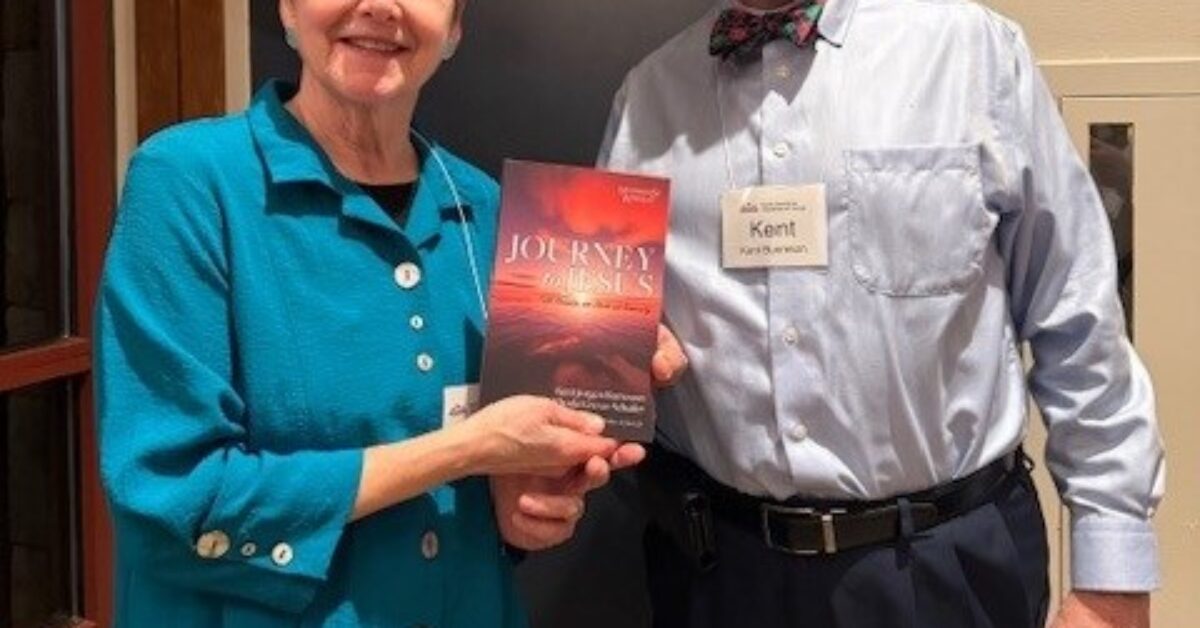
We are pleased to announce the start of a new series, Preaching on the Catechism. In September, when I attended the Go First! Ministry Conference sponsored by the Minnesota South District, I was curious about the workshop titled “Catechetical Preaching.” After attending the session led by Pastor Armand Boehme, I shared a bit of the content from his presentation with Kent. We both agreed that his work dovetails well with our goals for adult faith formation within congregations. We are delighted that Pastor Boehme has agreed to share with our readers the resources he has developed over his decades of parish ministry. Here’s more about him:
Rev. Dr. Armand J. Boehme serves as Associate Pastor, of Trinity Lutheran, Northfield, MN. He previously served other parishes in Wisconsin and Minnesota. He is a campus contact Pastor, and was a vicarage supervisor, mentor for colloquy and Ethnic Immigrant Institute of Theology students and a District LWML Counselor. He taught at seminaries and Bible schools in Kazakhstan, India, the United States, and Slovakia. He served on the Synod’s Commission on Theology and Church Relations (1992-1998, 2002-2010) and as the President of the St. Timothy Society, an organization which supported missionaries in Kenya.
He is a published author, having contributed essays to Martin Luther: Companion to the Contemporary Christian (CPH, 1982), and The Lutheran Difference: An Explanation & Comparison of Christian Beliefs (CPH, 2010). He and his wife Judy co-authored the 1983 LWML Bible Study, God’s Rescue Mission: The Story of Jonah (CPH, 1983). He also authored The Lutheran Difference: Angels and Demons (CPH, 2006). He currently serves on the board of the Lutheran Heritage Foundation, is involved with Sudanese ministry, and recently celebrated the 50thanniversary of his ordination.
Next week he’ll introduce the topic, followed by four more blog posts in this series. The first three of these four blog posts are one unit—his division of Luther’s Six Chief Parts spread out over a three-year lectionary cycle. He proposes one chief part beginning with the Baptism of our Lord (ending at the beginning of Lent), and the second set of sermons on the next chief part (generally covering more weeks) beginning in the fall. The final blog will outline a different model: A six-week series, with one sermon on each of the Six Chief Parts. Stay tuned in the coming weeks for a complete set of lectionary ideas, hymn selections, and other wisdom.
I’m nostalgic for 2017, a year filled with special commemorations of the 500th anniversary of Luther’s 95 Thesis and the reforms of the church launched by that event. While most people today (October 31) are fixated on costumes for their kids, Halloween candy to give out, or creepy lawn decorations, I’m musing about Luther’s 1520 treatise The Freedom of a Christian (Quotations are from The Annotated Luther Study Edition, edited by Timothy J. Wengert, Fortress, 2016). Luther wrote: “In order to point out an easier way for common folk (for I serve only them), I am proposing two themes concerning the freedom and servitude of the spirit.”
The Christian individual is a completely free lord of all, subject to none.
The Christian individual is a completely dutiful servant of all, subject to all (488).
The remainder of Luther’s treatise shows how these paradoxical statements are both true. As a child and youth growing up in the Lutheran church, I heard a much greater emphasis on the first theme: the Christian is “completely free” and “subject to none” on account of one’s faith in Christ (not on one’s good works), and most of the preaching (that I recall, at least), centered on my future life with God in heaven, guaranteed by that faith in Christ. But having lived my entire adult life as a deaconess, with its emphasis on service, I revel in the interconnection of Luther’s two themes. Joyful service on behalf of others flows from the firm foundation of a person’s complete freedom through faith in Christ. Luther says it with greater eloquence in the second half of the treatise.
Up to now we have spoken about works in general and, at the same time, about those specific things that a Christian must do to train his or her own body. Finally, we will discuss those things done for one’s neighbor…. Thus, it can never happen that in this life a person is idle and without works toward one’s neighbors…. Nevertheless, no one needs even one of these works to attain righteousness and salvation. For this reason, in all of one’s works a person should in this context be shaped by and contemplate this thought alone: to serve and benefit others in everything that may be done, having nothing else in view except the need and advantage of the neighbor…. That is, with joy and love [faith] reveals itself in works of freest servitude, as one person, abundantly filled with the completeness and richness of his or her own faith, serves another freely and willingly (519-21).
Thanks be to God for the richness of Luther’s theology, that draws us into relationship with God through the person and work of Jesus and Christ, and then frees us for a life a service on behalf of others. Our world needs this message now, just as it did 500 years ago.
++++
Photo by Rhoda Schuler, 2024: Narthex floor of a Lutheran church in Colorado
Last week I concluded with words from Ambrose that the goal of the catechumenate is “inebriation” in Christ. Arriving at that inebriation requires a well thought process on the part of the catechist. As William Harmless notes in Augustine and the Catechumenate, Augustine received just such a question from a catechist, Deogratias (what a baptismal name, God-thanking one), around 400 AD. Deogratias question essentially was, how shall I catechize effectively the inquirers, those entering the initial stage of the catechumenate. Apparently at that time in North Africa this stage lasted one session. In particular, Deogratias wanted to know how much of the biblical narrative he should cover. Augustine answered in his treatise, On Catechizing. The treatise has a profound influence on pedagogues and pedagogy in the subsequent eras of church life. However, I want to focus, as Harmless does, on Augustine’s response to Deogratias’ question. There are lots of things that could be done with inquirers, but ultimately the most important thing they should come to know is the story of God in Christ. That is exactly where Augustine points Deogratias. As Harmless conveys, using Augustine’s words,
“The narrative is complete when the beginner is first catechized from the text, ‘In the beginning God created heaven and earth,’ down to the present period of church history.” This advice, at first sight, seems overwhelming: that the catechist should have to survey the whole of biblical and church history in a single speech. . . . He counselled—obviously tongue-in-cheek— against taking his suggestion too literally: “That does not mean, however, we ought to repeat verbatim the whole” of the Scriptures, even “if we have learned them by heart.” Augustine insisted that the catechist be selective: on the one hand, give a comprehensive survey, and on the other, highlight “certain of the more remarkable facts.” . . . . Augustine offered an analogy: one’s narrative should flow as though it were a valuable parchment being carefully unrolled and spread out to view that the audience might both examine it and admire its beauty. What guided this was a commonsense pedagogy: “In this way not only are the points which we desire to emphasize brought into high relief by keeping other in the background, but also the one whose interest we are anxious to rouse by the narrative (narratio) does not come upon them with a mind already exhausted nor with a memory confused” (Harmless, 126-129; De catechizandus rudibus, 3.6, 4.8).
In other words, “the case for Christianity” for the inquirers was best made by the story itself, and especially by its culmination in the coming of the Lord Jesus Christ. As Augustine says, “Christ came mainly for this reason: that we might learn how much God loves us, and might learn this to the end that we might begin to glow with love of him by whom we were first loved, and so might love our neighbors at the bidding and after the example of him who made himself our neighbor by loving us.” This was, for Augustine, the Christian message in a nutshell.
Inquirers through God’s story in Christ Jesus are inebriated with God’s love. If that is the end result of the period of inquiry, Alleluias will abound.