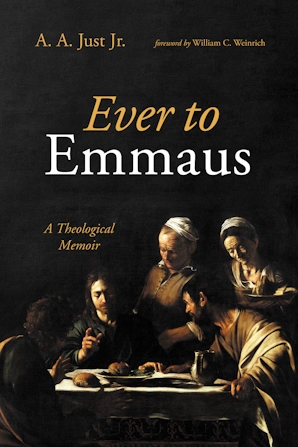
“Ever to Emmaus”: Where to Find the Book

Our thanks to a subscriber who emailed me, asking for information about where to buy the Art’s book.
What poor marketing we have done thus far! To purchase the book, click here.

Our thanks to a subscriber who emailed me, asking for information about where to buy the Art’s book.
What poor marketing we have done thus far! To purchase the book, click here.
Rhoda ended last week’s blog with Arthur Just’s words about good pastoral ministry in the context of and oriented toward the Eucharist, which is always for him and for all of us a Return to Emmaus, an act of remembrance. Section two of the memoir, entitled “Jesus and Mary,” remembers Just’s teaching of the “Gospels as Kerygmatic Memoirs,” especially the Gospel of Luke and enunciates an incipient Lukan (and Lutheran) theology of Mary, who in the church’s remembrance on the basis of Luke’s Gospel is arguably the second most important person in Luke’s narrative. The book is worth reading for innumerable reasons, not the least of which is Just’s provision of a much-needed Lutheran theology of Mary.
In chapter 6, “Returning to Emmaus,” Just returns to the “blick,” the hermeneutical insight of seeing clearly the high Christology and high sacramentology of the Scriptures, that weaves as the thread through all of his teaching of the Gospel of Luke. That Scriptural hermeneutic is not only read and interpreted, but experience through the catechumenal life as our camino, our journey. As Just writes,
Emmaus captures the entire paschal mystery, and the two Emmaus disciples embody the confusion, denial, and conversion of everyone who struggles with the mystery of Christ’s incarnation and passion, and how in the Eucharist we proclaim his death until he comes (113).
The act of remembrance is thus always a matter of kerygmatic/sacramental interpretation for the sake of catechesis. In that context Just remembers his teaching of the Lukan narrative through the question of whether the Emmaus account is eucharistic. He retells his negotiating—not explicitly identifying it as the Eucharist— through that with both one of his doctoral readers and with other CTS faculty during the Babylonian Captivity at CTS. In this memoir, in the freedom of the Gospel, he can remember in ways that are congruous with his teaching all along:
The reason it is important to understand Emmaus as the first post-resurrection Eucharist is that the eyes of the Emmaus disciples are opened in the breaking of the bread. . . . the climax of Luke’s Gospel, for it is the first time a human being recognizes Jesus as the crucified and risen Lord. . . . Jesus is in the center. And this is the moment of conversion for the Emmaus disciples. . . . Emmaus teaches us that Word (teaching on the road) and Sacrament (the breaking of the bread) must go together. In that order. The teaching prepares for the opening of the eyes. Word prepares for Sacrament (119-120).
It is the catechumenate! And the catechumenate drives toward the certainty of faith: “Catechesis in the catechumenate precedes baptism, and the climax of a full conversion is the Lord’s Supper, which comes immediately following washing at the font, for after you are reborn, the church feeds you holy food” (125). The catechumenate discloses to us living by faith in all of life through the paschal mystery.
Chapter 7, “A Lukan (and Lutheran) Theology of Mary,” is a much needed tour-de-force of Luke’s remembrance of Mary. Just notes the need for a robust theology of Mary in relating to fellow Christians who hold her in the highest respect and honor, even if Mary is placed in untenable theological positions. Just places her in the right position of honor in accord with Luke’s gospel by recounting four things: “Mary as the New Israel, the Temple, and the Ark of the Covenant; Mary’s Hermeneutic of Humility—Breaking What is Whole and Making Whole What is Broken; The Memoirs of Mary as She Ponders the Meaning of Jesus’ Birth and Suffering; and Mary as the New Eve and Mother of the Family of God” (139). While there is much that could be highlighted, for the sake of this blog Just’s observation about the Annunciation and the catechumenate is revealing:
The annunciation is a first glimpse of the pattern of incorporation into the church that will be followed throughout Luke-Acts: catechesis, baptism, and Lord’s Supper—the pattern continued by the post-apostolic church. Mary prefigures this as she receives catechesis from the angel, the Holy Spirit comes upon her, and she receives the flesh of Christ (146).
Mary’s importance for the church’s life, often understated in Lutheran circles, should not be. As Just emphatically concludes,
She knew her home was no longer in Nazareth or in Ephesus but where her Son was, and that, of course, is at font, pulpit, and table. She became an evangelist by telling her story to others, and finally telling it to Luke, who canonized it in his infancy narrative. But most of all, she was a mother, first to Jesus and then to his church. . . . So as Lutherans, we honor Mary, for her Son did. He had her blood, and it was her blood in him that washed away our sins. For this we owe her our utmost devotion (161-2).
With this post, Kent and I begin a series reviewing a new book, Ever to Emmaus: A Theological Memoir, by our friend Arthur Just, Professor of New Testament at Concordia Theological Seminary, Ft. Wayne, Indiana. Since Art graciously wrote one of the forewords to our book, Journey to Jesus, we’re delighted to be able to thank him by featuring this newly published work.
The opening words of the Prologue – “The room was large and the sherry was dry” – immediately drew me into Art’s story. The Prologue, the story of his doctoral dissertation (Luke’s Gospel through the lens of the Emmaus account), sets the stage for the theme of the book. His dissertation advisor declared, “Emmaus is a story that will serve you until you close your eyes in death. You will always be ‘Ever to Emmaus’” (xxiv).
Part I is titled “A Story of Pilgrimage,” and each of the five chapters has a pilgrimage theme. In the opening chapter Art joins his story to that of all Christians, declaring that “we are always on pilgrimage to Emmaus for hearts to burn and eyes to be opened in the breaking of the bread” (12). Although autobiographical and conversational in tone, he closes the first chapter as a good academic, stating that he “will argue that a postmodern church will look like a premodern church, and that means that ‘tradition’ must be either reinvented or restored as a way forward for the generation of my children and grandchildren” (14).
Chapter 2, cleverly titled “A Just Conversion,” chronicles his early years through the lens of his spiritual “pilgrimage” that led to embracing his calling to pastoral ministry. Art claims that a key to this “conversion” for him was an inner dialogue akin to Mary’s “pondering” after the Annunciation and what Paul likely experienced for the three days in Damacus before Annanias restored his sight. His musing – “One wonders how, in the process of evangelization, we could be more intentional in directing the inner conversation of those who are bit by the Gospel and are seeking His face always” (37) – struck a chord with me, because, like Art, I am deeply immersed in such questions relating to the adult catechumenate.
In Chapter 3, “The Camino,” Art recounts walking the full 500-mile medieval pilgrimage route through France and Spain at age 55 with his 19-year-old son (who often trekked ahead of his father to secure prime space at the pilgrimage hostel and to scope out dinner options). He concludes the chapter not at the end point, Santiago de Compostela, but at a stop only a third of the way on the route, with a description of the Mass (and details of the priest’s homily) in the small but beautiful church in San Juan de Ortega attended by locals and pilgrims alike. He writes:
As a priest in the parish for twenty-five years, he had seen countless pilgrims walking the Camino for all kinds of reasons. But he believed, deep down, that we were all walking this road for one reason and one reason alone—we were searching for our home, and perhaps, perhaps, on these paths we would find it in Christ, and that when we arrived in Santiago, we might know where our true home is (61).
With “Novel Theology,” Art uses his knowledge of literature (his undergraduate major was a History-English) to expound on “the Lutheran distinction between law and gospel that is … fundamental to the biblical narrative” and is present, according to Just, in two novels, The Great Gatsby and A Prayer for Owen Meany. I commend this chapter to English majors and lovers of literature.
The final chapter in part one, “Old School: Hemingway and the Prodigal,” reveals Art as simultaneously a literary critic and caring pastor whose empathetic listening to parishioners is informed by the suffering of the literary characters he has analyzed. I close with these words (next to which I made a large star in the margin):
The circumstances of life can overwhelm the saints in our congregations, but with good pastoral care, good preaching, our people will come back to Christ by a pastor who connects their sufferings to the sufferings of Christ, especially through the Eucharist, so that they may say with Paul, “For to me to live is Christ, and to die is gain” (Phil 1:21). (103, emphasis added.)
++++++
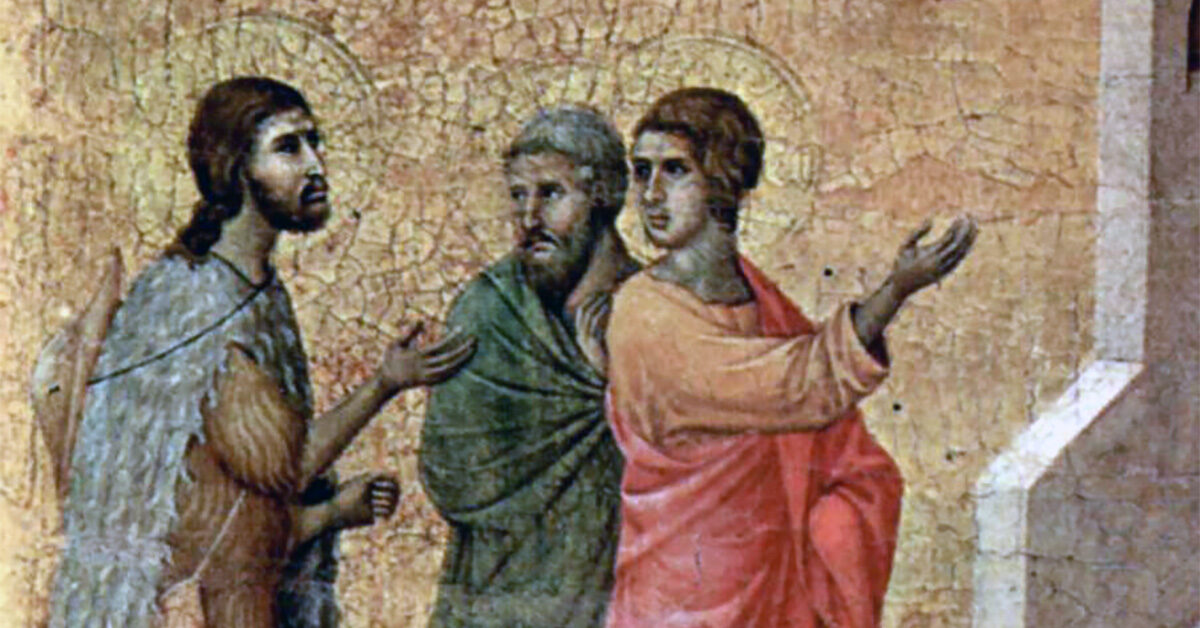
Banner image: Jesus and the two disciples On the Road to Emmaus, by Duccio di Buoninsegna (1255-1319); Altarpiece of Siena Cathedral, reverse side, main register with scenes from the Passion of Christ; scenes: Christ appears to two pilgrim apostles at Emmaus.
Source/photographer: The Yorck Project (2002) 10.000 Meisterwerke der Malerei (DVD-ROM), distributed by DIRECTMEDIA Publishing GmbH. ISBN: 3936122202.https://commons.wikimedia.org/w/index.php?curid=3799693
The Rev. Dr. Chad Lakies is the Vice President of Ministry Engagement for US Ministries at Lutheran Hour Ministries and author of How the Light Shines Through: Resilient Witness in Dark Times. The first of today’s video is from the beginning of our lengthy conversation on Zoom and touches on the connections between this book and Kent’s and my research on congregations with robust adult catechumenate.
This first video is less than four minutes; to watch it, one must be logged into Google Drive.

This next link is a bonus video in which Rev. Lakies offers the “testimonial” of his journey from “nonbeliever” to a person with faith in Christ. It is just under five minutes long. Chad speaks about the Holy Spirit working through the proclaimed Word of God, extravagant hospitality, and relationships with mature Christians. Next week’s post will be another video clip from this interview and a list of podcasts in which Chad speaks further about his book.

Last week Kent introduced the topic of sponsors in the adult catechumenate, focusing on ways in which sponsors “are one of the direct links to the life of the congregation and all its members.” Sponsors are described as companions who mentor, coach, and guide those in the adult faith formation process.
This week we look at the essential traits of a sponsor, again drawing on the Roman Catholic resource Guide for Sponsors by Ronald J. Lewinski (4th edition; Liturgy Training Publications, 2008). Written for sponsors, the book uses second person discourse frequently, speaking directly to potential and actual sponsors. Chapter 4 lists six traits that a sponsor “should strive to develop,” describing each in a few paragraphs:
The chapter concludes: “Together with the one you sponsor, trust in the guidance of the Holy Spirit and walk confidently on the path of faith that lies before you” (30). Our goal with this two-part series is to introduce to our readers this Roman Catholic resource and its adaptability for adult faith formation in Lutheran and other Protestant congregations. We would not recommend that sponsors read the book with its many specific references to the Roman Catholic tradition, but it could be an excellent resource for pastors as you recruit and train sponsors.
++++++
Banner image: The baptism of Jesus by John, northeast entrance to Chapel of the Holy Trinity, Concordia University, Ann Arbor, Michigan. Photo by Rhoda Schuler (CUAA, ’75 [AA degree]), June 2024.
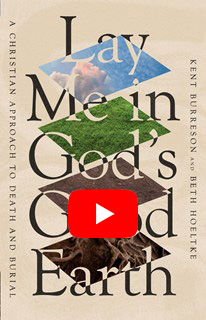
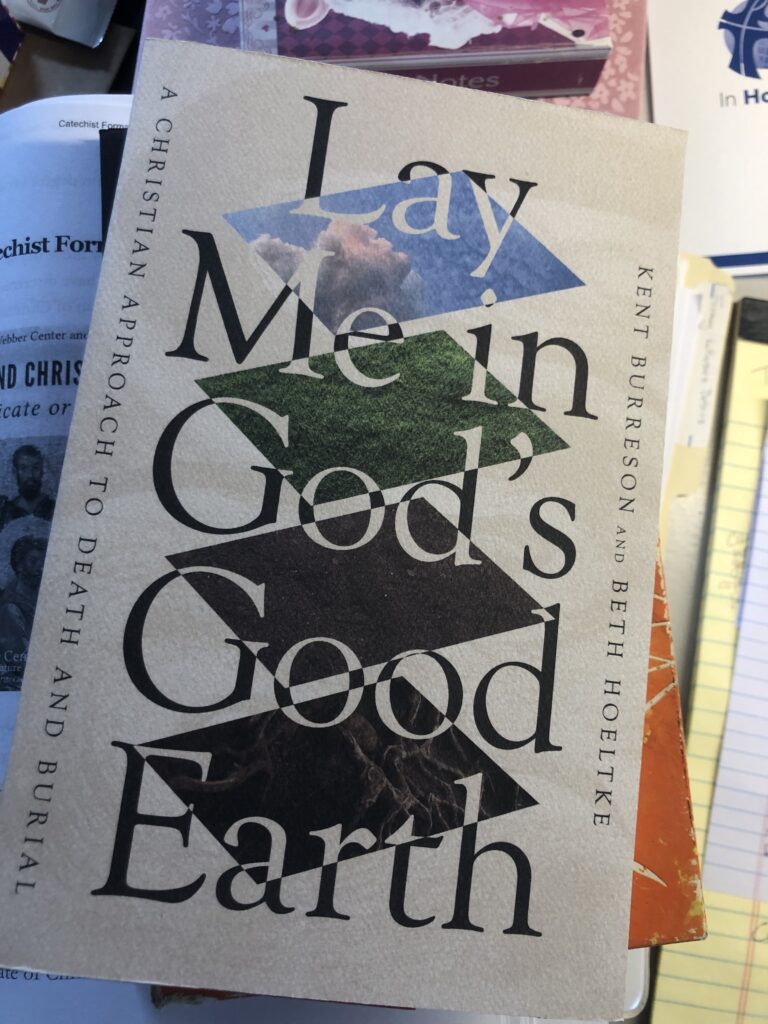
This week Rhoda interviews Kent and his other research partner and co-author, Dr. Beth Hoeltke, about their book Lay me in God’s Good Earth. The authors discuss how they got drawn into the topic of natural burial, the Christian lens of the book, and the expansive approach of the book, which encourages pastors and lay Christians to think proactively about end-of-life decisions as well as funeral practices.

To view this four-minute video, you must be logged into a Google account.
In addition to seven chapters, the book includes numerous resources for those interested in exploring the various facets of natural burial:
The book is published by IVP; click here to order the book!
++++
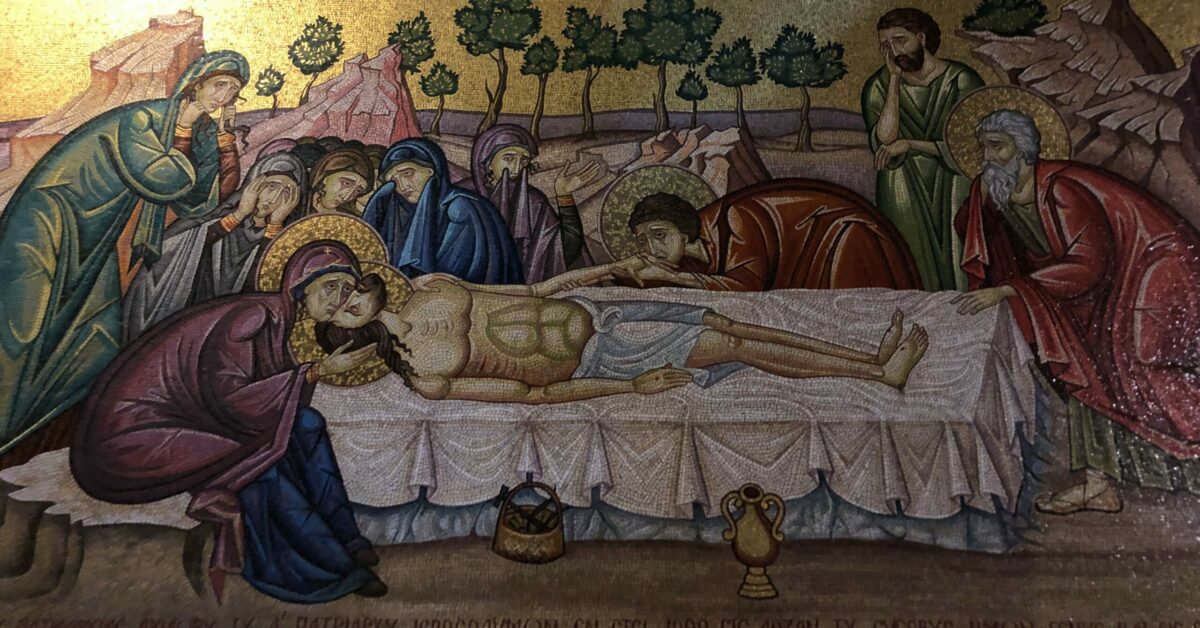
Banner image: Modern mosaic depicting Jesus’ mother, Mary Magdalene, and other women preparing Jesus’ body for burial as Joseph of Arimathea and Nicodemus look on. Wall mounted inside the entrance to the Church of the Holy Sepulchre, Jerusalem.
Photo by Rhoda Schuler, March 2023.
The package arrived a couple of weeks ago; clearly, it was a book, but I had no recollection of ordering a book from IVP. It was with great delight that I discovered I had received a pre-publication copy of Lay Me in God’s Good Earth: A Christian Approach to Death and Burial, by Kent Burreson and Beth Hoeltke. I took a photo and texted it to Kent, saying “It just arrived!!”
The authors write, “With this book, we hope you will consider the route of natural burial, which can provide intimate care of your body both before and after death” (3); they conclude the introduction lamenting that “the church has largely lost its ability to teach the art or theology of dying” (5). Both theological and practical, this book seeks to do both. Chapter 2 lays the theological foundation for natural burial by emphasizing the Christ’s resurrection as the foundation of Christian hope and linking the resurrection of the body to God’s promise to renew creation.

Kent and Beth critique both the commercialization of the funeral industry and the move toward “the spiritualization of Christian funerals and burials”; the antidote is recovering “a living eschatology and faith in the hope of the resurrection and eternal life” (61).
They provide a clear articulation of the four “core practices” of natural burial (21-22):
Most helpful are these encouraging words: “Engaging even just one of the four core practices … moves toward practices that reflect a Christian understanding of death and resurrection” (24).
Later chapters discuss appropriate Christian funeral practices, encourages family involvement with the body after death, and lays out options for “walking alongside our loved ones in the final journey that leads to death” (115). A lengthy appendix provides “A Burial Planning Guide” (161-179).
Lay Me in God’s Good Earth is accessible to lay readers and is written to break down the barriers in our culture that has made open discussions of death, dying, and funeral wishes verboten topics.
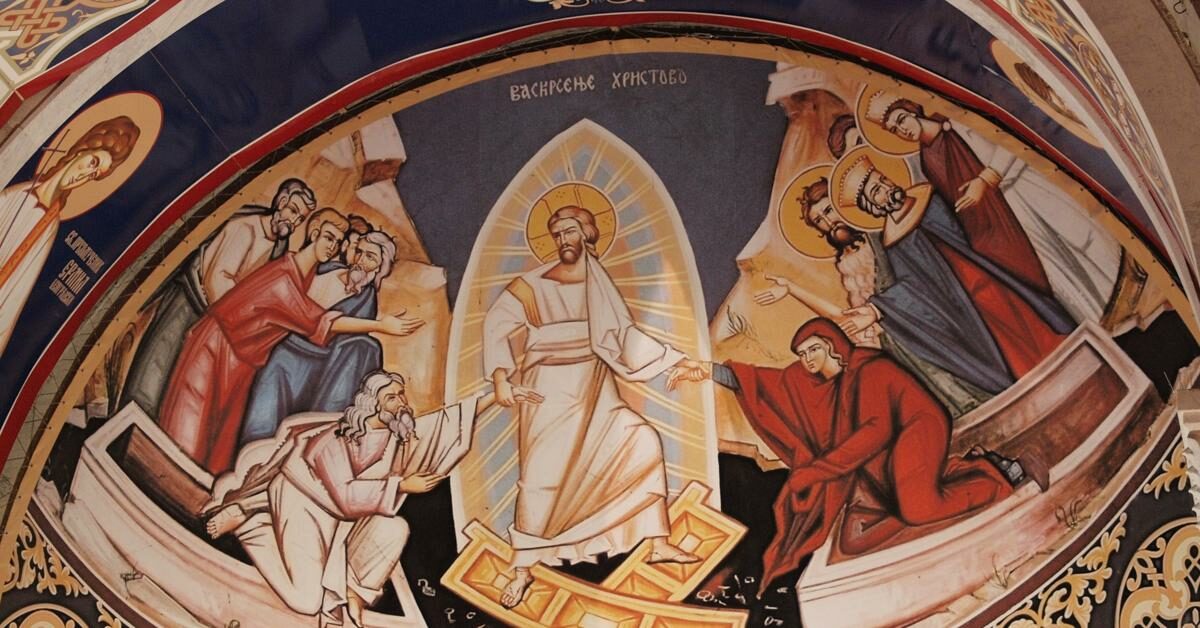
Banner Image:
Fresco depiction the resurrection of Christ, Sv. Sava, Serbian Orthodox Church
Photographer: Orjen, 16 June 2009
By Orjen – Own work, CC BY-SA 3.0, https://commons.wikimedia.org/w/index.php?curid=7085844
https://commons.wikimedia.org/wiki/File:Resurrection_Fresco_Saint_Sava.JPG
In our recent workshop on the adult catechumenate, we stressed the importance of creating small groups to build community and foster an environment for seekers to ask questions and to respond genuinely to biblical texts. The research of Anna Clare Creedon (Do Small Groups Work? A Study of Biblical Engagement and Transformation, London, SCM Press, 2021) offers support for our claims about the value of small groups. Creedon set out “to explore whether the context of a small group provides the necessary conditions for transformative biblical engagement to take place” (1). Her data draws from study of three small groups associated with parishes in the Church of England.
The data point to three major themes:
Creedon’s findings on an “expert” are twofold. First, she notes that those experts who “embrace their role as ‘skilled master builder’ [1 Cor 3:10], and use their expertise to serve the small group” are “more likely to facilitate transformative biblical engagement” than experts who offer “right answers” (115). The presence of the latter type of experts can create an environment where others in the group defer to the “expert,” dampening discussion (96-98), keeping it at an “intellectual level” (115), and thus inhibiting the desired transformation.
Creedon identified the second theme as “challenge” because the word was used by the subject participating in the research and because one can be “challenged” both by others and by a biblical text (116); a majority of in all the groups she studied named it “very important or fairly important that their views were challenged” (117). She also concluded that for “transformative biblical engagement” to happen, participants need to be challenged by the biblical text, and that “small groups can provide a facilitative context for this challenge to take place” (136, emphasis in original).
In her discussion of the third theme, “use of materials,” the author considered both what and how materials were used, primarily the latter (137). She offers these conclusions:
“… the data does suggest that incorporating a range of materials, either in one session or across a number of sessions … may be more likely to generate a great diversity of insights into the biblical text, and thus potentially lead to transformative biblical engagement” (158).
“The data points towards the conclusion that the deeper discussions emerged from material that had been altered or specially chosen by the group leader” (156).
Our own research has affinities with Creedon’s work. At one of our research congregations, participants were invited to respond to narratives from the Gospels. The lay catechist and pastor agreed that the latter’s presence in the group led to the kind of “deferring to the expert” that Creedon also uncovered in her research. At another of our research congregations, the catechetical gatherings were successfully led by the pastor, primarily because he developed his own material and because of his ability to “read the room” and adapt to the particular needs of the group.
In the end, of course, the work of the Spirit to transform lives by creating faith in Jesus Christ cannot be pinned down by modern “research methods.” Our research, as Thomas Aquinas might say, is a “handmaiden” to Scripture, one that can shed helpful light on human efforts to live out the Great Commission. Even as we hope that our research may led to more congregations adopt a robust adult faith formation process, we also keep in mind these words of Jesus to Nicodemus:
The wind blows where it chooses, and you hear the sound of it, but you do not know where it comes from or where it goes. So it is with everyone who is born of the Spirit” (John 3:8)
+++++++++++++++++++++++++++++++++++
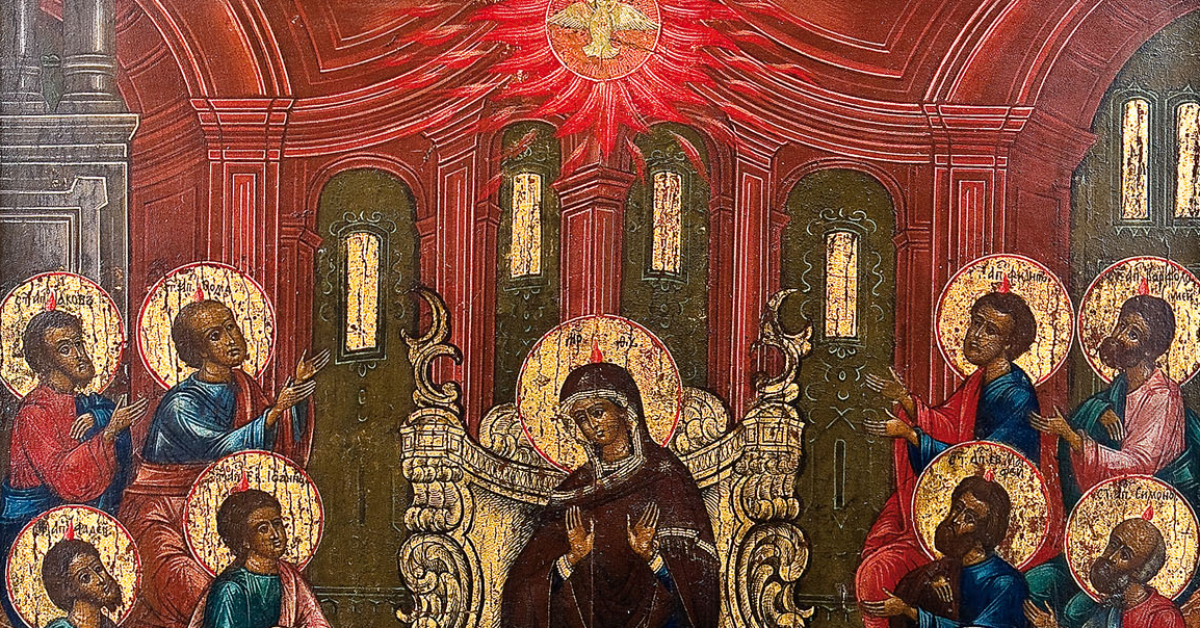
Image: Pentecost icon, egg tempera on wood panel. Russian, 18th century. 53.5 x 45 cm.
Author: Anonymous
It’s back. My neighbors have decorated their yards and porches for the “high holy day” of Halloween: Huge spiderwebs with big, scary spiders, orange strings of lights on porches, and ghosts fluttering in tree branches abound. As I observe these decorations on my morning walks during this brisk fall weather, those who encounter me see another symbol of this season: Luther’s seal and the words “Confirmed Lutheran” in large letters on my sweatshirt.
To commemorate the Lutheran Reformation, a review of some sources on Luther’s Small Catechism seems most appropriate. Here are four publications:
Praying Luther’s Small Catechism by John T. Pless, CPH, 2016.
https://www.cph.org/p-30433-praying-luthers-small-catechism.aspx
A more “scholarly” book than the others—based on the number of endnotes and wide use of other confessional documents—Pless’s book is divided by the six chief parts. Each subsection within the chapters quotes a section of the catechism followed by a prayer and extended commentary on that section, drawing on other writings of Luther and the works of Luther scholars. Pless himself says in the preface, “This book that you now hold in your hands might be thought of as an exercise in prayed dogmatics.”
Mark Mattes from Grand View University, Des Moines, IA, wrote this synopsis for the book jacket: “Giving voice that the Catechism not only teaches true doctrine but also Christ-centered spirituality, John Pless reminds us that the Catechism was designed not only to be taught but also to be prayed. Many find prayer challenging because they have a hard time focusing. This book not only offers model prayers grounded in the Catechism, but shows how the Catechism itself can structure the life of prayer and so help those who are easily distracted in prayer. Sound doctrine, consistent practice, pastoral wisdom, all held together by a passion for the Gospel, constitute the richness of this book.”
Praying the Catechism by Donald W. Johnson, rev. ed., ELIC, 1998. Used copies available at https://www.amazon.com/Praying-Catechism-Donald-W-Johnson/dp/B003AOWBB4/ref=sr_1_1?dchild=1&keywords=Praying+the+Catechism+by+Donald+w.+johnson&qid=1634241667&sr=8-1
As a “devotional” writing, this publication is more practical the Pless’s volume and more open-ended than Harrison’s. In the introduction Johnson describes the book as “an attempt to help restore the Catechism into the prayer room. It invites you to experience its parts through a journey of prayer and meditations. Along with the Catechism, passages of Scripture and the liturgies of Baptism and the Eucharist are used as a starting point for some meditations.” Each section gives several prompts to “pause and reflect,” such as this one from the Fourth Commandment: “At times there is so much abuse, so much neglect, so much isolation and so little help within a family. If you have grown up with this, it is hard to honour. You will not honour by keeping things hidden. God’s healing comes in the midst of facing the truth.” In the next suggestion to “pause and reflect,” Johnson speaks to those whose parents “have been loving, caring, and supportive” and invites the reader to take time to give thanks. Each section closes with suggested intercessions on behalf of others.
A newer edition, with excerpts from liturgies in ELW is available through Augsburg Fortress. https://www.augsburgfortress.org/store/product/9786000123956/Praying-the-Catechism
Thank, Praise, Serve, and Obey: Recover the Joys of Piety by William Weedon, CPH, 2017. https://www.cph.org/p-31340-thank-praise-serve-and-obey-recover-the-joys-of-piety.aspx
Unlike the other three volumes reviewed here, Weedon’s book is not organized according to the six chief parts of the catechism but according to seven “godly habits” named in the chapter titles: “Faithful listening to the Word of God,” “The Daily Prayers,” “Frequent and Faithful reception of the Eucharist,” etc. Weedon asserts that “the habits we will explore in this book foster a joyous freedom from” that “fatal ‘bend in one’s self’” of original sin. These habits turn our attention “toward God and His promises, and toward our neighbor in love and charity for her or his needs” (viii). He contrasts piety with pietism; the former “is simply the cultivation of godly habits” (viii) and “is born and learns to breathe deeply the bracing air of freedom” (x).
A reviewer on Amazon writes, “This book is a refreshing blessing to the reader. It is not about Christian piety as something we do, but rather shows how true piety is receiving, ruminating on, and rejoicing in the gifts that God so generously lavishes upon us in both body and soul.”
Why Am I Joyfully Lutheran? Instruction, Meditation, and Prayers on Luther’s Small Catechism by Matthew C. Harrison, CPH 2018. https://www.cph.org/p-32618-why-am-i-joyfully-lutheran-instruction-meditation-and-prayers-on-luthers-small-catechism.aspx
The title accurately describes what Harrison does in the 35 chapters, each of which begins with a section of the catechism and Luther’s explanation, a brief Scripture passage, and a devotional meditation. Each chapter closes with a section titled “Why am I joyfully Lutheran?” Included here is one paragraph relating this catechetical section to joy, followed by prayers addressed to Jesus reminding the reader of God’s instruction, offering thanks for Christ’s redeeming work, and closing with words of confession. In the foreword Harrison describes this pattern as that of Luther, based on his pamphlet “A Simple Way to Pray” (AE 43:189-209).
Chapters that include the longer sections of the catechism (articles on the creed, Q & A on the sacraments) subdivide Luther’s explanation, and Harrison offers commentary on each subsection with a plethora of Scripture quotations.
A penultimate word: Both Pless and Harrison reference Albrecht Peters’ Commentary on Luther’s Catechisms as a resource. This five-volume work is available through CHP.
May we commemorate the Reformation with prayers of repentance, thanksgiving for God’s love revealed in Jesus Christ, and joyful service on behalf of our neighbors in need.
Shortly after I started work on my masters in liturgical studies at St. John’s University, Collegeville, Minnesota, Father Godfrey Diekmann, who had served as a Peritus (theological adviser) at the Second Vatican Council, spoke at a School of Theology convocation. I remember vividly this statement: “At Vatican II we rediscovered Christ”—words that warmed my heart and convinced me that I had come to study in the right place. While Father Diekmann’s words resonated with my Lutheran mind and heart, there are still times when some Roman Catholic language feels foreign and a bit off key. Those steeped in the Lutheran tradition may feel the same about some of the language in Nick Wagner’s Seek the Living God, subtitled “Five RCIA Inquiry Questions for Making Disciples” (Liturgical Press, 2017; 124 pp.). Nevertheless, Wagner’s book contains wisdom that crosses denominational divides. Take, for example, the section titled “How to evangelize like a Catholic,” which is full of practical advice for devout Christian laity of any background living and working in the world. He introduces these tips with this wisdom: “there are some simple, gentle ways we can put words to our ‘wordless witness’” that can draw people “into a personal relationship with Jesus” (18).
A layman with three decades of experience in education and RCIA catechesis, Wagner advocates for contract learning, adapted for adult faith formation. Perhaps of greatest value in the book are the five questions that he recommends to shape individual conversations with inquirers. In each of five chapters he names the question, offers various ways of stating the question, and discusses the goal for each conversation. Each question begins “Regarding your habits, knowledge, memories, and attitudes about God, …
Where have you been?”
Where are you now?”
Where do you want to get to?”
How are you going to get to were you want to go?”
How will you know you have arrived?”
Lutherans will want to dig deeper into each chapter to find a restatement of the question that emphasizes the longing of the inquirer rather than the person’s agency to effect the desired change. For example, his first restatement of question three, “Where do you want to get to?” is “What do you most hope for in your relationship with God?” Such a question invites inquirers to talk openly about hopes, fears, and obstacles they have faced in life. Wagner stresses the importance of listening carefully to each individual’s needs and desires while not necessarily agreeing with all that they say.
In his conclusion Wagner says, “My hope is that in writing this book, I’ve caused you to imagine a new future” (93) for your congregation’s adult catechumenate. We hope that congregations and their pastors can re-imagine the “new members class” as an adult faith formation process that begins by building one-on-one relationships with inquirers; Nick Wagner’s book could be a useful resource in that re-imagining process. Through the power of the Holy Spirit and by carefully listening to the stories of inquirers, we can do what Godfrey Diekmann said of Vatican II; we can help people discover Christ.