Blog
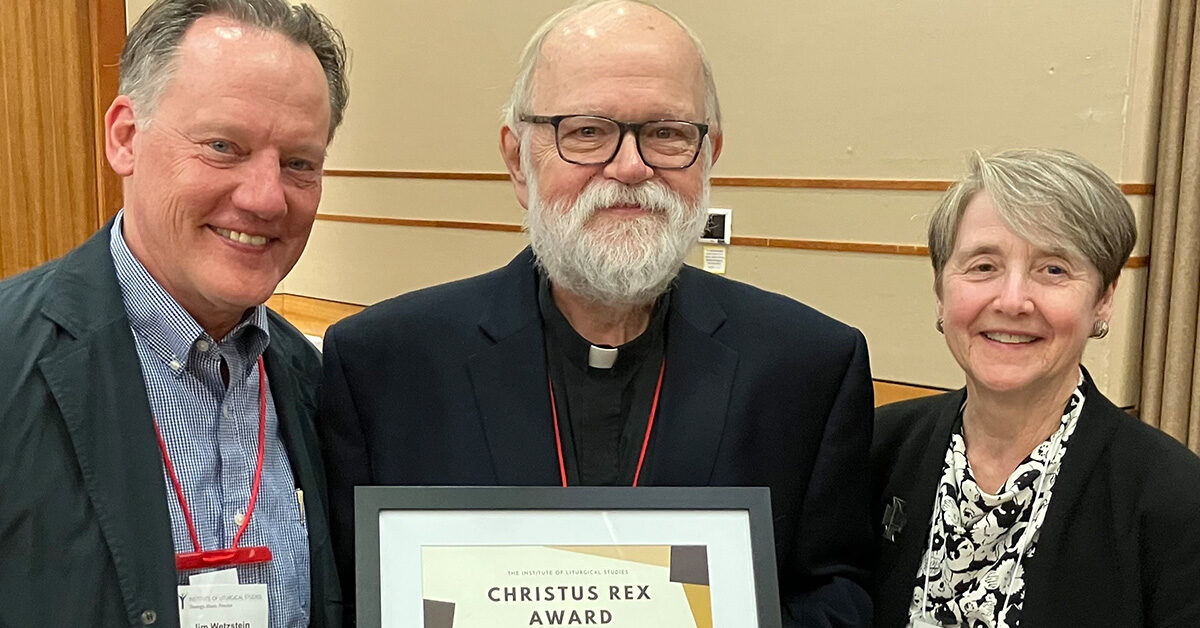
Congratulations to Rev. Dr. Maxwell E. Johnson
I just returned home from the 2025 Institute of Liturgical Studies (ILS), held at my and Kent’s undergraduate alma mater, Valparaiso University. It was my honor to introduce the recipient of the Christus Rex Award, Max Johnson, pictured (center) with ILS Director and VU Campus Pastor Jim Wetzstein (left) and moi (right). Max, like Phoebe named in Romans 16:2, “has been a helper of many and of myself as well.” Early in my graduate school days, Max encouraged me to boil down my master’ thesis to article length and helped get it published. Thirty some years later, he graciously agreed to write a foreword for Kent’s and my forthcoming book, Journey to Jesus.
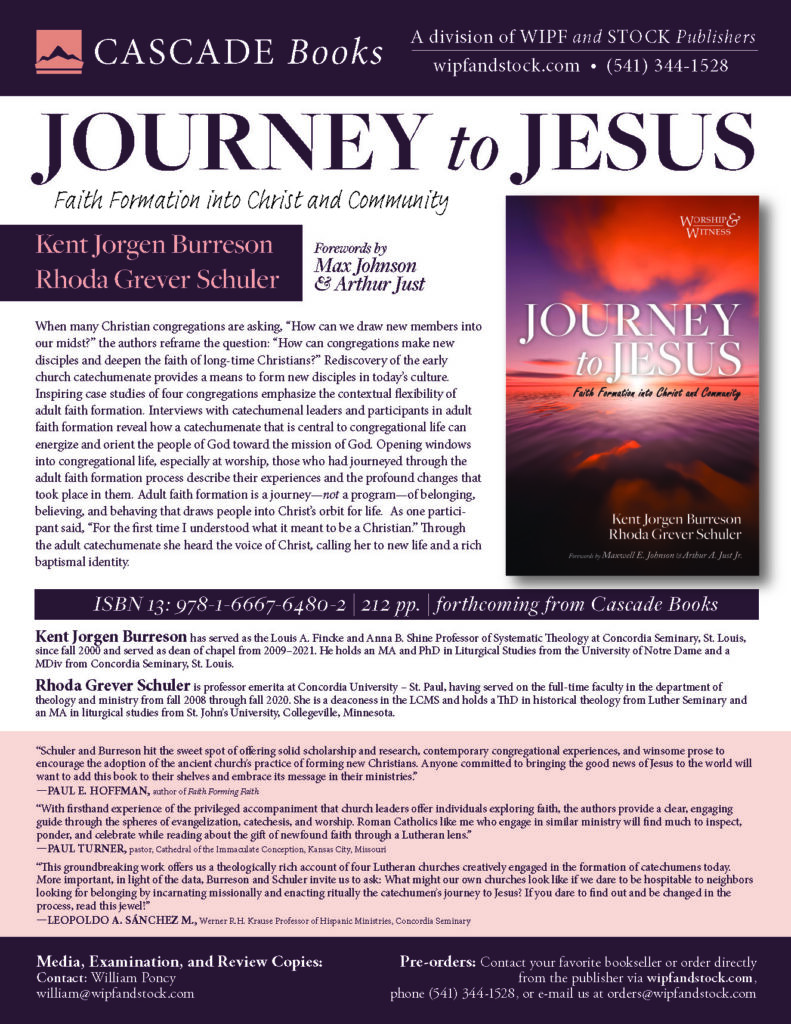
The book is now available for pre-order! Click here for the link.

Multiethnic Symposium: Registration Closes Easter Monday, April 21
Learning From Each Other
Catechesis That Raises Up Multiethnic Leaders for the Kingdom
May 6-7, 2025 at Concordia Seminary, St. Louis
Plenaries:
- “A House of Catechesis and Prayer for All Nations: Formation Through a Contextualized Catechumenate” presented by Dr. Kent Burreson, Professor of Systematic Theology, Concordia Seminary, St. Louis and Dr. Rhoda Schuler, Professor Emeritus, Concordia University, St. Paul, St. Paul, Minn.
- “Who’s Next? Necessary Skills in Raising Next Generation Ethnic Leaders” presented by Rev. Jeff Cloeter, Senior Pastor, Christ Memorial Church, St. Louis
- “Preparing Congregations to Serve and Empower Immigrants” presented by Dr. Stanish Stanley, Executive Director, CFNA and Jessica Bordeleau, Coordinator, Digital Publishing, Concordia Seminary, St. Louis
Kent and Rhoda invite our readers to this annual symposium at Concordia Seminary; the cost is very reasonable! Registration is $85.00 (with an additional $15.00 each for 2 lunches). To learn more about the topic, see the full schedule, and register, click here.
A blessed Great Week, as the Church contemplates the mystery of salvation accomplished by our Lord Savior Jesus Christ.
+++
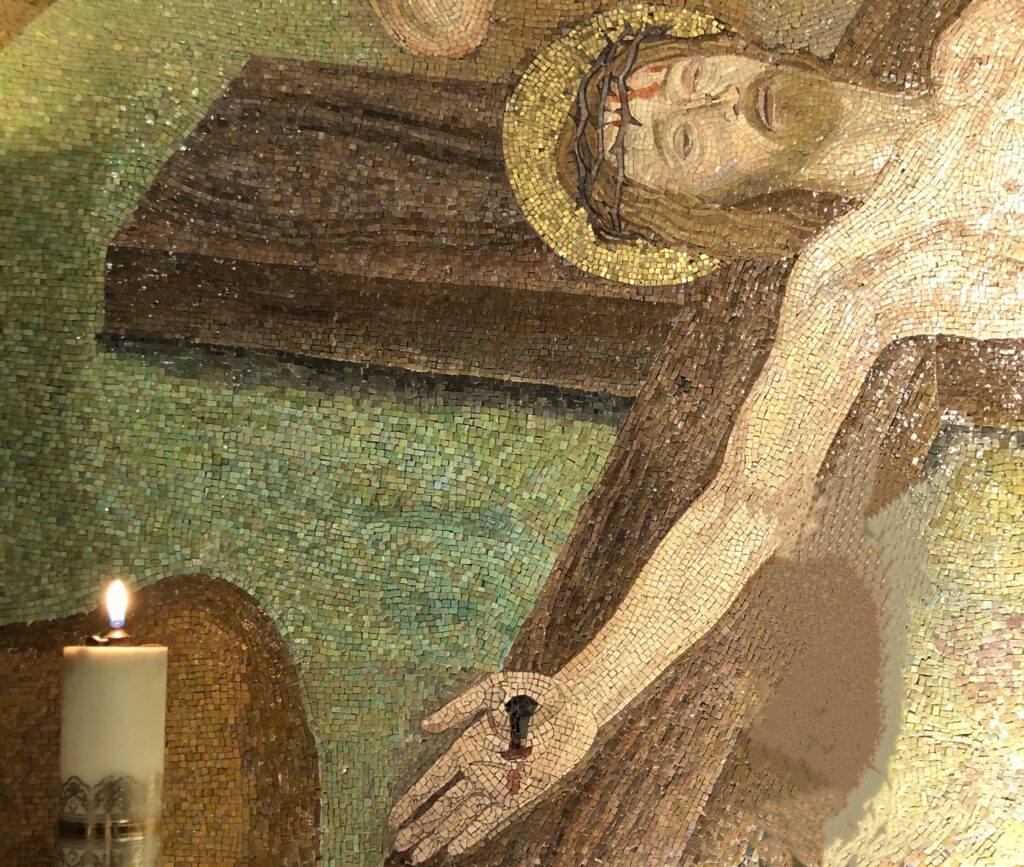
Photo: close-up of mosaic behind the altar, Latin Calvary Chapel in the Church of the Holy Sepulchre, Jerusalem. By Rhoda Schuler, 2023

OCIA: Prayers at the Presentation of the Lord’s Prayer
This week we turn to one of the final rites of the period of Enlightenment before Holy Saturday: The Presentation of the Lord’s Prayer to the Elect. As I indicated in a previous post on this rite, the presentation of the Lord’s Prayer takes place either on or following the Third Scrutiny on the 5th Sunday in Lent. The RCIA recommends a weekday, while Welcome to Christ designates the Fifth Sunday in Lent.
This rite, along with the presentation of the Creed, makes the most sense in the midst of a regular dismissal of the catechumens to study the Word during the celebration of the Lord’s Supper. They would not be praying the Lord’s Prayer as part of the liturgical assembly. While this would presumably not be their first introduction to the Lord’s Prayer, it would be their first opportunity to truly make it their own.
In the RCIA and OCIA, following the presentation of the Our Father, there is an invitation to prayer and a collect for the rite. While surprisingly the invitation and prayer in the RCIA/OCIA do not contain any explicit references to the Lord’s Prayer or to prayer in general, Welcome to Christ includes a call to commitment to prayer for each season of the church year. The text for year B reads, “As the disciples were taught to follow Jesus by living their life for others, so the church prays for you and for all the needs of the world, confident in the life-giving presence and mercy of Christ” (Welcome to Christ, 32). With this rite the elect have been given two primary elements of their catechetical formation in the faith and are prepared to confess and pray them at their initiation into Christ through Holy Baptism.
And since this is our last nerdy post comparing the prayers during Enlightenment in the RCIA and OCIA, I decided to follow Rhoda’s lead and nerd out completely by including the Latin of the prayer texts. (Those of you who have put up with all of this can be comforted in knowing that it all comes to an end on the eve of Palm and Passion Sunday!)
Even more so than last week, since these prayers are translated in a much different fashion, the contrast between formal correspondence and dynamic equivalence is apparent. As Rhoda noted last week, here the RCIA text reflects poetic language evocative of the human experience. And yet some of the language in the OCIA texts is bold and evocative of the moment in the catechumenal journey.
As in past weeks I have highlighted certain words and phrases, and I will discuss them by numbered section:
RCIA, 1972
(1) Let us pray for these elect, that God in his mercy may make them responsive to his love, so that (2) through the waters of rebirth they may receive pardon for their sins and have life in Christ Jesus our Lord.
(3) Almighty and eternal God, you continually enlarge the family of your Church. Deepen the faith and understanding of these elect, chosen for baptism.(4) Give them new birth in your living waters, so that they may be numbered among your adopted children (Rite of Christian Initiation of Adults, Liturgy Training Publications, 1988, 113).
Editio Typica, 1972
(1) Oremus pro electis nostris, ut Deus et Dominus noster adaperiat aures praecordiorum ipsorum ianuamque misericordiae, ut (2) per lavacrum regenerationis, accepta remissione omnium peccatorum, et ipsi inveniantur in Christo Iesu Domino nostro.
(3) Omnipotens sempiterne Deus, qui Ecclesiam tuam nova semper prole fecundas, auge fidem et intellectum electis nostris, ut, (4) renati fonte Baptismatis, adoptionis tuae filiis aggregentur.
OCIA, 2025
(1) Let us pray for our elect, that our God and Lord will open the ears of their innermost hearts and the gate of mercy, so that, (2) receiving remission of all sins through the cleansing waters of rebirth, they too may be found in Christ Jesus our Lord.
(3) Almighty ever-living God, who make your Church ever fruitful with new offspring, increase the faith and understanding of our elect, that, (4) reborn in the font of Baptism, they may be added to the number of your adopted children (Order of Christian Initiation of Adults, The Liturgical Press, 2018, 147-8).
- The OCIA follows the Latin closely by referring to the elect as “our” rather than “these” elect. It is a much more corporate and intimate designation, reflecting of the church’s fellowship. On the other hand, “gate of mercy,” while reflective of the Latin, fails to convey that God’s mercy is active in the life of the elect. The same is true of “opening the ears of their innermost hearts.” Some combination of the two texts would be very poetic: “opening their ears that they might respond to his love.”
- “Pardon” communicates much better than “remission.” I regretted that in my own tradition we didn’t change the language of “remission” in the Nicene Creed to “forgiveness.” Remission is not an obsolete word in this sense, but it is archaic. Trying to capture the language of the Latin, literally the “bath of regeneration,” the OCIA refers to baptism as the “cleansing waters.” Very evocative language. But while “be found” captures inveniantur well, it is fairly pedantic in comparison to “have life.”
- The first clause in part 3 makes it sound like the church is simply part of the animal kingdom. While it is still fairly common to refer to children as offspring, the entire phrase diminishes the reality of the church’s growth. The RCIA is much more active in cadence: “you continually enlarge the family of your Church.” Likewise, “deepen” conveys better what is happening for the elect at this point in the catehumenate.
- By creating a new sentence in place of the relative clause the RCIA better conveys the nature of this wonder in the making: “new birth in your living waters.” However, the reference to the font of Baptism, reflecting the Latin, provides a definite locatedness to the rebirth. Why not “new birth through the living waters in the font of Baptism.” “Added” versus “numbered”? Neither is particularly more evocative than the other, but “added” follows the Latin more closely.
There we have it. As I said in the first post in this series, nerdy as it may seem, important issues such as clear understanding and participation in the process by which God through the church is making new Christians is at stake in the translations and in any Lutheran adaptation of them. Failure to understand and participate hinders the vary process of making Christians through the catechumenate itself. And hopefully these prayer texts have invited you into the paschal mystery as we have made the journey to the paschal feast in sincerity and truth.
OCIA: Prayers of the Third Scrutiny (revised)
Our nerdy journey into the new (yet retro) translation of the OCIA texts for the Scrutinies takes a divergent path this week (into the Latin original for comparison). A few reminders: These texts draw on the Gospel readings in Lent for Year A (Lent 3, 4, 5), all from the Gospel of John, all terrific narratives: the woman at the well, the man born blind, and (today’s subject) the raising of Lazarus. Each set of texts for a given liturgy includes prayers (a lead collect and prayer of exorcism, as Kent noted last week), for which there are two options. To illustrate my primary points this week, I’ve chosen the prayer of exorcism, Option B, and this week I took the time to find the Editio Typica, the official Latin text. Here we can see clearly the principle of formal correspondence at work in the recent OCIA translation, which “is not so much a work of creative innovation as it is of rendering the original texts faithfully and accurately into the vernacular language” (Liturgiam Authenticam, 49). As Kent asked in his March 6 post, “Or do they achieve their own goal according to Liturgiam Authenticam of providing ‘language which is easily understandable, yet at the same time preserves these texts’ dignity, beauty, and doctrinal precision?’” (Liturgiam Authenticam, 25).
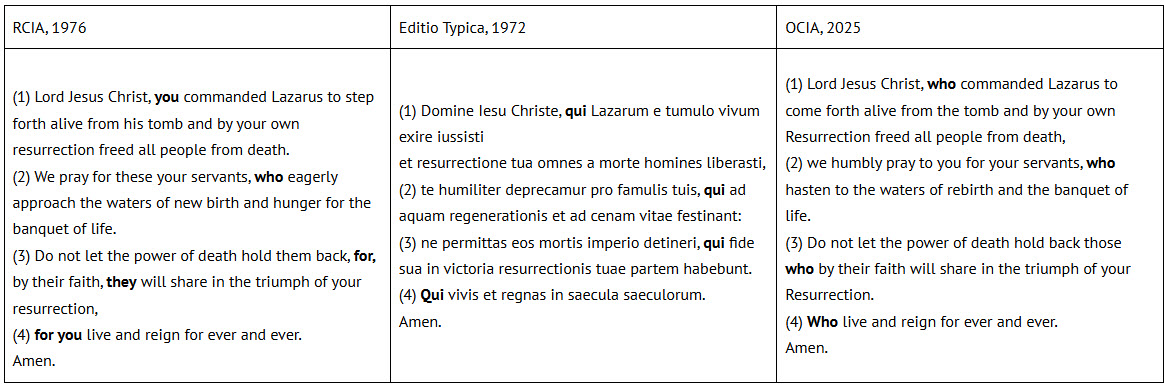
First, look at the OCIA translation, the third column, and note the word in bold in each of the four sections of the prayer: “who ….” Then move to the middle column and see the bold word in the original Latin: “qui ….” The Latin text is laden with a relative clause in each section, all of which are retained in the OCIA translation, a clear example of the principle of formal correspondence at work. Note that the RCIA drops two of the relative clauses (in sections 1 and 3), likely to break up the prayer for an aural reading, in a way that, one might argue, uses “language which is easily understandable, yet at the same time preserves these texts’ dignity, beauty, and doctrinal precision.” In contrast to the prayers Kent analyzed last week, the translations are very close.
- As noted, the “who” (qui) is abandoned for “he” in the RCIA translation, allowing for the statement of Christ’s work to end with a period—a pause for the assembly to connect this prayer with the Gospel text. The only other difference is the infinitive (exire). The OCIA (to come forth) is an example “of rendering the original texts faithfully and accurately,” while the RCIA, “to step forth,” is more vivid and concrete, emphasizing the human agency of Lazarus. Note also that this prayer of exorcism is addressed to Jesus, the One who overcame temptation by the Devil and who cast out demons.
- One need not be fluent in Latin to notice that the OCIA includes the Latin modifier “humbly,” while the RCIA omits the word, leading to speculation about the motives of scholars translating in the 1970s. Perhaps they felt it drew attention to those “humbly” praying at the expense of those for whom the prayer was offered, the Elect preparing for baptism. One can be more confident speculating about the reason for the RCIA addition of a second verb in the relative clause. In the OCIA version, the servants are hastening to both baptism and the Eucharist. But the RCIA not only translates the verb in more common vernacular (“eagerly approach”), but the translators also deliberately chose to include the word “hunger,” rendering the phrase “and hunger for the banquet of life.” As with the verb in section 1, “hunger” is more concrete, with an obvious connection to “the banquet.” “Hunger” evokes a physical sensation universally known, but here used with a spiritual meaning.
- Here is the heart of the petition, of the exorcism; the wording in the two translations is identical with the exception of the rendering of the relative clause. The OCIA’s translation is faithful and accurate: “Do not let the power of death hold back those who by their faith ….” What of the RCIA? “Do not let the power of death hold them back, for, by their faith, they …” The OCIA seems very straightforward—so much so that it seems “the servants” for whom this prayer is offered don’t really need our prayers. The RCIA wording implies that the power of death may impede their faith, and the prayer implicitly asks that their faith remain strong.
- Here the RCIA, by replacing “who” with “you” makes clear that this phrase is addressed to Jesus, not to those for whom the prayer is offered.
The liturgy calls for poetic language evocative of the human experience. To step forth … to hunger … these word choices bring concrete actions and feelings to the ambiguity of spiritual formation. While they may fail the text of formal correspondence, they are words of dignity and beauty.
+++
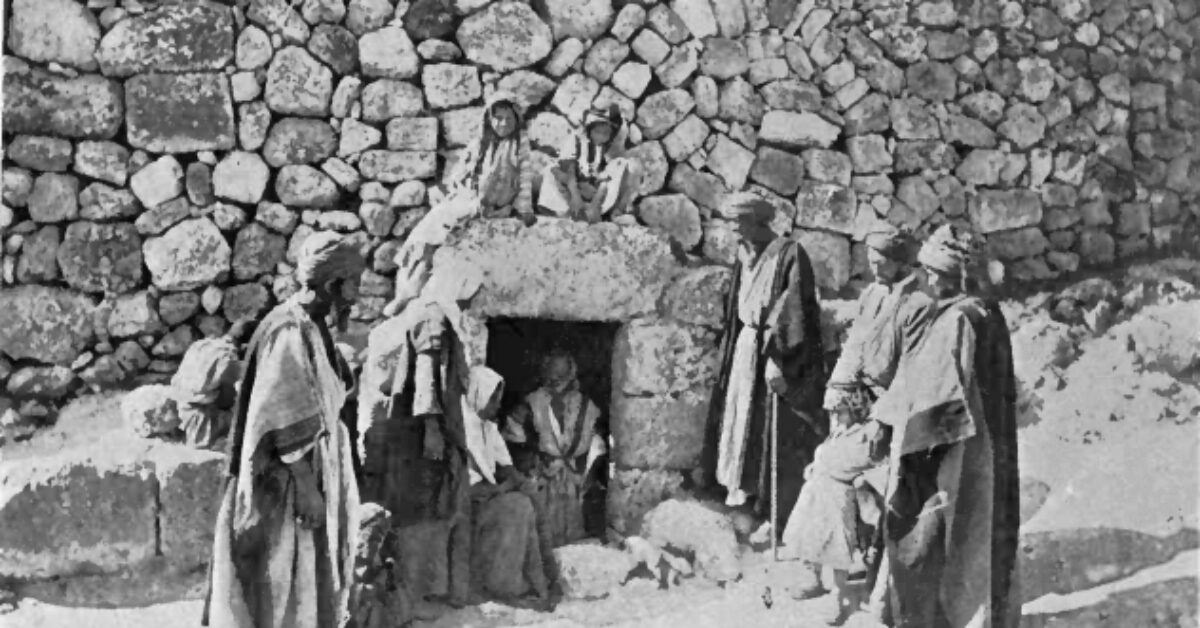
Banner photo “The Tomb of Lazarus” by Breen, A. E. (Andrew Edward) – A diary of my life in the Holy Land. J. P. Smith printing company Rochester, N.Y., (1906), Public Domain, https://commons.wikimedia.org/w/index.php?curid=6771086
For the main text, see page 65-66, par. 178
For the Option B prayers, see page159-60, par. 378
Order of Christian Initiation of Adults: Prayers of the Second Scrutiny
This week in our nerdy journey we take up the prayers of the Second Scrutiny rite in the OCIA/RCIA. As Rhoda indicated last week, “our goal is to set forth some principles for making sound theological and pastoral decisions when borrowing rites and prayers from a variety of sources. Our nerdiness is earnest and with good purpose.” Just like the catechumenate itself!
The Second Scrutiny, often on the Fourth Sunday in Lent, follows the Presentation of the Creed. As we saw with the First Scrutiny, the orientation and purpose of the scrutinies in the modern RCIA is for the elect to “renounce sin and evil and profess faith in the Triune God at their baptism” (Guide for Celebrating Christian Initiation with Adults, 58). The Second Scrutiny follows the same pattern as the first (see the first post in this series for that pattern). The gospel reading for the 4th Sunday in Lent is the account of Jesus’ healing of the man born blind, John 9:1-41. The Second Scrutiny in light of this gospel reading emphasizes to the elect the ways in which blindness might affect them and where they need the light of Christ “so that they might see the truth” (Guide, 60). Seeing the truth, who is the Light of the world, is central to the conversion experience facilitated through the catechumenate. It leads them toward enlivened faith in the Triune God throughout the catechumenate culminating in God’s enlightening them in the baptismal water of their Jordan. These prayers for enlightenment direct the Elect to see their liberation from sin, evil, and the power of Satan in Christ Jesus. How do these prayers facilitate the Elect’s participation in the story told in John 9 as those born unable to see the light who are now led into the kingdom of light?
Here are the texts of both. The first prayer is the lead collect and the second prayer is the actual prayer of exorcism. Major differences are highlighted in italicized bold.
Father of mercy, you led the man born blind to the kingdom of light through the gift of faith in your Son. Free these elect from the false values that surround and blind them. Set them firmly in your truth, children of the light forever. We ask this through Christ our Lord.
Lord Jesus, you are the true light that enlightens the world. Through your Spirit of truth free those enslaved by the father of lies. Stir up the desire for good in these elect, whom you have chosen for your sacraments. Let them rejoice in your light, that they may see, and, like the man born blind whose sight you restored, let them prove to be staunch and fearless witnesses to the faith, for you are Lord for ever and ever (Rite of Christian Initiation of Adults, Liturgy Training Publications, 1988, 98-9).
Most merciful Father, who granted the man born blind to believe in your Son, and through this faith to come to the kingdom of your light, grant also that your elect here present may be freed from deceits that surround and blind them, so that firmly grounded in the truth, they may become children of light and remain so forever. Through Christ our Lord.
Lord Jesus, true light who enlightens all people, by the Spirit of truth free all who are oppressed beneath the yoke of the Father of lies, and stir up good will in those you have chosen for your Sacraments, that, delighting in the joy of your light, and, like the blind man you once restored to sight, they may prove to be staunch and fearless witnesses to the faith. Who live and reign forever and ever (Order of Christian Initiation of Adults, The Liturgical Press, 2018, 132-133).
- Light and Blindness: The man born blind and his encounter with Jesus is the focus of the story. Earthly light is unable to penetrate his sight. But his more profound inability to see is that he cannot see the Light of the world, Jesus the Christ. And so it is for the Elect. They are entering the kingfom of light just as he did. While both the OCIA and RCIA texts communicate this, in the first prayer the OCIA does it in a very clunky mechanistic way: “Granted and come to” versus “Led.” There is a simplistic elegance in God the Father leading the catechumens to the Light. In the second prayer the change from “world” to “people” has both positive and negative repercussions. The conversion of humanity is at the forefront of Jesus’ mission. But ultimately it leads to the enlightenment of the whole world.
- Faith and Kingdom: Lutheran proclivities shine through with the juxtaposition of these images. Entrance into the kingdom of light is through the sight of faith. In the OCIA the language implies that faith is the beginning of that entry: “through this faith to come to the kingdom of your light.” The RCIA implies that entrance into the kingdom is purely and always by faith: “you led the man born blind to the kingdom of light through the gift of faith in your Son.”
- Freedom and Deceits: The implications of enlightenment that leads the catechumens into the kingdom of light is that they are free from bondage in the darkness of sin, evil, and Satan. That is the ritual intention of the scrutiny rites: to effect that deliverance. Here the OCIA better captures the nature of the bondage: “freed from deceits.” However, the RCIA captures better the nihilistic age in which we live: “from the false values.” Make your pick depending upon what you are trying to emphasize. In the second prayer the OCIA is simply much more cumbersome: “free all who are oppressed beneath the yoke of the father of lies.” The RCIA is much more direct: “free those who are enslaved by the father of lies.” There is a simple earnestness of the church on behalf of the catechumens in the RCIA version.
- Delighting in joy versus Rejoicing: Here it is apparent how the traditional collect form imposes a certain clumsiness on the language. The RCIA concludes prayer #2 with the words “Let them rejoice in your light.” A result of entering the kingdom of light is pure rejoicing, in very active terms. I am reminded of the redeemed in C.S. Lewis’ The Great Divorce. There is pure rejoicing at being IN the light that streams from the city of God. Because the OCIA prayer has to make this a subordinate clause, the direct sense of the active and intensive activity of rejoicing is lost: “that, delighting in the joy of your light.” Delighting in the light is certainly delightful, but it is not the same as full-throated rejoicing. Granted, both will be a result of the entrance of the catechumens into the kingdom of light and of all believers into the eternal kingdom of light.
Admittedly these assessments are subtle. But they matter because the rhetoric of faith matters in the ritual moment. And that ritual moment is that all of us might be set firmly in God’s truth, even Jesus Christ our Lord, and be “children of the light forever.”
Order of Christian Initiation of Adults: Handing on of the Creed
We continue (as Kent coined it) our “nerdy” series comparing the Roman Catholic Church’s new OCIA translation with the earlier RCIA translation. Following the practice of the early church, the period of the Enlightenment (third stage of the catechumenate) includes “the handing on” of the Creed and the Lord’s Prayer (OCIA translation; the RCIA text says the “presentation of …”). The OCIA’s translation, although more clunky in English, follows the goal “of rendering the original texts faithfully and accurately” (Liturgiam Authenticam, 49). From the Latin word, traditio, comes tradition—the handing down of values and beliefs from one generation to the next. This “handing on” is the beginning of a process for the Elect to learn by heart these core Christian texts. The Creed, of course, is a core part of the baptismal rite, at which the elect will publicly assent to this summary of the work of the Triune God for human salvation.
Both sources call for the ritual to take place during a weekday mass, following the homily, which “explains the meaning and importance of the Creed” (RCIA, #159). Following the homily, the elect are invited forward, and the celebrant speaks the first line of the creed (either the Apostles’ or Nicene, although the Apostles’ is the “A” option), “And then he continues alone or with the community of the faithful” (OCIA). The RCIA is more explicit: “As the elect listen, he continues with the assembly of the faithful.” There is an exhortation to pray, time for silent prayer, and then a prayer for the elect. Here are the texts of both, with major differences highlighted in italicized bold; the numbers correspond to the analysis of section that follows.
| RCIA (1) Let us pray for these elect, that God in his mercy may make them responsive to his love, (2) so that through the waters of rebirth they may receive pardon for their sins and have life in Christ Jesus our Lord. All pray in silence. Then the celebrant, with hands outstretched over the elect, says: (3) Lord, eternal source of light, justice, and truth, take under your tender care your servants N. and N. (4) Purify them and make them holy; give them true knowledge, sure hope, and sound understanding, and make them worthy to receive the grace of baptism. Amen. | OCIA (1) Let us pray for our elect, that our God and Lord will open the ears of their innermost hearts and the gate of mercy, (2) so that, receiving remission of all sins through the cleansing waters of rebirth, they too may be found in Christ Jesus our Lord. All pray in silence. Then the celebrant, with hands extended over the elect says: (3) O Lord, fount of light and truth, we invoke your eternal and supremely just compassion upon these your servants, N. and N.: (4) cleanse and sanctify them, bestow on them true knowledge, firm hope, and holy doctrine, that they may be made worthy of attaining the grace of Baptism. Through Christ our Lord. Amen. |
- In both translations, God is the acting subject, but the OCIA translation has stronger concrete, albeit odd, imagery: “open the ears of their innermost hearts.” Perhaps the crafters of this language felt that if Paul could use the phrase “eyes of the heart” (Eph 1:18), an image of the heart with ears is equally evocative. If only this nerd had time to look at the Latin! The evocative image wins this round, beating out (pun intended) the terse RCIA version, even with the lovely way in which the RCIA phrasing puts the focus on the attributes of God’s love and mercy.
- Comparing first the verbs at the end: The RCIA “have life in” wins a point for more evocative language than the passive “be found” of OCIA. Note the addition in the OCIA of “cleansing” to modify the “waters of rebirth.” Here, I appeal to Luther, who was not a big fan of “cleansing” as an image for baptism, as it implies that the problem of sin is mild and external, remedied with soap and water. Not only that, but to pair “cleansing” with “rebirth” seems to muddy the waters (pun intended) of the birth language—the life-giving event that commences when the woman’s “water breaks” and the birthing process begins. RCIA scores another point.
- Oh, to have the Latin text before me! What is the verb form of the Latin? An imperative addressed to God (RCIA “take”) or the first-person plural indicative (OCIA “we invoke”)? Is the Latin the noun justitia (“justice,” paired with “light” and “truth” in the RCIA) or the superlative form of the adjective justus (“supremely just,” modifying “compassion” in the OCIA)? Lacking the time to answer these questions, the simplicity of the RCIA form wins the day. The OCIA may meet the translation goal “of rendering the original texts faithfully and accurately,” but it fails the pastoral, aural test; reading both versions aloud ought to convince the skeptic. Keep the language clear and plain for the sake of the elect and assembly.
- Working from bottom to top, there are three issues. First, to be “made worthy to receive (OR of attaining) grace” is an oxymoron in Lutheran theology, even when God is doing the “making.” Grace, by definition, excludes one’s worthiness; it is an undeserved gift. Period. For Lutherans (or others not governed by canon law) who want to include the “handing on” of the Creed as a ritual in their catechumenal process, a suggested wording is “so that they may enter the water of rebirth with rejoicing.” Second, while I suspect that “holy doctrine” may be a more faithful, accurate translation, let’s play a modified form of the Sesame Street game “One of These Things.” Which noun better completes this trio: “… knowledge … hope” …”? To choose “understanding” over “doctrine” seems self-evident. Point for RCIA. Finally: To cleanse or to purify, that is the question. As noted earlier, “cleanse” is quite tame, signifying a simple remedy. To “purify” indicates a problem deep within; in a literal sense, it requires serious chemical reactions from a catalyst like fire that separates the dross from a precious metal (Malachi 3:3). From a Lutheran perspective, the metaphor of purifying wins, and the RCIA translation is worthy (as defined above) of another point.
Readers, did you keep score? We hope not; rather, our goal is to set forth some principles for making sound theological and pastoral decisions when borrowing rites and prayers from a variety of sources. Our nerdiness is earnest and with good purpose.
+++
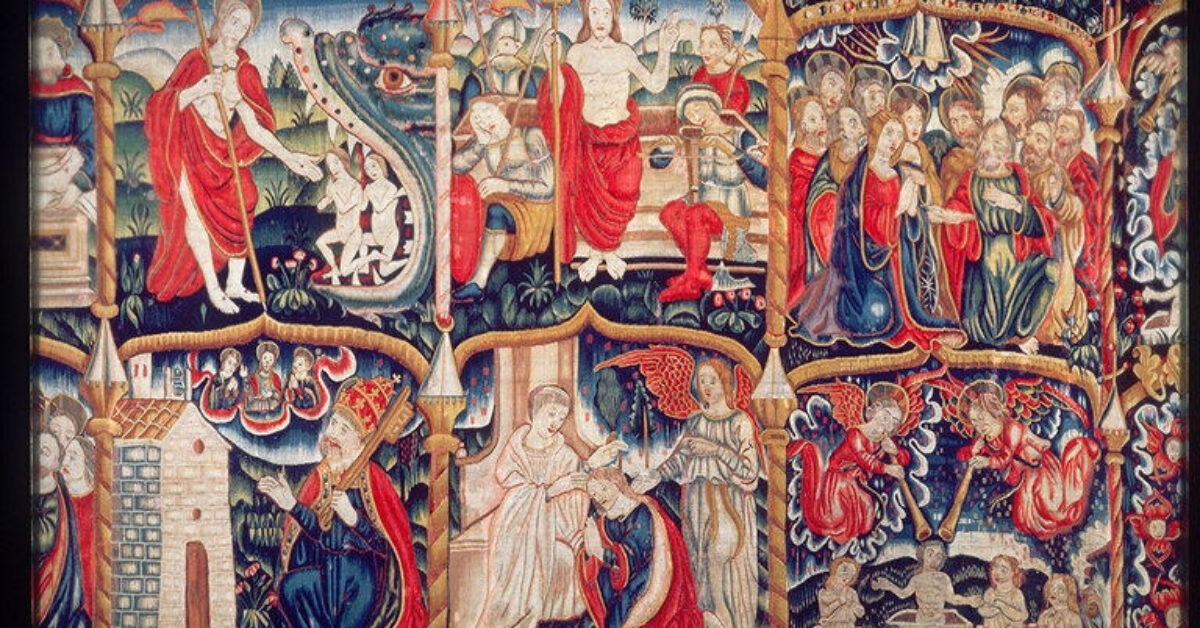
Image: The Apostles’ Creed; European Tapestry, circa 1550-1600
Metropolitan Museum of Art, CC0, via Wikimedia Commons
https://commons.wikimedia.org/wiki/File:The_Apostles_Creed_MET_SC105541.jpg

Order of Christian Initiation of Adults: Prayers of the First Scrutiny
Last week we discussed the approaches to translating the texts of the Roman Catholic Latin rites of the catechumenate reflected in the Rite of Christian Initiation of Adults and in the new Order of Christian Initiation of Adults. This week we begin teasing out how those changes are reflected in the actual translations. Our first case study are the prayers of the First Scrutiny Rite on the 3rd Sunday in Lent. As I (Kent) noted in this blog several moons ago the orientation and purpose of the scrutinies in the modern RCIA is to allow the elect to renounce sin and evil and to make their profession of faith in the Triune God at their baptism. The scrutinies ritually express the turn from the lordship of sin, evil, and the devil and submission to the lordship of Jesus Christ. The scrutiny rites are structured according to this pattern:
- Readings from Series A (woman at the well, the man born blind, and the raising of Lazarus, seeking to illuminate the lives of the elect)
- Homily (which includes exploration of the meaning of the scrutiny)
- Silent prayer by the presider, sponsors, elect, and the assembly
- Intercessions for the elect
- Exorcism Prayer
- [Psalm/Hymn/Song]
- Dismissal of the elect
We will focus on the Exorcism Prayers. The Exorcism Prayers contain three parts: An initial prayer over all of the elect; individual silent prayer by the presider over each of the elect; a concluding prayer over all of the elect. I am going to focus this week on the first prayer of the exorcism prayers. In terms of the assessment of the prayers we should keep in mind two things. First, this Sunday through the Gospel reading focuses on Jesus’ encounter with the Samaritan woman at the well and her conversion to faith in the Messiah. Second, the primary orientations in terms of translation under the guidance of Comme le prévoit for the Rite of Christian Initiation of Adults and Liturgiam Authenticam for the Order of Christian Initiation of Adults. The former is “hearer-oriented” while being textually faithful. It wants the text to make sense for the hearer in that given linguistic context. The latter focuses on formal correspondence, translating the Latin as faithfully and literally as possible while creating a text that flows in the vernacular language in the rhythm of popular prayer.
Here are the two initial prayer texts from the Exorcism Prayer (RCIA first, OCIA second):
God of power, you sent your Son to be our Savior. Grant that these catechumens, who, like the woman of Samaria, thirst for living water, may turn to the Lord as they hear his word and acknowledge the sins and weaknesses that weigh them down. Protect them from vain reliance on self and defend them from the power of Satan. Free them from the spirit of deceit, so that, admitting the wrong they have done, they may attain purity of heart and advance on the way to salvation. We ask this through Christ our Lord. Amen (Rite of Christian Initiation of Adults, Liturgy Training Publications, 1988, 84).
O God, who sent your Son to us as Savior, grant that these elect, who desire to draw living water like the Samaritan woman and have been converted by the Word of the Lord, may acknowledge the hindrance of their own sins and weaknesses. Do not permit them, we pray, to rely on a vain confidence in themselves, and to be deceived by the power of the devil, but free them from the spirit of untruth, so that, recognizing their sinfulness, they may be cleansed inwardly and advance on the way of salvation. Through Christ our Lord. Amen (Order of Christian Initiation of Adults, The Liturgical Press, 2018, 116-117).
Note that both texts pray for the elect in light of the Samaritan woman’s encounter with Jesus. Thus, the prayer is intended to allow the elect to understand their own conversion to trust in Christ and his lordship from within the story of the Samaritan woman, to read their life in light of that story. How well does either prayer accomplish that? I’ll return to that at the end. In addition, note that the OCIA prayer is written in traditional collect fashion. It is one continuous prayer. The RCIA translation is written according to modern English syntax and oral patterns with shorter sentences and phrases, but still following the ancient collect structure.
Now let’s examine five different phrases in the two translations:
- “thirst for living water” versus “desire to draw living water.” The RCIA text expresses faith in more active vocabulary that reflects the Gospel narrative. The OCIA is more abstract.
- “turn to the Lord as they hear his word” versus “converted by the word of the Lord.” The RCIA text reflects the effective power of the Word through hearing it in the catechumenate as the means by which the Lord converts people. The active engagement with the oral word is lost in the OCIA version.
- “sins and weaknesses that weigh them down” versus “may acknowledge the hindrance of their own sins and weaknesses.” Weigh is much more evocative language than hindrance in conveying the effect of sin.
- “spirit of deceit” versus “the spirit of untruth.” Both of these phrases are effective but communicate differently. The RCIA focuses on how Satan’s lordship deceives the human. The OCIA focuses on how Satan’s lordship leads away from the truth in Christ.
- “attain purity of heart” versus “cleansed inwardly.” For a Lutheran, neither of these are possible in this life so the prayer would need to be adapted to reflect the striving for this in sanctification while acknowledging it is only realized in the eschaton. However, the RCIA language is yet more evocative. Envisioning what being cleansed inwardly looks like is challenging.
So, how well does either prayer facilitate the elect reading their lives in light of the Gospel reading? The evocative vocabulary and language reflective of modern English thought patterns and usage of the RCIA translation, allows the hearer to hear their life in light of the reading in deeper and more profound ways.
Order of Christian Initiation of Adults: Translating the Rites
We embark on a series during Lent that might seem the height of all nerdiness to some (and Rhoda and I might rightly be accused of being liturgical nerds). With the appearance of the new 2018 translation of the Order of Christian Initiation of Adults last November from the Roman Catholic Church, it seemed appropriate to us to begin exploring this new translation. It is the form of catechumenate that the Roman Catholics will be using in English into the foreseeable future. So, we will compare prayer texts over the next five weeks from the stage of enlightenment and final preparation for baptism from the former process, The Rite of Christian Initiation of Adults, and the new translation, with each other. Nerdy as it may seem, important issues such as clear understanding and participation in the process by which God through the church is making new Christians is at stake in the translations and in any Lutheran adaptation of them. Failure to understand and participate hinders the vary process of making Christians through the catechumenate itself.
What got this whole process of providing new translations for all the Roman liturgical books and rites started was the 2001 document Liturgiam Authenticam: Fifth Instruction on Vernacular Translation in the Roman Liturgy. Since in many ways some of the translations immediately after Vatican II were considered provisional, it was expected that new translations would appear in the future. All the original translations were guided by the first instruction Comme le prévoit of 1969, which was supplanted essentially by Liturgiam Authenticam. The catechumenate was one of the last documents to be translated anew. Comme le prévoit operated under the translation principle of dynamic equivalence. As John Baldovin observes, “It is as concerned with the receiver as it is with the original text. In other words, how is this text going to make sense (in an oral/aural fashion) for the listeners? This approach gave translators great leeway in fashioning texts and inspired avoiding a wooden literalism when translating” (Baldovin, 117). Liturgiam Authenticam on the other hand operated under the principle of formal correspondence, a literal, word-for-word approach. As Liturgiam Authenticam itself says,
“The translation of the liturgical texts of the Roman Liturgy is not so much a work of creative innovation as it is of rendering the original texts faithfully and accurately into the vernacular language. While it is permissible to arrange the wording, the syntax and the style in such a way as to prepare a flowing vernacular text suitable to the rhythm of popular prayer, the original text, insofar as possible, must be translated integrally and in the most exact manner, without omissions or additions in terms of their content, and without paraphrases or glosses. Any adaptation to the characteristics or the nature of the various vernacular language is to be sober and discreet” (Liturgiam Authenticam, 49; italics mine).
In previous translations, such as the Missal, some of the prayer texts are cumbersome and lack clarity in meaning. Is that the case for the Order of Christian Initiation of Adults under the principle of formal correspondence? Or do they achieve their own goal according to Liturgiam Authenticam of providing “language which is easily understandable, yet at the same time preserves these texts’ dignity, beauty, and doctrinal precision?” (Liturgiam Authenticam, 25). Only an examination of the texts from the RCIA versus The Order can determine that. One that was helpful and positive was the change of title. The RCIA was always a series of rites, a process including significant ritual action that birthed new Christians. It is an order, a process that identifies and creates a vocation, in this case catechumens, within the church’s life. And, as Stephen Wilbricht notes, “We have long been accustomed to abbreviating the Rite of Christian Initiation of Adults as the RCIA. It is time that we cease this unfortunate habit” [Wilbricht, “Synodality, Baptismal Ecclesiology, and Welcoming a Newly Translated Order of Christian Initiation of Adults, Worship 98 (October 2024), 305].
So, nerd away on prayer texts we shall over the next five weeks as we make the journey to the paschal feast in sincerity and truth. May these prayer texts invite us into that mystery. And may we keep in mind the words of Pope Paul VI when he said of the sacrifice of the priceless treasure of the Latin for the vernacular languages, “What is worth more than these sublime values of the church. The answer may seem trite and prosaic, but it is sound because it is both human and apostolic. Our understanding of prayer is worth more than the previous, ancient garments in which it has been regally clad. Of more value, too, is the participation of the people” (quoted in John Baldovin, Reforming the Liturgy, 117). Undoubtedly a truly catholic sentiment.

Field Trip to Explore Multicultural Ministry
We (Kent and Rhoda) will be presenting the opening plenary address at Concordia Seminary’s Multiethnic Symposium, May 6-7, 2025. Our concern to have concrete, firsthand data coalesced with the desire of a pastoral team in Springdale, Arkansas, to have outside “consultants” visit and make recommendations for strengthening congregational faith formation across generations. It was a match made in heaven and came to pass through the work of the Holy Spirit and a generous grant from the Mid-South District of the LCMS.
On Saturday, February 22, we arrived in Springdale and received a warm welcome from Pastors Adam Gless and Brandon Martin, who serve the bilingual Salem Lutheran Church. During our four-day visit we worshipped with the congregation; broke bread with congregational members; attended Bible studies and faith formation gatherings for adults and for youth and their parents; and interviewed a variety of members.

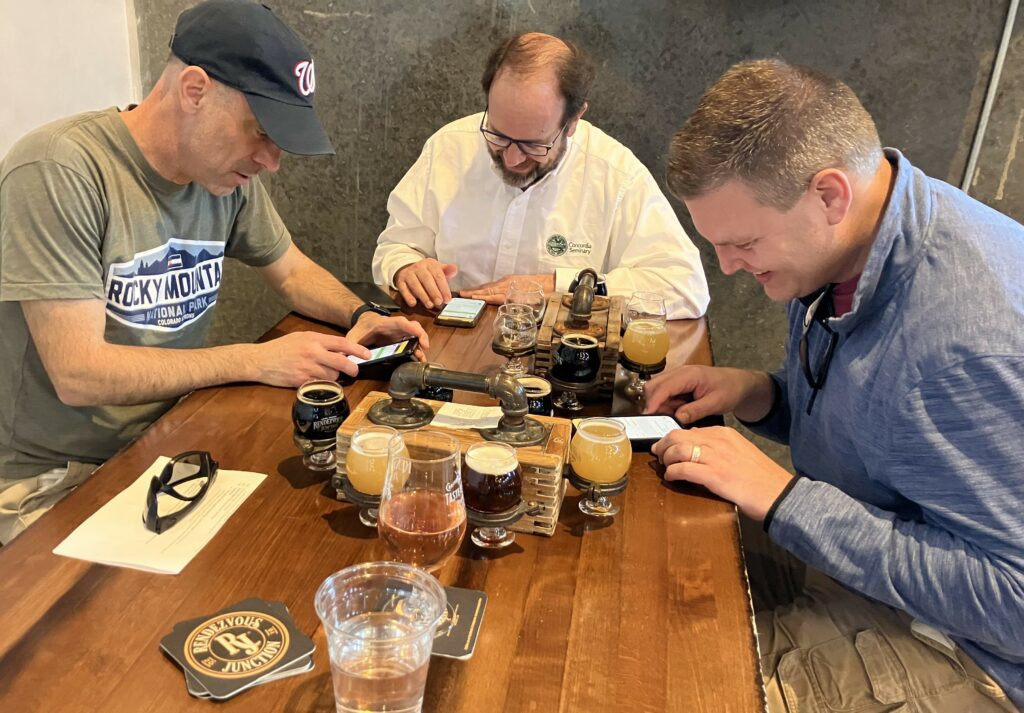
And yes, there was time for relaxation and fun, as the banner photo and gallery of photos indicate. Those who know Kent will not be surprised to see him under the banner of Rendezvous Junction Brewery. A thoughtful colleague, he made Adam and Brandon aware that my beverage of choice is wine, that, according to the Psalmist, “gladdens the heart” (Ps. 104:15). The bartender “poured”—squeezed is more accurate—a generous glass of rose from the “dregs” of the bladder of the (un)boxed wine. One can see the seriousness with which each of the guys approached the flights of beer as they hunched over the beer rating apps on their cellphones. As we parted after a sumptuous breakfast Thursday morning, the four of us gave thanks to God for our time together; we pray our research will be a blessing for the people of Salem Lutheran and for the church at large.
To learn more about our findings, we recommend attending the Multiethnic Symposium. Click for more information.

Banner photos by anonymous, friendly person at table next to us at brewery. Gallery of photos by Rhoda Schuler.